Episode 9: The Keys to Driving with Parkinson’s
-
Dan Keller (00:00)
Welcome to this episode of Substantial Matters: Life and Science of Parkinson's. I'm your host, Dan Keller. At the Parkinson's Foundation, we want all people with Parkinson's and their families to get the care and support they need. Better care starts with better research and leads to better lives. In this podcast series, we highlight the fruits of that research, the treatments and techniques that can help you live a better life now, as well as research that can bring a better tomorrow. This week, we're talking about driving, a complex task involving many physical skills and mental processes. After driving for many years, we often take those skills for granted, but as we age, and especially if we have an underlying physical or mental condition, our abilities may deteriorate, making us less safe on the road, to ourselves and to others. But as complex a task as driving is, it may be just as complicated to know when to quit. Giving up the keys can affect our independence, mobility, and even our ability to go and do the things we enjoy. I spoke with Lissa Kapust, a licensed clinical social worker at Beth Israel Deaconess Medical Center in Boston, a Parkinson's Foundation Center of Excellence. She is the creator of DriveWise, an objective assessment of driving safety for people with neurological, psychological, or certain physical conditions. The program involves a range of health professionals who can evaluate the many abilities and skills that a person needs to be a safe driver.Lissa Kapust (01:51)
The assessment of whether someone is safe to drive is just one of the most emotionally charged issues that one can try to negotiate. Giving up keys, as anyone can imagine, is something that nobody chooses to do. TheLissa Kapust (02:10)
car and driving is such a symbol in our country of independence, freedom, and even youth. When people stop driving, they often really feel old for the first time.Lissa Kapust (02:26)
So it's a marker of aging. And in the context of Parkinson's disease, often it's a marker that illness has really now moved into a different area of importance for the individual. It's a huge loss in emotional ways and also in practical ways. Sometimes not being able to drive means you can no longer live where you've been living and within the family. It also means renegotiating relationships when suddenly somebody can't drive any longer and needs to rely on others to get from one place to another. They're all the important kind of medically driven appointments that people think about needing to get to. But equally important are social events, getting to church or synagogue, going to visit family and friends, going to a movie. I had one man who talked with me about how visiting his wife's grave every day was important for him, and there was no formal transportation system that could pick up that activity for him. So the importance of an objective assessment, like DriveWise, and there are other programs around the country that offer these objective assessments is really important, because adult children often aren't in a position where they can assess this in a neutral way. Sometimes they are either overly worried because they fear that their parent will be the next headline news item of a 90-year-old person that drove the wrong way on the highway. One adult son has described to me that telling his father he couldn't drive any longer was one of the hardest things that he had ever done. And other adult children say that this task literally brings them to their knees. Spouses often aren't in a good position to do this, because it may be that if their husband can't drive any longer, the wife has no way to get around, since she may have given up driving, or maybe never learned to drive, and is dependent on her husband. And finally, the physician will say in a 20-minute appointment in the office, they really can't tell about the real-life skill of driving, whether someone is safe or not, and they also don't want to take the risk of ruining the relationship with the patient. So there's huge value in.Lissa Kapust (04:59)
In an objective program at Beth Israel Deaconess Medical Center. Our program is a multidisciplinary team. It includes my social work colleagues are the bookends of the program. They both begin the program by understanding the role of driving in that person's life, and then once our team has reached the decision about whether someone is safe to drive or not safe to drive, they either get to deliver the good news, which is an easy task, or the more difficult task of delivering the bad news that someone is no longer safe to drive. We have an occupational therapist who does a lot of cognitive testing.Dan Keller (05:42)
How does DriveWise work?Lissa Kapust (05:44)
So, DriveWise is an interdisciplinary team that looks to see whether someone is safe to drive or not. It begins with a social work assessment that really looks at the role of driving in that person's life. An occupational therapist then works with the patient in the office to look at tests of memory, speed of processing, reaction times, judgment, and then the occupational therapist accompanies the individual with Parkinson's for an on-the-road standardized test. And this is done with a certified driving instructor, a remediation driving instructor. The certified driving instructor is in the front seat with the person who's taking the driving test, and he has his own brakes in case things get into trouble. It's a 45-minute standardized test that goes through quiet suburban streets and works its way up to the highway, actually. And then the team meets to decide whether, on the basis of the on-road test, the office test, the social work visit, whether we feel somebody is safe to drive or not. We then write up a letter detailing our recommendations. The social worker follows all of that up with a meeting with the patient and hopefully the family, to deliver either the good news or the bad news.Dan Keller (07:15)
Is it better to have a real-world on-the-road test than to use a simulator?Lissa Kapust (07:20)
Yeah, that's just a great question. The on-road test for now is really considered the gold standard. Simulators for a lot of older people are very difficult to use. Many people get a feeling of vertigo. They get sick to their stomach in a simulator. So until we have self-driving cars, the on-the-road test is probably the best.Dan Keller (07:39)
How often should they be assessed? This probably is not a one-shot deal, is it?Lissa Kapust (07:44)
It isn't a one-shot deal. If someone is safe to drive, we tell them they are safe to drive if they have an underlying medical condition such as Parkinson's disease. The American Academy of Neurology has really set the standard to say that you need retesting every six months. Because if we tested you in May 2017,Lissa Kapust (08:12)
it's really a snapshot. So if you have an illness that, over time, gets worse, we know that six months from now, you may not perform at the same level, so it's six-month follow-up.Dan Keller (08:23)
Do people accept the results when they're told that they're no longer capable of driving more readily because you have some objective measure and some formal program than if their kid said, Dad, I think it's time to stop?Lissa Kapust (08:38)
Yeah, that's just another great question as well. In fact, people come to us because we joke that we're kind of the Judge Wapner of the driving scenario. It's like everybody has their day in court with us, and while nobody likes to get the news that they're not safe to drive, I think that they appreciate that when they come through our program, we've given them every chance to succeed. We're hoping that they're going to do well. As a matter of fact, we've done a research project looking at what we call our over 90 crew, and you would think that people over the age of 90 would not pass a driving assessment test. In our study, in fact, almost half of them were found safe to drive. So yeah, I do think that people accept our advice, and our recommendations are so detailed in terms of if somebody is not safe to drive, really helping them to understand at what point they either were dangerous to themselves or to others, driving is an extremely complex task, and in fact, since it's also an overlearned skill, kind of like riding a bike, for many people it holds up well over time and with illness. But driving includes things like paying aLissa Kapust (09:59)
attention, probably the key ability. Memory plays a role, judgment, speed of processing, visual skills, and executive functioning tasks. So it's not a single simple task. In fact, it's many component parts.Dan Keller (10:17)
Good. Thanks.Dan Keller (10:20)
Most occupational therapists can perform a driving assessment or refer you to a program. For help finding an occupational therapist or driving program near you, call our toll-free helpline at 1-800-4PD-INFO.Dan Keller (10:43)
Both AAA and AARP have helpful driving resources on their websites. You can also find more information on parkinson.org. Just search driving. If you have any questions about the topics discussed today, or if you want to leave feedback on this podcast or any other subject, you can do it at parkinson.org/feedback.Dan Keller (11:10)
We'll respond to some questions in future episodes. At the Parkinson's Foundation, our mission is to help every person diagnosed with Parkinson's live the best possible life today. To that end, we'll be bringing you a new episode in this podcast series twice a month. Till then, for more information and resources, visit parkinson.org.Dan Keller (11:34)
or call our toll-free helpline at 1-800-4PD-INFO, that's 1-800-473-4636.Dan Keller (11:45)
Thank you for listening.
Driving is a complex task involving many physical skills and mental processes. Age, along with a chronic or progressive illness like Parkinson’s, affects these critical driving skills, making a driver less safe on the road. But giving up the keys is an emotionally charged issue. Lissa Kapust created DriveWise, a program that involves a multidisciplinary team of health professionals who do objective assessments of the many skills and mental abilities needed for safe driving.
Released: August 15, 2017
-
Giving up the keys can be both an emotional and practical loss – of independence, mobility, and even your sense of youth. It is a marker of aging, and in the case of Parkinson’s, an indicator of disease progression. Instead of thinking about “giving up the keys,” it can be helpful to frame the situation as “driving retirement.” Life will change, but you can plan for it and look forward to new ways to spend your time.
-
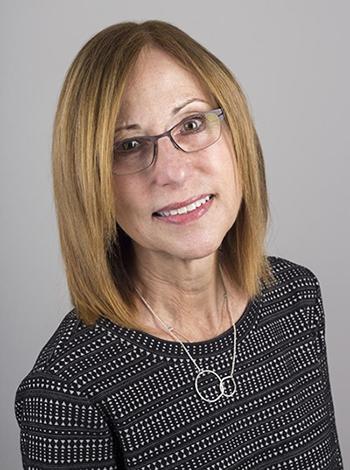
Lissa has been an educator, program developer, researcher, writer, and clinician in the Department of Neurology at Beth Israel Deaconess Medical Center (BIDMC), a Parkinson’s Foundation Center of Excellence, for over 30 years, and over the past several years, she has focused her activities in the field of Parkinson’s. With funding from the Parkinson’s Foundation, she developed an educational video on driving safety for Parkinson's patients. She is founder and clinical coordinator of “DriveWise,” a nationally-acclaimed, hospital-based assessment of driving safety for those with underlying medical problems. In 2010, she became program coordinator for “Wellness Works,” which offers a broad range of exercise and therapeutic programs to patients and family members. She takes leadership within the interdisciplinary team that provides integrated services for people with PD, including the assessment of patients for deep brain stimulation. Lissa has a keen interest in ethics and how principles of ethics intersect with clinical care of patients. She regularly attends monthly Ethics Rounds at BIDMC and has presented cases on several occasions.

Want more?
Don't forget to subscribe! There are many ways to listen: Apple Podcasts, TuneIn (Amazon Echo), Spotify or RSS Feed. (Need help subscribing? See our quick guide.)
For all of our Substantial Matters podcast episodes, visit Parkinson.org/Podcast.