Episode 47: Swallowing Issues and Oral Care with Parkinson's
-
Dan Keller 0:00
Welcome to this episode of Substantial Matters: Life and Science of Parkinson's. I'm your host, Dan Keller. At the Parkinson's Foundation, we want all people with Parkinson's and their families to get the care and support they need. Better care starts with better research and leads to better lives. In this podcast series, we highlight the fruits of that research, the treatments and techniques that can help you live a better life now, as well as research that can bring a better tomorrow. Good oral health care is important for everyone, but it's especially critical for people with Parkinson's disease. Symptoms of the disease, such as drooling and swallowing difficulties, can affect quality of life, and oral bacteria can even cause harmful infections such as pneumonia if inhaled into the lungs due to choking. To avoid these harmful scenarios, people with PD need to practice good oral health care at home and should have frequent visits with their dentists and other oral health care professionals who should be aware of the PD. Cameron Jeter of the Dental School at the University of Texas Health Science Center in Houston explains some of the oral problems that people with PD may experience, and she offers advice on how to cope with them. She says awareness of the special need for attention to oral health should start at the time of diagnosis.Cameron Jeter 1:42
Often, when a patient is newly diagnosed with Parkinson's disease, they do not receive information from their neurologist about oral health concerns that may occur later in the disease process. And I can summarize this for patients and their caregivers by the four deadly D's of oral health and Parkinson's disease. So those dreaded D's can include dry mouth, drooling, dysphagia, and deadly oral bacteria, and I can talk more about what each of those are.Dan Keller 2:14
Okay, why don't we start at the top? What about dry mouth?Cameron Jeter 2:18
So dry mouth, I think, is self-explanatory. Its fancy word is xerostomia. And dry mouth is just the subjective complaint that someone has a dry mouth. They wish they had more saliva. They often have to take small drinks of water. They can complain of a cracked tongue.Dan Keller 2:35
Is it a component of the disease, or is it from the medications, or what leads to it?Cameron Jeter 2:40
I would say both. So when we survey patients, prodromal patients, that means patients before their official diagnosis of Parkinson's disease, some will complain of xerostomia, and this prevalence increases as people progress in their disease, but so too, at the same time, many medications given to Parkinson's patients, and frankly any individual on medications, cause dry mouth. So it's kind of a two-pronged approach.Dan Keller 3:10
So if they have dry mouth, how are they drooling? That seems like an overproduction of saliva.Cameron Jeter 3:14
And that is the contradiction that led me to do a research study and to read the research literature about this very thing. I first want to differentiate between what drooling is and what sialorrhea is. Drooling, as we can see in our mind's eye, of course, is the picture of the unfortunate individual that has saliva pouring out of the corners of their mouth. They either have to have a regular handkerchief or spittle cup on hand. Sialorrhea, conversely, is pooling of saliva in the mouth that doesn't necessarily pour out of the mouth. So what I wanted to know is, is the drooling of Parkinson's disease the result of hypersalivation, the overproduction of saliva, or is it more likely linked to dysphagia, that third dreaded D, meaning that as a patient develops difficulty swallowing, they simply can't clear the saliva that exists in the mouth?Dan Keller 4:14
And can you expand on the dysphagia part, the swallowing difficulties?Cameron Jeter 4:19
All right, so dysphagia actually is the root cause of drooling. We found it's not that Parkinson's patients produce too much saliva. In fact, their salivary flow rate is reduced compared to healthy controls, but dysphagia is that culprit that begins usually six to 10 years after diagnosis of Parkinson's disease, and as speech pathologists will explain, there are four phases of swallowing. It's usually that second phase of oropharyngeal swallowing that is disordered in Parkinson's disease. That's just a fancy way of saying it's hard to get our tongue around the bolus of food to start sending it down our throat.Dan Keller 5:00
Yeah. And finally, you yourself have a particular interest in oral bacteria, which some of them, I guess, you now call deadly oral bacteria.Cameron Jeter 5:09
Right. And the reason for that is, again, in my research study with patients with Parkinson's disease, we took a very easy oral swab of the tongue and the cheek to identify in the lab what bacterial species were present there. And what we found is that Parkinson's disease patients not only have more bacteria in abundance but also a greater variety of species in their mouths than individuals without Parkinson's disease, and the reason that is concerning is we want them to have good oral health care to avoid having cavities, periodontal disease, etc. But the reason I call it deadly is that some of the patients who lived for probably 10 to 15 years after a diagnosis of Parkinson's disease had a preponderance of Streptococcus pneumoniae, and that's the very bacteria that can lead to aspiration pneumonia. You may know that aspiration pneumonia is the number one killer of patients with Parkinson's disease, and it occurs when bacteria from the mouth is swallowed into the lungs and causes infection rather than being swallowed into the stomach as it should be.Dan Keller 6:21
Is it good advice to give to people with Parkinson's that they should be immunized against pneumococci, the strep pneumonia bacteria?Cameron Jeter 6:32
That's possible. They could probably visit with their specific neurologist to see what's best for them as an individual. But in the case of this Streptococcus pneumoniae in their mouths, what's best is for them to have frequent visits to their dentist, rather than every six months as most of us go, perhaps even every four months, to make sure that they have routine cleanings in addition to thorough home oral hygiene.Dan Keller 6:58
Had you compared people who were going to the dentist every four months to those who are on a more prolonged schedule to see if it actually had an effect?Cameron Jeter 7:06
What's interesting is, in addition to taking these swabs of the oral bacteria, we asked these same patients, do you have a dentist? Do you regularly go to the dentist for cleanings? And many of them said yes, and they already were on a four-month routine cleaning schedule, and those that said they had difficulty doing their own tooth brushing asked for the help of a caregiver, and so that tells me that they were doing a good job. Another thing I should mention is we took a second oral swab from the teeth of patients with Parkinson's disease, and interestingly, there was no difference in the bacteria between the teeth of patients with Parkinson's compared to other healthy adults. And so what that told us is that Parkinson's patients are doing a good job of brushing their teeth. It's just that this bad bacteria is growing on the soft tissues, namely the tongue and the cheek.Dan Keller 8:01
What should a person with Parkinson's request of their dentist? Or do the dentists know what to do with these people?Cameron Jeter 8:08
Unfortunately, it's not standard training at most dental schools to have specific care for patients with Parkinson's disease. It's usually involved in a general training curriculum for geriatric dentistry, but a variety of different techniques can be suggested to the dentist, either by the caregiver, the patient, or the neurologist. Some of those include asking for morning appointment times, probably 30 minutes to an hour after the patient has taken their L-dopa medication so that they are least likely to have tremors while in the dental chair. Another one is to ask that they have more frequent appointments. Let's say they need to come in for a root canal or have a crown placed, rather than doing it in one visit over multiple hours, to come in over different shorter visits, and then also, if the patient has trouble with dysphagia, just keep that at the forefront of the conversation with the dental providers so they can be cognizant as they recline the patient in the chair that the swallowing reflex is not as robust and the saliva going down their throat can be a choking hazard.Dan Keller 9:23
In a more general context for people who have swallowing difficulties, should they be seeing a speech-language pathologist or some other professional to maybe educate them or teach their body to swallow better?Cameron Jeter 9:36
Certainly, there's no tried-and-true technique that can get rid of dysphagia entirely. Other recommendations that the speech pathologist will make mainly are just trying to mitigate the severity. It is important that each patient that has a concern see a speech pathologist because not every technique that the speech pathologist will recommend works for every patient. It's a very, very individualized behavioral recommendation.Dan Keller 10:04
There are artificial saliva products. Does that help the patient with dry mouth only to feel better, or does it actually have any therapeutic effect, especially on oral bacteria?Cameron Jeter 10:18
So actually, most of the products available are just trying to mitigate the symptoms. They don't try to reverse the process of the disease. What's important is when patients look for chewing gum or lozenges to help stimulate the saliva, first they should consider if they have any choking hazards, but then they should also be looking for sugar-free products. This is very important in how it impacts the oral bacteria. For example, fructose and glucose are sugars that are easily fermented or broken down by the oral bacteria, and they result in a very acidic oral environment in which bad bacteria can thrive. There are many products available over the counter that instead of these fructose or glucose sugars have xylitol. Xylitol actually does not ferment in the oral bacteria and is better for your oral health.Dan Keller 11:16
Have we missed any important points for people with Parkinson's to consider or to help themselves?Cameron Jeter 11:24
I think an important part is that often concerns with drooling and dysphagia, that swallowing difficulty, is first noticed by the loved one or the caregiver. Some patients will say to the provider, oh, I don't have any trouble with swallowing or with drooling, but they have just sat there and taken a few sips of water before being able to speak clearly or before being able to eat troublesome foods. And so if there is a certain number of foods that a patient begins to avoid, perhaps even without thinking about it, that's a good sign that it could be time to have a swallowing study, an actual quantitative way to study the physiology of the swallowing reflex, and from there, then it can be good timing to have referral to a speech pathologist. We want to not only improve the quality of life of individuals, but the time that they have to live well.Dan Keller 12:22
Very good. Thanks. The Parkinson's Foundation website has a variety of information on oral health for people with PD. Just go to parkinson.org and search on dental. There's information on the basics of oral health in Parkinson's, the need for good oral health practices, tips for preventing dental problems, the fact sheet "Dental Health in Parkinson's," and more. You'll also find a link to an archived expert briefing webinar on swallowing and dental changes, including a set of slides describing the stages of the swallowing mechanism, treatments for swallowing difficulties, the oral effects of PD, and home care and treatment at parkinson.org/eb. Here you can also find a recent expert briefing on other non-motor symptoms of Parkinson's disease with Dr. Ronald Pfeiffer. For help with this issue or anything else having to do with Parkinson's, you can talk with our PD information specialists on our toll-free helpline at 1-800-4PD-INFO. And if you want to leave feedback on this podcast or any other subject, you can do it at parkinson.org/feedback. At the Parkinson's Foundation, our mission is to help every person diagnosed with Parkinson's live the best possible life today. To that end, we'll be bringing you a new episode in this podcast series every other week. Till then, for more information and resources, visit parkinson.org or call our toll-free helpline at 1-800-4PD-INFO, that's 1-800-473-4636. Thank you for listening.
Everyone should practice good oral health care, but it is particularly critical for people with Parkinson’s disease (PD). Unfortunately, at the time of diagnosis, many people do not receive information about oral health problems that may arise later in the disease. Parkinson’s symptoms can complicate oral care at home and dental professionals need to be aware of their patient’s PD so that they can provide appropriate care at frequent intervals. In this podcast, Cameron Jeter of the dental school at the University of Texas Health Science Center in Houston describes what she calls the “Dreaded D’s” – dry mouth, drooling, dysphagia or swallowing difficulties, and deadly bacteria. Beyond discomfort and inconvenience, these problems can affect a person’s quality of life and can even present a risk to their life, for example, through choking or inhaling bacteria that can lead to pneumonia. Dr. Jeter offers some helpful suggestions to maintain oral care and avoid problems.
Released: January 29, 2019
-
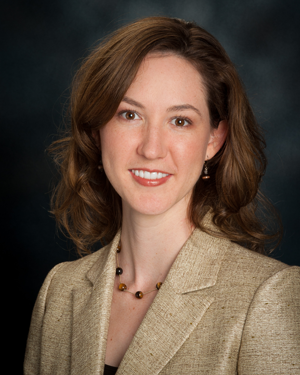
Dr. Cameron Jeter is an associate professor at The University of Texas Health Science Center at Houston (UTHealth) School of Dentistry. After her father developed parkinsonism, Dr. Jeter witnessed the real impact that drooling and dysphagia have on a patient and his or her family. Determined to improve life for patients affected by these oral symptoms, Dr. Jeter focused her laboratory’s research to understand and address the unique oral health needs of neurodegenerative diseases. At the intersection of neurology and dentistry, Dr. Jeter specifically investigates drooling and dysphagia in Parkinson's disease, and considers how these symptoms affect oral bacteria composition and risk of aspiration pneumonia.

Want more?
Don't forget to subscribe! There are many ways to listen: Apple Podcasts, TuneIn (Amazon Echo), Spotify or RSS Feed. (Need help subscribing? See our quick guide.)
For all of our Substantial Matters podcast episodes, visit Parkinson.org/Podcast.