Episode 20: Medical-Community Partnership for Parkinson’s Wellness
-
Dan Keller (00:00)
Welcome to this episode of Substantial Matters: Life and Science of Parkinson's. I'm your host, Dan Keller at the Parkinson's Foundation. We want all people with Parkinson's and their families to get the care and support they need. Better care starts with better research and leads to better lives. In this podcast series, we highlight the fruits of that research, the treatments and techniques that can help you live a better life now, as well as research that can bring a better tomorrow. The Edmond J. Safra National Parkinson's Wellness Initiative brings people with Parkinson's together outside the medical clinic. It's a community-based wellness program that helps people get and stay fit, build their care network, meet other people with PD, and find support and educational resources. The program started in New York in 2007 and has been very popular ever since. Now it's expanded to four other cities: Boston, Chicago, Tampa, Florida, and Washington, DC. Social worker Amy Lemen of NYU Langone Medical Center in New York, a Parkinson's Foundation Center of Excellence, describes the program, what it offers, who can participate, and how to get involved in New York and across the country.Amy Lemen (01:33)
The Edmond J. Safra National Parkinson's Wellness Initiative was founded a few years ago to help bring the idea of a comprehensive approach to wellness to cities around the country. The NPWI was founded 10 years ago in New York City as a partnership between NYU and the JCC in Manhattan, and the idea with the program was to de-medicalize access to services for people with Parkinson's and their families, to give them more opportunities for exercise, but also to get them connected to support resources, educational resources, and help build a community outside of the clinic walls. At that time, we really sensed our limitations of what we could do in the clinic—certainly critical to have expert medical care—but that we felt there was so much more we could be doing, so we pushed past the clinic walls and partnered with an excellent community agency to develop this idea of a comprehensive approach. And we didn't quite know who would come or if people would come, and the program has been sold out since the day we opened the doors, and we have waiting lists, and we're constantly trying to build capacity for that program. And over the years, we had different Centers of Excellence in the NPF network and JCCs around the country reach out to us and say, “How can we be involved in what you're doing there?” And so that got us thinking about how to really develop a partnership program and a training program. And we have an amazing sponsor, funder in the Edmond J. Safra Philanthropic Foundation that was very supportive of the idea of taking the knowledge that we have and translating it to a lot more people to try and reach a lot more people with Parkinson's and their families. I'm a social worker, so I work very much from a biopsychosocial perspective, a very systems perspective—how are people able to access what they need? How do we keep them engaged, active in the community? How do we reduce isolation in every way we can? And this program has been incredible because it works on many levels for people. It's great exercise for people with Parkinson's, but it's a group-based fitness concept, meaning we want everyone to come out and meet one another, network, and very often that's a motivator for people. And I've heard many times over the years, “I didn't feel like coming to class today, but I wanted to show up for my friends. I wasn't feeling great to get out the door, but the idea of seeing people that I know and I care about helped me get there.” So that's part of the design as well. And the partners around the country—in Boston, Washington, DC, Tampa, Florida, Chicago—they've all been amazing in terms of what they've brought to the project and how they've adapted the project to their cities, because that's the idea as well. We didn't want to say, “Okay, you have to do it exactly how we did New York,” because we're a very particular place. The excitement for me in the development of the national initiative is seeing how each site and each team adapts it to the communities there. And also we're beginning to even push past the JCC walls of the program as well and network deeper and further into communities to try and reach as many people as possible. So we're at a very exciting phase of the initiative, and we're looking forward to continuing to build, reach more people.Dan Keller (05:00)
People enter it at any stage, or are there certain schedules that you have to make sure that you get in when a new program is beginning or a new group?Amy Lemen (05:09)
We really encourage people, from the moment of diagnosis, to get connected with exercise support for you and your family, for the loved one who's going to be primarily helping care for you—help in every way they can. So we really encourage people to get connected early and stay connected. And we have an intake process for the program, because one of the things that we heard from patients was, “I really want to know what I'm walking into.” So there's an intake process which helps us to get to know you a little bit better and what your goals are and what your functional abilities are and where your strengths are. So we're able to plug you into a class that fits best for where you are and where you want to be. In New York, we started with three classes, and that's grown to seven to nine classes, running five days a week, and we serve up to 100 people per week—patients and caregivers—in that program. And we could be doing even more; we could be, I think, probably doubling that and still scratching the surface of people who want to access the program. We operate on a three-season-per-year schedule, and we do intakes three times a year for those seasons, and we usually have about 40, maybe 50 people on the waiting list each season. We've tried to listen to our participants in terms of what they are liking to do and try to build more classes and opportunities around that. I think that dialogue between the medical professionals, the patients, and the community organization is so critical because all of our ideas really make this program. It's not kind of the medical center saying, “You have to do this.” It's really listening, and it's a dialogue, and it's become a community lab where we are able to gain ideas—not just for programs, but research studies as well. We're excited in New York—we're actually going to be starting two clinical studies on the impact of art therapy and visuospatial organization for Parkinson's and a singing protocol with a speech-language pathologist who's developed various exercises supported by group singing. And both of those studies will take place in the community lab at JCC Manhattan. So that's the kind of idea and creativity we're trying to promote within this program. It's a place for people to access and get services, but it's also a place for us to learn as medical professionals, develop studies, develop new treatments. We're all working towards finding a cure, so every little bit and every voice helps with that.Dan Keller (07:41)
Since this is run through the Jewish Community Center, do people have to be members of the JCC, and is there an additional cost for this program?Amy Lemen (07:50)
That's a great question. This is a partnership between NYU and JCC Manhattan, and so founding this program, we knew that we couldn't do what they do, and they knew they couldn't do what we do. So we really try to share our ideas and resources. And the one thing that was very important to our sponsor was cost not being a barrier to participation in the program. So we try to provide low-cost classes that are maybe about a third, even a quarter, of what people might be paying in a regular exercise class. And if people don't have the funds, even for the, say, $5 to $7 fee for the class, we have a scholarship program available as well. So that's a goal—to try and increase access as much as possible.Dan Keller (08:32)
So it sounds like they do not have to belong to the JCC.Amy Lemen (08:36)
They don't. This is a community-wide program. You don't have to be a patient at NYU Medical Center, you don't have to be Jewish, you don't have to be a member of the JCC. Anybody can come and access the program. And that's the real mandate and opportunity, I feel. We have different medical centers, excellent movement disorder specialists and centers in New York City, and neurologists and community providers that are all referring to this program because they want their patients and families to be able to access it.Dan Keller (09:05)
Is it expanding beyond JCCs? I mean, some communities, if you were in the middle of Montana, might be hard to find a JCC.Amy Lemen (09:13)
That's also a great question. You and I think very similarly. I think 10 years ago, I remember saying, “We don't want to stop until this type of program is in every neighborhood in the country,” because, particularly for people with Parkinson's, access is critical. And sometimes five blocks can seem like 15 miles—you know, it can seem like 50 miles. So yes, I think the initial phase in New York was to gather data, see how the program runs. The next phase to national is seeing how we can learn to adapt in cities. Again, next steps being: how do we maybe expand that network to even more JCCs and beyond and really promote not just an exercise class or a support group, but a real comprehensive approach? But yes, that is the goal—to be everywhere that needs this type of program.Dan Keller (09:59)
Is this something the helpline at the Parkinson's Foundation knows about, or how would someone find out what's available near them?Amy Lemen (10:09)
We were fortunate in the expansion to the national initiative. This is a partnership between the Parkinson's Foundation, NYU, and JCC Manhattan. So people who want to access the program can check out the parkinson.org website, Parkinson's Foundation website, they can call the helpline. The helpline has been terrific in helping people access services in their area, and they can give people information about the programs in New York, Boston, Washington, DC, Tampa, and Chicago. Also, the JCCs in those locations have information on their websites. And I think one thing we always tell our patients and families too—talk to your provider, talk to your neurologist about this program, because we're trying to raise awareness in the medical community as well about the program and the opportunity. I think one of the interesting things about this program from the beginning was we did not do a tremendous amount of marketing in New York from the beginning, because the patients who heard about it accessed it immediately, and they started telling their doctors, their providers, and that's how we really raised awareness within the medical community. So if you have Parkinson's, if you love someone with Parkinson's, continue to ask your doctor for the support services that you need. That's how we're raising awareness in the medical and professional community about how to build these types of programs. So keep talking to your doctor about the things that you're hearing about that are working for Parkinson's and help get them on board as well about helping build in their community the services that are needed. We have incredible doctors who have really bought into this program all around the country and, I think, have just gone above and beyond for their patients and wanting to do more. So we're trying to tap into that caring network of people that say, “Let's go beyond the walls, let's go beyond the box, let's continue to build what is needed.”Dan Keller (11:54)
Very good. Thank you.Dan Keller (12:02)
If you live in New York, Boston, Chicago, Tampa, or DC, get to your local JCC and sign up for the Edmond J. Safra National Parkinson's Wellness Initiative. Go to www.parkinson.org/wellness to learn more. If you don't live in one of those cities, don't worry. The PD information specialists on the Parkinson's Foundation helpline can connect you to exercise and support resources near you. Call toll-free at 1-800-4PD-INFO. As Amy mentioned, programs like these can help motivate you to be active, be social, and get moving. Exercise is an important part of managing Parkinson's. It provides relief from many symptoms and may even slow down progression of the disease. Plus, it can be fun to exercise with other people. Check out our free publication Fitness Counts for information and tips on how to get started with an exercise program and what types of exercises to try. If you have any questions about the topics discussed today, or if you want to leave feedback on this podcast or any other subject, you can do it at parkinson.org/feedback. At the Parkinson's Foundation, our mission is to help every person diagnosed with Parkinson's live the best possible life today. To that end, we'll be bringing you a new episode in this podcast series every other week. Till then, for more information and resources, visit parkinson.org or call our toll-free helpline at 1-800-4PD-INFO—that's 1-800-473-4636. Thank you for listening.
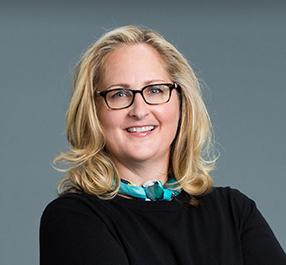
The Edmond J. Safra National Parkinson’s Wellness Initiative aims to build community hubs for people with Parkinson’s – outside the medical setting – to create more opportunities for exercise, connect people to support and educational resources and provide motivation to get out and be active. Founded ten years ago in New York and now expanded to Boston, Chicago, Tampa, FL, and Washington, DC, the initiative is a partnership between Parkinson’s Foundation Centers of Excellence and Jewish Community Centers, with support from the Edmond J. Safra Philanthropic Foundation. Clinical social worker Amy Lemen of New York University Langone Medical Center was the original project lead for the New York program and led expansion of the national network. She describes the program, what it offers, who can participate and how.
Released: January 16, 2018
-
Ms. Lemen is Director of Development in the Office of Development and Alumni Affairs at NYU Langone Health. At the time of this interview, she was the Parkinson's Foundation Center of Excellence Coordinator for the Fresco Institute for Parkinson’s and Movement Disorders at NYU Langone Health, where she worked from its founding in 2007 until 2017. She was also Managing Director of the Edmond J. Safra National Parkinson’s Wellness Initiative and founding Project Lead for the Edmond J. Safra Parkinson's Wellness Program-NYC. She co-founded the Fresco Institute’s Edmond J. Safra Interdisciplinary Home Visit Program for Advanced Parkinson’s, a clinical research program designed to extend specialized services into the home to improve quality of life and outcomes for vulnerable patients and their families. She also founded and was clinical supervisor for the Fresco Institute’s Master of Social Work Internship Program, a clinical training program developed in collaboration with the NYU Silver School of Social Work to raise Parkinson’s disease competencies for social workers.
Ms. Lemen has presented on the concepts of social work, multimodal care and medical-community partnership to improve Parkinson's outcomes at the national and international levels. She is a psychotherapist specializing in helping individuals, care partners and families adapt to the emotional experience of living with Parkinson’s, movement disorders and other neurodegenerative syndromes. She was the recipient of an Individual Recognition Award from NYU Langone Health for superior overall performance in support of the mission, vision and values of the Medical Center in 2012. She received her bachelor of arts from NYU and master’s degree in social work from the NYU Silver School of Social Work. She is Research Assistant Professor of Neurology and Medicine, NYU School of Medicine, and Adjunct Assistant Professor, NYU Silver School of Social Work.