Episode 189: Questions to Ask When Considering Deep Brain Stimulation
-
Dan Keller 0:03
Welcome to this episode of Substantial Matters: Life and Science of Parkinson's. I'm your host, Dan Keller. At the Parkinson's Foundation, we want all people with Parkinson's and their families to get the care and support they need. Bett
er care starts with better research and leads to better lives. In this podcast series, we highlight the fruits of that resear ch, the treatments and techniques that can help you live a better life now, as well as research that can bring a better tomor row. After a diagnosis of Parkinson's disease, people often start with levodopa to manage symptoms, increasing daily doses as needed, and adding other drugs to further control symptoms, but at some point, if drug regimens are not sufficient or adverse effects become troubling, it may be time to explore more advanced treatment options, like deep brain stimulation, or DBS. When considering DBS, a person needs to become educated about it, including how the procedure is done, what to expect in terms of recovery, and what benefits DBS can provide.
I spoke with two experts in DBS, each in their own way. Dr. Arjun Tarakod is the director of the Deep Brain Stimulation Program at Baylor College of Medicine in Houston. Samantha Helton, a patient of Dr. Tarakod's, is a person with young-onset Parkinson's who has undergone a DBS procedure and can give a firsthand account of it from a patient's perspective. Samantha, when did you start to feel like your medications weren't working the way they used to, and what was changing?
Samantha Helton 2:02
Well, my issue was I was just taking so many medications and having the side effects from those medications, and I probably noticed that a few years ago. It just seemed like every time I would go in, we'd have to change something, maybe increase medications. I wasn't getting the benefits of the medication as much as I had when I first started.
Dan Keller 2:24
And Dr. Tarakod, what are the types of signs that tell you that it might be time to start talking about more advanced treatment options, something like deep brain stimulation?
Dr. Arjun Tarakod 2:35
I'd say there are two common reasons, and then a few less common reasons that we might start thinking about deep brain stimulation surgery. I think the most common one that people run into is what we call motor fluctuations and dyskinesia. So, motor fluctuations are when the medications don't last as long, or you're noticing more dramatic shifts between when the medications are working and not working. This can lead to taking multiple doses a day.
And then the dyskinesias are symptoms that come as a result of using the medication. So, these are the typically twisting, turning, involuntary movements that you can get, usually when the medication dose is running a little bit high, but sometimes people can also notice these as the medication wears off.
Outside of that, the other common reason we might look at deep brain stimulation is for tremor that doesn't respond to medication, so that's one symptom that we say we can treat better with deep brain stimulation than we can with medication. Everything else is somewhat comparable treatment, maybe a little bit more persistent or reliable, but tremor is that one symptom that we can do a little bit better with the stimulation than with medication. Less frequent reasons would be other side effects from medications, or people wanting to reduce the amount of medication that they take. Those can still factor in, but those are usually not the main reason that we would look at the surgery.
Dan Keller 4:00
Since deep brain stimulation somewhat simulates or takes the place of levodopa medication, you had brought up dyskinesias with levodopa. Does DBS also risk having dyskinesias or not?
Dr. Arjun Tarakod 4:17
So you can get dyskinesias induced by stimulation. There are ways around this, and there are a couple of different targets that we use when we're trying to decide with someone with Parkinson's, if they're going to get DBS, what would be the best target for them. That's usually a discussion we have both with the patient and then with the neurosurgeon prior to the surgery. I do want to make it clear, though, that even if you do get dyskinesias with stimulation, there's usually ways you can adjust the stimulator to get rid of that.
Dan Keller 4:48
Right. Samantha, before you decided on getting DBS, what did you know about it, and what was your understanding of what symptoms it would take care of?
Samantha Helton 5:01
I didn't know too much about it, but I did, you know, obviously do a little research before. My main concern was the tremor. I had a really bad tremor in my right hand, and then it affected the way I did a lot of things. So that's what I watched videos on, and I saw how it helped people, the dramatic difference between when they had the stimulation on and when they had the simulation off, and that's when I started to really consider DBS, and Dr. Tarakod helped me with that.
Dan Keller 5:30
What expectations do you most often need to clarify what DBS can do when you're talking to a patient? So, what is the symptom control that they can expect, which ones may be ameliorated and which ones won't it touch?
Dr. Arjun Tarakod 5:46
Okay, so we usually will break down what DBS can help with into motor symptoms. So when we think of what dopamine does or what levodopa does, it has potential to treat almost all, if not all, symptoms of Parkinson's—maybe not every symptom in every patient, but we do have some people where their cognition feels like it does better with levodopa, or their mood does better with levodopa, but those are what we call non-motor symptoms. When we think of motor symptoms, this primarily centers around stiffness, slowness, tremor, so those are the symptoms that we would say reliably respond to deep brain stimulation. Dyskinesia, I would add on there too, if you have it as another one that can reliably respond to deep brain stimulation.
So it's good at treating those motor symptoms, as I mentioned earlier. Tremor is that one symptom that it probably does better than any of the medications in treating. With the other symptoms it's really just about prolonging the good periods and reducing the bad periods, so when we go back to those motor fluctuations or those ups and downs, having more periods where you feel like the medication or that feeling you get when the medication is on and working lasts a little bit longer with deep brain stimulation, and then the period where you notice that the meds aren't working, where you feel stiffer or slower, that tends to reduce.
But it is always important to highlight the limitations with deep brain stimulation surgery. So, aside from non-motor symptoms—it doesn't help with thinking or memory, it doesn't help with fatigue, doesn't really help with mood directly—it also isn't going to change the progression of Parkinson's, so it doesn't slow or stop the progression of symptoms. It just treats it kind of like how the levodopa treats symptoms.
And then there are even some motor symptoms which don't reliably improve with deep brain stimulation, and these would be things like walking or balance. That one always gets tricky, because you definitely do get people who walk better post-surgery. It's just not as reliable. I usually will try to break it down when I explain to patients that there are a lot of different things that factor into your walking, so if it's a question of stiffness or slowness, that ease of movement can improve with deep brain stimulation. If you have dyskinesias that are throwing you off balance, those can improve with deep brain stimulation, but that sense of balance, or what we call postural instability, or that loss of postural reflexes that we see in Parkinson's, that typically doesn't improve with the surgery. So, there are aspects of gait and balance that don't really tend to do better with the surgery.
Dan Keller 8:23
Are most of the risks associated with the surgery, like bleeding or infection, or are there other risks from the surgery, or from the actual DBS as it's operating?
Dr. Arjun Tarakod 8:36
So, I would say the main significant risks with deep brain stimulation surgery are going to be right around the time of the surgery itself, and these do go into things like infection or bleeding. Anytime you have a surgical procedure, there are going to be some known associated risks with that. Once everything is healed up and closed up, I would say the complication rate is exceedingly low. Infection is still a possibility, as it is anytime you have a foreign object implanted into the body—there is a slight increased risk of infection with those, but it doesn't tend to be a significant issue for most people.
The risks or side effects you can get with deep brain stimulation as a consequence of the stimulation itself are typically adjustable with adjusting the stimulator. So, the other frequently seen side effects we can see with deep brain stimulation would be speech changes or balance changes, but those can typically be reduced or eliminated when you adjust how you're stimulating. A lot of times, if we run into issues we might have... it's almost like a whack-a-mole, where we can make an adjustment that helps with the speech, but then the tremor comes out a little bit more. We might trade a side effect for symptom control, and those are some situations where we might see a person might prefer to stay with a mild side effect if it gives them a fair amount of symptom control. Samantha, can you tell me a bit about the testing that you had to go through before the surgery?
Samantha Helton 10:10
Yes, so the surgery is in two parts, but before you get to that point, you have to do a neuropsych evaluation, and this is probably very intimidating for some people, but I don't want people to be intimidated by it or not consider it because of this reason. But basically, it's to check your cognitive function, so the test is like memorizing—they'll read a, let's say, a story to you, you have to repeat what you can remember back, some memorization, logical thinking, that type of thing.
So, once I got through that, it was like a four-hour test. They do give you a break. Did that, they did put me before the board and get all that approved. And once that was done, it was just, you know, the normal medical MRI, CT, that type of test. You know, your typical blood work for surgery. But the neuropsych, I thought, was nothing that I was expecting until, you know, I was notified of it, but it's something that I was not concerned about because I'm a younger person, so it was definitely... I could see how people were very, very intimidated by it.
Dan Keller 11:13
Do you have any advice for other people about not feeling discouraged if they don't pass the neuropsych test, because of maybe declining cognition, just getting older?
Samantha Helton 11:25
I don't know whether you're not passing, so that might be some question for Dr. Tarakod, I'm not sure on that aspect of it.
Dr. Arjun Tarakod 11:32
I can chime in there, if that's okay.
Dan Keller 11:35
Yeah, sure.
Dr. Arjun Tarakod 11:37
So I think Ms. Helton brought up a good point with the "pass" part of it, and I always tell people when they're doing these tests that it's not really testing you to pass or fail. It's trying to get a sense of how your cognition is functioning versus where it would have been functioning 10, 20 years ago or before you had symptoms of Parkinson's. Everyone is tested to the point that they can't get questions right because we need to see limits on this, so everyone finishes that test feeling like they might have failed something, but that's pretty typical.
The reason that we do the test is we're trying to assess the risk of doing a brain surgery, and I also want to be clear that not all places do neuropsychological testing before the surgery. It's something that I definitely advocate for, but I know it's not standard practice everywhere. But the reason that we do it is if we do see changes with thinking and memory, and this looks like it's a significant change from what someone might have been functioning at before they had Parkinson's, then that risk of a decline of cognition with a brain surgery goes up more substantially. So it's really just to make sure that people are safe to do the surgery, and they don't wind up... maybe their tremor gets better, but then their thinking and memory is a lot worse, and their quality of life really doesn't improve with that. So we just want to make sure that anyone who we're sending to surgery is safe to do the surgery.
Dan Keller 13:06
Is part of the evaluation before offering DBS to make sure the candidate has a realistic expectation? And would you say that a satisfactory outcome—what someone considers satisfactory—really depends on their expectations going in?
Dr. Arjun Tarakod 13:24
I think that's very true. We do typically go through the expectations that people have with the surgery, and then we kind of correct it with what we expect could get better realistically with the surgery. That's another part of that pre-DBS evaluation that we typically do with patients.
That being said, a lot of people have in their mind what they want to get better, and even when we tell them what DBS can and can't do—I know gait is a big one for this, so everyone gets told through multiple visits what they can and can't expect from the surgery—but it is important to have those realistic expectations with it, because it's not the solution to all problems. Sometimes when we don't move forward with the surgery, it's not necessarily that someone isn't a good candidate for the surgery, or they're at a high risk for the surgery, it's just their goals for what they want the surgery to do is different than what the surgery is really going to be able to do.
Dan Keller 14:22
Besides the eligibility criteria we've already discussed, are there other criteria or evaluations that might surprise people?
Dr. Arjun Tarakod 14:32
I think within the neuropsychological testing—again, it's not something that all places do, but many places do incorporate it—it's not just for cognitive testing. It also looks at mental health. It's important that people have a sort of stable base and support structure to fall back on when they're going through something as major as the surgery. It's not a "you do it once and you're done" type of procedure. There's a few months of adjusting the stimulator and multiple visits, trying to get things dialed in the way that we want.
Part of that screening is looking at mood symptoms. Part of it is looking at what kind of support structure a person has. This can sometimes be an issue if someone lives alone and doesn't really have people who could either take them to appointments or help them if they're a little bit—I don't want to say incapacitated, but maybe having a little bit more trouble during the recovery process post-surgery. It is important to have people around to be able to help in those situations.
Dan Keller 15:35
With three FDA-approved DBS systems on the market, can you highlight any differences between what they offer and how a patient would decide among them?
Dr. Arjun Tarakod 15:48
I preface this that all three systems I think function well, and while at our institution we do use all three, I think the most important thing is with the neurologist who you're working with, or the neurosurgeon that you're working with, making sure that they're comfortable with a particular system, because you don't want someone either implanting or programming something that they just aren't familiar with. So, I think the most important thing is making sure that the neurologist, or whoever's going to be managing the stimulator, is familiar and comfortable with the system.
If you do have that option where they're using multiple systems, each one has its own sort of minor differences. I would say there's two main differences with programming strategies that are utilized to different degrees in different systems. So, one system uses something called adaptive DBS, which is the ability to adjust settings based off of recordings from the brain—that has its benefits and its limitations. Another system uses more image integration and a little bit more control of how you stimulate around the electrodes, so maybe a little bit more customization in the location of stimulation without that ability to adapt over time. And then one of the systems also has an ability for remote programming, so for some people who might live far away from the doctor who's managing the stimulator, that ability to adjust the stimulator without needing to drive into the clinic might be of benefit.
Dan Keller 17:31
Samantha, let's talk a little bit about your history. After you got the DBS, what was it like immediately after the surgery and the ensuing near-term period, and how long was recovery, and did you notice anything right away?
Samantha Helton 17:49
The first surgery was the brain surgery, and then you wait about two weeks, and then you have the device implant. Actually, for my recovery, I felt like the device that was implanted... I felt like that was a little harder for me to deal with than the actual brain surgery, other than the fact that, you know, being a female, couldn't wash my hair, all that kind of thing for a couple days, you know.
As far as the recovery process, it was pretty good for me, and then as far as improvement, I mean, I did... obviously, they don't turn it on, you have to wait a couple of times to go turn it on. You go to the office, you have visits once a month for about six months, where they dial it in, pretty much, in stimulation. I had to go back in for a second brain surgery just because we wanted to move the device after... kind of narrow down the target a little better, as far as dialing in, because some of my symptoms, they were improving, but my settings were so high for my stimulation that we felt like there was not a lot of room, necessarily, if I had to increase it later on for improvement.
I did see improvement, obviously. The first appointment I did have improvement, it was just a higher setting than what we would like to see, but after the second one, pretty much immediate, it's night and day, and my quality of life is so much better because of that.
Dan Keller 19:12
So, what do you think is the time period for you between the initial surgery and feeling comfortable, and you're kind of on a steady path?
Samantha Helton 19:25
As far as the surgery recovery, I would say about a month, because you've got the first one, and you want to stay out probably for two weeks for that, and then in two weeks, you go in, you have the device implanted, and then I would say after that, you know, you're on that six-month program where they're going to dial you in. I would say two weeks to a month after surgery to actually feel like back to yourself.
Dan Keller 19:51
Dr. Tarakod, is this sort of a typical course for someone who gets DBS?
Dr. Arjun Tarakod 19:53
Yeah, I would say the recovery is usually pretty quick. To expand a little bit on what Ms. Helton said, at Baylor, we do this as a staged procedure, so we do the brain surgery, and then two weeks later implant the battery, the pulse generator. There are some places where they do both of those procedures in the same surgery. The reason that we, in a lot of places, stage it is to reduce the amount of time that someone's under anesthesia for a given surgery, and that can help people come out of anesthesia a little bit better and can help with their recovery a little bit more, but it can be done either way.
Usually, we tell people it's good to take it easy after the surgery, but there aren't any major restrictions. So, we do have people who will go back to work fairly quick after they get the surgery done, if they're working, but we usually tell them you can use brain surgery as a reasonable excuse to take a week off—that's what I'd say we typically recommend, is at least take a week off. But there's no real rehab associated with it.
And then to maybe explain a little bit, when people see the results of the stimulation itself, it's pretty typical to see results fairly quickly, but those often fade as your brain is getting adjusted to the stimulation. We also can't crank up the settings too high right away as people are getting used to it, so we have these frequent visits over the course of a couple months just to get people used to the stimulation at a steady level. So I would say four to six months is probably typical for when we get people to a relatively steady or good functioning state. We still make tweaks after that, and I would say as time goes on, the longer someone has stimulation, the less we wind up needing to adjust it, but maybe four to six months is a reasonable expectation to get things dialed in.
Dan Keller 21:46
Are there any precautions that patients need to know about once they have fully gone through the process, have the electrodes, have the stimulator, and they're well on their way and out the door? I mean, things like getting brain imaging, MRI, or any of that, do they need to alert people about that?
Dr. Arjun Tarakod 22:04
Yes, in certain situations. So, anytime there's a very strong magnet or a very high electrical current involved, those are things that you need to be a little bit careful with. X-rays and other types of medical equipment aren't really going to be much of an issue, so if you needed to get an MRI, you can get them done. All the devices now are MRI compatible. You just need to do it under certain settings, so the radiologist should always be aware that you have the stimulator. Sometimes they need to use less strong magnets, or you might need to be in the scanner a little bit longer, just to avoid things that might heat up the device a little too much, but it is still possible to get all of that imaging done. The devices all have an MRI mode, or you just turn them off when you get those types of studies done.
For something like a CT scan or an X-ray, it doesn't really matter, so you can leave the devices on for those types of tests. The devices can also interfere with things like an EKG or an EEG, if you're getting one of those. So, a lot of times it's handy to take your controller with you if you have a stimulator and you're going to a doctor's office, just in the event that they need to do one of these other procedures, so that you can turn it off while they do their studies, just to avoid the interference.
Dan Keller 23:26
Samantha, looking back, what's the one or two things you'd want somebody considering DBS to understand?
Samantha Helton 23:34
Well, one, don't be scared when you hear brain surgery—you think that's very scary. I know I was kind of like that. Just don't be scared, trust your doctors. And the second thing I would say is make sure you have a conversation too with your doctors about, like you said, what the expectations are. I kind of knew what mine were. My main thing was, like I said, the tremor—it's completely under control at this point with some less medication, which is what we were going for in my case. The only thing is, you know, I kind of didn't know if I was going to have to go in for a second brain surgery, and then I did do that again, so I would say that was maybe something I didn't know was going to happen necessarily. So I would just say just have that discussion with all your medical staff.
Dan Keller 24:21
Dr. Tarakod, what would be your nutshell message to someone considering getting DBS?
Dr. Arjun Tarakod 24:26
I would say you have to really just look at if you want the results that the surgery can provide for you, because no one goes in saying they want to do brain surgery, and I understand that. I see a lot of people who want the results, but they want to put it off because they're scared of the surgery, and I think that's completely understandable. But when you put it off, the longer you wait... kind of a known thing, there's no age limit typically with the surgery, but as you get older you are more likely to have other health issues.
So I tell a lot of patients, let's say in their 60s or 70s: you don't have to do the surgery now, but doing the surgery when you're in your 60s or 70s is going to be easier to recover from than doing the surgery in your 80s. So it is one of those things where no one wants to do the surgery, but they want the results, so it's important to just be educated about what DBS can do, and if those results look like things that you would want to pursue, knowing that Parkinson's does change over time. I would say the most common thing I hear from patients is they wish they had done it sooner. When I think of the patients who get the surgery, they typically say that they wish they hadn't waited as long as they had to move forward with it.
Dan Keller 25:45
And for either of you, have we missed anything important to add or interesting that you want to say?
Dr. Arjun Tarakod 25:52
Maybe just... this might be a little bit of a question for some people listening with Ms. Helton and doing the surgery twice. In her case, we did do a revision. That's not a typical thing that we do. I would say maybe 1% of the time, or somewhere around there, we might look at a revision. So certainly do not go into the surgery expecting it. It's also not something that I usually will discuss with people too much when we first start talking about deep brain stimulations, just because I don't really expect it to be an outcome.
But in some cases, the wire is maybe a little bit off of the ideal target, and this is a question of maybe a millimeter or two in a direction outside of where we wanted to go. We still try using the stimulator first, as we did in her case, to see if we could get things under good control, and as she mentioned, we did get the tremor under good control, but we were using pretty high settings with that. So that brought up the question down the line: if we ever needed to make adjustments, we really didn't have too much room for an adjustment just because we were using such high settings.
And being that she was on the younger side, we expected her to do well with the surgery—she recovered well from the surgery. The idea of doing that revision surgery relatively early on did come up, just to try to get the wire in a better spot so that we didn't need to use quite as much stimulation to get that effect. And in her case, that wound up, I think, being the right decision.
Dan Keller 27:21
Very good, I really appreciate all the time and the information. It's a fairly voluminous discussion, but I think it really puts it into good perspective for anyone considering getting DBS. So, thanks a lot.
Dr. Arjun Tarakod 27:35
Happy to help.
Dan Keller 27:36
All right. Take care. Bye.
For more on DBS, search our website at parkinson.org for deep brain stimulation. There you'll find a fact sheet called Considering Deep Brain Stimulation, and a blog post featuring another person with PD who chose to get surgery. We also have a free book called Advanced Treatment Options, which talks about DBS and other options.
As always, our PD information specialist can answer questions and provide information in English or Spanish about this topic or anything else having to do with Parkinson's. You can reach them at 1-800-4PD-INFO. If you'd like to leave feedback on this episode, or to let us know what other topics you'd like us to cover, visit parkinson.org/feedback. Be sure to subscribe and rate us on Apple Podcasts, or wherever you get your podcasts.
We want to thank this episode's podcast sponsor, Boston Scientific, for supporting our mission at the Parkinson's Foundation. Our mission is to help every person diagnosed with Parkinson's live the best possible life today. To that end, we'll be bringing you a new episode in this podcast series eve
ry month. Till then, for more information and resources, visit parkinson.org or call our toll-free helpline at 1-800-4PD-INFO, that's 1-800-473-4636. Thank you for listening. Dan Keller 29:27
Thank you.
The standard treatment plan for Parkinson’s disease (PD) typically begins with medications to help manage symptoms. As the disease progresses, symptoms may worsen or medications may become less effective over time. If this happens, more advanced treatment options may be considered, such as Deep Brain Stimulation (DBS), pump medications, or focused ultrasound. Understanding the potential benefits and risks of each option, and discussing them with your care team, can help you make an informed decision about the next steps in your treatment plan.
In this episode, we speak with Dr. Arjun Tarakad, Associate Professor of Neurology at Baylor College of Medicine, a Parkinson’s Foundation Center of Excellence, and Samantha Helton, a person living with young-onset Parkinson’s. Mrs. Helton shares her first-hand experience undergoing DBS, including what motivated her to say “yes” to surgery, while Dr. Tarakad discusses what to expect before, during, and after DBS surgery.
Released: March 24, 2026
-
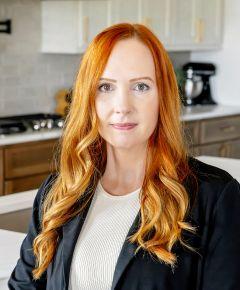
Samantha currently resides in Montgomery County, Texas, with her high school sweetheart and their daughter. She has worked in the real estate industry for the last 23 years. She has lived with Parkinson's for many years but doesn’t let it stop her from living life.
-
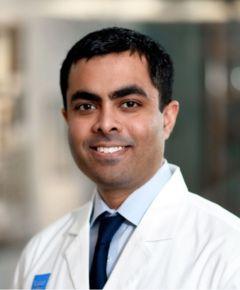
Dr. Arjun Tarakad serves as associate professor and director of the deep brain stimulation program at the Parkinson’s Disease Center and Movement Disorders Clinic at Baylor College of Medicine in Houston, Texas. He completed his neurology residency and movement disorder fellowship training at Baylor College of Medicine, his medical school training at UT Health, and his undergraduate training at Rice University. His clinical interests include Parkinson’s disease, essential tremor, and Tourette syndrome, with an emphasis on deep brain stimulation in the management of these conditions. His research interests focus on clinical therapeutics, with particular emphasis on disease modifying treatments.


We want to thank this episode’s podcast sponsor, Boston Scientific, for supporting our mission.

Want more?
Don't forget to subscribe! There are many ways to listen: Apple Podcasts, TuneIn (Amazon Echo), Spotify or RSS Feed. (Need help subscribing? See our quick guide.)
For all of our Substantial Matters podcast episodes, visit Parkinson.org/Podcast.
Related Materials
Related Blog Posts

Meet a Researcher Working to Make Adaptive DBS More Effective

