Episode 134: Meet the Researcher: Disparities in PD Care
-
Dan Keller 0:02 Welcome to this episode of Substantial Matters: Life and Science of Parkinson's. I'm your host, Dan Keller. At the Parkinson's Foundation. We want all people with Parkinson's and their families to get the care and support they need. Better care starts with better research and leads to better lives. In this podcast series, we highlight the fruits of that research, the treatments and techniques that can help you live a better life now, as well as research that can bring a better tomorrow. Shouldn't everyone have access to good medical care, regardless of their gender, race, community, or financial situation? These factors and more can be barriers to accessing health services, creating disparities in care and ultimately in quality and possibly length of life, but another impediment may be just knowing what one needs, what is available, and how to access it.
Dr. Lynda Nwabuobi, a movement disorder specialist at Weill Cornell Medicine in New York, recognized this problem in the communities surrounding Columbia University, where she received her training in movement disorders under a Parkinson's Foundation Movement Disorders Fellowship Award. She recognized that if people did not know about the healthcare services available, they would not be coming to her clinic, so she decided to reach out to underserved communities where they gathered to set the stage. I first asked her if the fellowship award furthered her research on health disparities.
Dr. Lynda Nwabuobi 1:51 Absolutely, I felt very lucky to get this award and to be able to attend Columbia University to do my movement disorders fellowship. I think one of the best things about being there and getting this award is that I was able to get trained at a Parkinson's Foundation Center of Excellence, and I was able to get excellent education. I was around some of the brightest minds in Parkinson's disease, like Dr. Stanley Fahn, and also being a Center of Excellence, it really taught me what it's like to be part of an interdisciplinary team, which is really important in Parkinson's disease care, and that's basically having a team of people, like, you know, like a social worker, a nurse practitioner, speech therapy, physical therapy, the ENT doctor, geriatrician, neurosurgeon, whatever you may have it, and having this group of people who just surround you and all work together to provide you excellent care. So I really learned what it's like to be a part of a team like that, and then also being at that center helped me realize a lot of collaborations with other Parkinson's disease community organizations, and really helped me further my career. I think that's one of the amazing things I was able to get from doing that fellowship.
Dan Keller 2:58 What made you interested in Parkinson's disease, to begin with?
Dr. Lynda Nwabuobi 3:03 One of the things that drew me to Parkinson's was, I think, the physicality of the disease. As a neurologist, we truly rely on our physical exam to diagnose a lot of neurological conditions, so being able to detect the cardinal features of Parkinson's at the bedside and feel fairly confident in the diagnosis, I really found that appealing. And I remember as a resident walking into a room in the hospital and quickly recognizing that a patient that I was about to see had some Parkinson's disease features. I found that so fascinating. That was the first thing that drew me to it.
And then, secondly, Parkinson's disease, it typically affects an elderly and geriatric population, which I think is a group of people that are often ignored in our society, and I do have a passion for taking care of individuals in this age group and providing them care, just for the simple fact that I feel that they are often ignored, and life shouldn't just stop because you're 65 and above, I really don't believe in that.
And finally, sometimes about Parkinson's, it's a disease that truly affects the whole body and the whole being, and it's a chronic disease that you live with for the rest of your life, and it necessitates getting additional support from friends, family, really anywhere that you can, and I find that I enjoy, you know, managing the patient, the family, and just like coming together with a group of people, all hands on deck, to provide the best care for the patient. So all these things about Parkinson's disease and the way it affects the patient, it truly drew me to it, and I made it the focus of my career.
Dan Keller 4:31 Age is just one disparity that people encounter in getting health care. So, what inspired your work in investigating health disparities, specifically in Parkinson's disease?
Dr. Lynda Nwabuobi 4:45 Many disparities have been found in Parkinson's disease care. There are several papers that have been published on it, and for example, one of the biggest ones that we know is that individuals who identify as African American or Hispanic, they're 30 to 40% less likely to get neurologist care, and they're more likely to be seen in their communities by non-neurologists, you know, primary care physicians, or other providers. We've also seen other findings that, you know, people who are African American, they're less likely to be initiated on Parkinson's disease medications at diagnosis. We also know that women are less likely to be taken care of by a neurologist or Parkinson's disease doctor, so these are some disparities, just a few among the many that have been found.
And in my work, one of the first pieces of research that I did that focused on Parkinson's, I looked at individuals who were homebound with Parkinson's disease, and I looked to see what are some of the social factors and any disparities between the men and women in this group, and the main finding from that was that women are more likely to be alone. The women with Parkinson's who were homebound, they're more likely to be alone, and this has been reported in other studies. And I think that lets us know that this is a group of people that we need to pay more attention to, because we know that Parkinson's requires a lot of support beyond the individual with the disease. So that's one of the first things I looked at.
And something else I've looked at is comparing the care between two groups of Parkinson's disease individuals that were cared for, one group at a public institution, a public hospital, and then another group at a Parkinson's Center of Excellence, and both groups were cared for by the same physician, and the goal was to see, is there any difference in the care that both groups received. And one of the findings was that the group being taken care of at the public hospital, they had less access to physical therapy and exercise, and they faced more barriers to getting deep brain stimulation, and they also had less access to one of the major Parkinson's disease medications that we use, and these are all differences, despite having the same treating doctor, and this tells us what institution you're located at can affect the type of care that you get. So, these are some disparities that I also found in my study, and I think the goal is for us to be more aware of these disparities and find solutions to tackle them.
Dan Keller 6:56 Another thing that affects the kind of care you get is what comes out of research, those findings. Is there a disparity in who participates in clinical trials, that they are represented, and you know what happens, how they react, and how they should be treated?
Dr. Lynda Nwabuobi 7:13 Absolutely. You know, when you look at the majority of Parkinson's disease studies, and you look at clinical trials, the majority of patients who participate in these trials are people who identify as white ethnically, and then it's also a majority of men. I don't remember the number exactly, but it's a very high percentage—over 90% of these studies have white patients as the majority of people who are participating in these studies, and so it affects the results that we get from these studies, because we're not able to generalize them to the whole population. And so the results that we're getting from testing new drugs and treatments on a majority of individuals that are white, we're also applying the same treatments to individuals who identify as ethnically Black or Hispanic or Asian, and so we need to have more diversity in clinical trials, making sure that the clinical trials reflect the individuals that are treated, but this is a definite fact that has been seen in many studies.
Dan Keller 8:11 So, what are some of the potential solutions on how you can start providing more equitable care for Parkinson's disease patients, especially for some of the communities you identified who are getting suboptimal recognition?
Dr. Lynda Nwabuobi 8:25 I think one of the first steps is just being aware, so having conversations like this, like we are having right now, people being aware that these disparities do exist, because if you don't hear about it, you assume that everyone is getting equal care, right? So being aware that they exist and knowing what the disparities are, and then to providers and clinicians and organizations who are involved in Parkinson's disease, I think finding gaps in the care or services that you're providing to make sure that you are reaching every single person appropriately and that you're providing optimal care to them.
So, for example, if you find that you're not prescribing a certain medication to a certain group of people, finding ways to address that. For example, at the institution where I did my research, one of the Parkinson's medications was not on the pharmacy formulary, and that was just one barrier. And so this would involve having conversations with the pharmacy to see how we can include that medication into the hospital formulary.
And then something else that we see often is academic institutions oftentimes have separate clinics for their private patients versus their Medicaid patients. I think that's a bigger issue in our healthcare system, and in this country, but I think that when you have a system like that, that can easily lead to disparities in care when you have two separate clinics treating people based on, you know, their insurance status, right? And I think ensuring that you look at both groups, both clinics, and make sure that you're providing equitable care for both groups.
And then also, Parkinson's disease organizations—there are a lot of big, powerful ones in our country. I think that one thing they need to do is to ensure that their outreach efforts are culturally sensitive, meaning that they are considering the cultures, beliefs, the history, and language of marginalized groups when they create their programs, and making sure that there's translation to other languages, so that everyone can truly access it. And then making sure that their programs are not just online, because not everyone has access to a computer or to the internet, but making sure that they actually physically go into communities to reach people who are not able to access things online. And I think one easy way to do that is, you know, partnering with community organizations that are already doing the groundwork, located in these communities and are trusted, partnering with those organizations to find a way to reach these communities that we're not being able to reach, so far.
I think, you know, for our individuals with Parkinson's who may be listening to this, you know, you may be wondering, how can you help? I think that Parkinson's disease, it's a disease where we have a lot of advocates in our patients and their family members, you know, people go and do the walks and the runs for Parkinson's disease every year, so we have a lot of advocates, and I think being more aware about these disparities now, you can serve as an advocate for them. For example, your institution that you get your Parkinson's disease care at, you know, asking them, "What are you guys doing about these health disparities that you know I just learned about? Are you guys making sure that you're reaching out to, you know, different patient populations and marginalized communities?" I think patients can advocate by reaching out to Parkinson's disease organizations, and you know, asking them these same questions. How are you tackling this issue, and just holding institutions and organizations more accountable?
Dan Keller 11:36 One way you did outreach, I saw, was you went to a local farmer's market, yeah.
Dr. Lynda Nwabuobi 11:42 Yeah.
Dan Keller 11:42 And what was the reaction, and what was the outcome? Did people actually become more aware and take advantage of certain things that the health system could offer? Yeah.
Dr. Lynda Nwabuobi 11:51 Yeah, that's a really good question. So I started this farmer's market effort, I call it Neurology at the Market. I started this while I was a Parkinson's Foundation fellow at Columbia, and one of the things I noticed at our institution, when we see the majority of our patients, is that the majority identified as white. However, we were located in a neighborhood that's very diverse, predominantly Hispanic, and so there was a mismatch, and I felt that we needed to go more into the community that we're surrounded by and teach them about Parkinson's, learn what they know and make sure that they know that we are here at this institution. This is what we treat.
And so the farmer's market, I walked by it, you know, every week, and I thought that would be a great idea to set up a table there, and it would be a good way to reach the community, because when you look at the market, it's the perfect demographic for Parkinson's, you know, people from the community come in and shop, and it was just a very comfortable environment. So I partnered with the institution, some organizations, and GrowNYC markets, and set up a table there, doing it once a month over the summer. I believe it was 2019 I started this, and I had our social worker with us who spoke in Spanish, and we basically just provided a lot of information about Parkinson's to people who came to shop at the market.
People really appreciated basically kind of getting an insight into Parkinson's, and just having a doctor who's standing there and just chatting with you about different things. And we also collected a survey, and you know, we found that people knew mainly about tremor, but did not know about the other symptoms of Parkinson's. We met some people who were affected by Parkinson's in different ways in their lives, and you know, they learned more about our clinic. I wasn't able to measure whether the market itself was able to bring in more patients to our clinic, but it showed that, you know, doing the market is a feasible way to be out there and do community outreach and have people learn more about Parkinson's.
Repeated the market just last year, and this time I have, you know, medical students, residents involved, and we're teaching not just about Parkinson's, but about other neurological ailments, because I got the sense based on surveys that people wanted to also learn about other things: headaches, migraines, stroke, dementia. And so we've incorporated education also into the plan, but Parkinson's remains the main focus, and it's been quite successful being able to reach different people from different walks of life.
Dan Keller 14:06 I noticed in a picture of you at the farmers market you were wearing a white coat, which is often taken as a sign of authority and credibility, but does that also create some distance from the crowd you're trying to reach or relate to? What's your recommendation?
Dr. Lynda Nwabuobi 14:22 That's an excellent question. And so the first day I did the market, I wore my white coat. The first time I went into the market, I noticed that people did not notice me. They saw the table, they saw materials, and would just come look at it, but they did not see me as a person who had the knowledge that they could benefit from, even though I was wearing my ID. And so I think that once they saw the white coat, they go, "Oh, you're a doctor," and once they recognized that, I noticed a shift that people felt more comfortable asking me questions and feeling like they could learn something from me.
However, when I repeated the market last year, I wore a jacket from my institution, not a white coat, because I had other people with me, like our residents and our medical students, and I didn't want everyone wearing a white coat, because that would be too much, and I just told everyone, wear your ID, wear, you know, something that has our institution logo on it, and present ourselves that way. But I think it can go both ways. It depends on the community. I think in that community, where I was for the first market, they took me more seriously because I was wearing a white coat, and I did see the difference.
Dan Keller 15:22 Have you thought of other places or venues to do outreach similar to what you were doing at the farmers market, but if people don't have them around their area, what kind of places should they look for?
Dr. Lynda Nwabuobi 15:34 I think partnering with community centers, senior centers, they are able to draw the perfect demographics that are often affected by Parkinson's. The senior centers, different seniors in the community come and, you know, have their lunch, they play games, and so, you know, you can sneak in a lecture in there, a quick 30-minute lecture and a talk, and teach people about Parkinson's. So that's one really good place to reach out to individuals, and religious organizations, such as churches. I've worked with churches in the past to do some education, so religious organizations are another one. And then, you know, just other community organizations that do government work, are in the community, and provide different resources to the community and are trusted. Those other community centers also, you can give talks to them.
And then I'm doing a lot of my talks these days via Zoom with the pandemic, and this way I found that I've been able to reach even more individuals, you know, by working with these different organizations and setting up different Zoom talks. One of the talks that we do here at my institution at Cornell, it's a video conferencing talk, and it's basically broadcast to different senior centers all over New York City, so to the other boroughs, so Brooklyn, Queens, the Bronx, and so I'm giving this talk, but it's reaching to different senior centers and different organizations and different people in their homes at the same time, so I found that doing talks over Zoom actually I've been able to reach more people.
Dan Keller 17:00 Well, this has been great. It puts a whole new perspective on reaching communities and informing them and finding out what they know, what they're thinking, and maybe even misconceptions. So, thanks a lot.
To see more about Linda's training and her research on healthcare disparities, search our website at parkinson.org on disparities and see the article called Tackling Disparities in PD Care: A Movement Disorder Specialist's Story. Also, within that article is a link to information about the Parkinson's Foundation Movement Disorders Fellowship, and how it has supported specialized training for more than 40 years. As the number of people with PD is expected to increase as the population ages, the need for this sort of training and care is greater than ever.
In terms of healthcare disparities and underserved communities, you may be interested in some past podcasts. One with Aaron Daly is called Extending the Reach of Parkinson's Resources and Services. In another called PD Across Race and Ethnicity: Outreach to the African American Community, Dr. Reversa Joseph describes her efforts to raise awareness of PD in this community. For an international perspective, see Parkinson's Education Through Community Outreach, in which Dr. Louis Tan describes an outreach program in Singapore and the alliances they have made with other organizations. To hear about gender disparities in PD research and care, go to the podcast called Encountering Gender Differences: Women and PD Initiative. Along these same lines is a podcast titled Addressing the Unmet Needs of Women with PD, and remember that we have several bonus episodes in Spanish.
As always, our helpline information specialists are available to answer questions in English or Spanish about today's topic, or anything else having to do with Parkinson's. News and updates about future events and resources are available by joining our email list at the bottom of our website's homepage. If you want to leave feedback on this podcast or any other subject, you can do it at parkinson.org/feedback. If you enjoyed this podcast, be sure to subscribe and rate and review the series on Apple Podcasts, or wherever you get your podcasts.
At the Parkinson's Foundation, our mission is to help every person diagnosed with Parkinson's live the best possible life today. To that end, we'll be bringing you a new episode in this podcast series every other week till next time. For more information and resources, visit parkinson.org or call our toll-free helpline at 1-800-4PD-INFO. That's 1-800-473-4636. Thank you for listening.
As with many medical conditions, people with Parkinson’s disease (PD) may experience disparities in access to care, in diagnosis, treatments, and ancillary care. These disparities may be based on age, gender, race, financial situation, language barriers, and geographic location, among other factors. Dr. Lynda Nwabuobi, now a movement disorders specialist at New York-Presbyterian/Weill Cornell Parkinson’s Disease and Movement Disorders Institute in New York City, received her specialized training at Columbia University, supported by a Parkinson’s Foundation Movement Disorders Fellowship.
During her training, she noticed that women with PD who were home bound were more likely than men to be alone and to have less access to a neurologist. She also recognized disparities in the care between the majority white population of people with PD seen at the main hospital clinic of New York University (NYU) compared to the more racially diverse, multicultural community of people seen at NYU’s public Bellevue Hospital nearby – even though they were being treated by the same doctor. In this podcast episode, she describes how she acted on her passion of “creating access to better care to marginalized communities and bring more diversity to the clinic.” Rather than waiting for the community to come to the health care setting, she reached out to them on their turf — at a farmers’ market.
Released: August 9, 2022
-
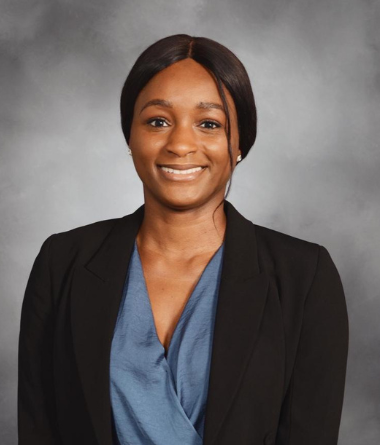
Dr. Lynda Nwabuobi is an Assistant Professor of Clinical Neurology at New York Presbyterian/Weill Cornell Medical College, specializing in Parkinson’s Disease and Movement Disorders. She diagnoses and treats individuals with Parkinson’s disease, tremors, and other neurological diseases with the goal of delivering compassionate and individualized care using a holistic and multidisciplinary approach. In addition to her clinical work, Dr. Nwabuobi has interests in health disparities research, teaching, advocacy, and community engagement/outreach. She has published several articles in peer-reviewed journals and has presented her work at national and international conferences. She is actively involved in educating underserved communities about Parkinson’s disease with the goal of improving access to care.

Want more?
Don't forget to subscribe! There are many ways to listen: Apple Podcasts, TuneIn (Amazon Echo), Spotify or RSS Feed. (Need help subscribing? See our quick guide.)
For all of our Substantial Matters podcast episodes, visit Parkinson.org/Podcast.
Related Materials
Related Blog Posts
