Episode 127: Aging in Place
-
Dan Keller 0:02 Welcome to this episode of Substantial Matters: Life and Science of Parkinson's. I'm your host, Dan Keller, at the Parkinson's Foundation. We want all people with Parkinson's and their families to get the care and support they need. Better care starts with better research and leads to better lives. In this podcast series, we highlight the fruits of that research—the treatments and techniques that can help you live a better life now, as well as research that can bring a better tomorrow.
Most people want to stay in their own homes as they age, whether the home is the one they've lived in for years or a new one in a new location. The general term is aging in place, that place being one's own home, but it's not as simple as just staying put. People must consider present needs, anticipated future needs, medical and social services, transportation, access to shopping, entertainment, recreation, and more. Fortunately, there are many resources to help plan for aging in place.
I spoke with two experts on the subject. The first was Rodney Harrell, AARP Vice President for Family, Home, and Community. He told me what aging in place should mean and shared some of the considerations for successful aging in place. Then I turned to Scott Rider, who we might call a practical expert, as he has taken many of those considerations to heart, adapting his home to make life easier with his Parkinson's disease now, and anticipating his future needs. First, Rodney Harrell, what is meant by aging in place?
Rodney Harrell 2:05 For me, aging in place is one of those concepts that sometimes is misunderstood. So, to me, aging in place means being able to stay in your home or community where you choose, as opposed to being forced to move to a different setting because of conditions that don't meet your needs. I typically like to use terms like "aging in community" as a little broader, because it gives you options outside of your home, or just generally the ability to stay in your home. I think it's just a way of framing what most people want.
Dan Keller 2:38 Is there a variety? Are there places to age in place? Does it have to be in the home?
Rodney Harrell 2:45 There should be, and unfortunately, there are very few options in many communities in America. Our Livability Index shows that over four-fifths of the neighborhoods in the country, there are only single-family homes, and oftentimes those homes don't have what people need. There's a study by Harvard a few years ago that showed that less than 1% of homes have a set of features that people need to stay in their home successfully while they're aging—things like zero-step entrances, wider doorways, light switches that are usable, lever doorknobs and handles. So we have a challenge where there's not enough of the housing stock that really fits the needs that people have, and that becomes a mismatch for folks that want to stay in their homes, as most do.
Dan Keller 3:32 This sounds like the CDC definition of aging in place really doesn't apply to most people. They say it means the ability to live in one's own home and community safely, independently, and comfortably, regardless of age, income, or ability level. So, that sounds like a lofty goal. Do you foresee this coming?
Rodney Harrell 3:54 Well, I think what happens is many of us end up compromised in trying to reach that goal. I often like to talk about the fact that we have a wide range of housing preferences and needs as a country, and our individual needs and preferences shift over time as our conditions shift. So that staircase that didn't use to be such a challenge, that becomes a problem as you're getting older, or the fact that your needs might change. The fact that you don't have transportation options in your neighborhood could be an issue if you're no longer driving. So that neighborhood may be close to a highway to get out and do everything you need to do, but if you're not driving, are there transportation options? So that "comfortably" part of the definition you just quoted is a tough one, and so I think the challenge is trying to figure out how to think ahead, get the home that works best for you to best enable you to stay in there, if that's what you want to do.
Dan Keller 4:50 You named a few things, like transportation and adapting the home, and things like that. Are there other elements people should consider when they try to age in place?
Rodney Harrell 5:01 There are, and that's why I mentioned our Livability Index. That's why it has 40 metrics, and also it looks at some public policies that could be in place to help improve communities. The idea that there's a wide range of things, and frankly, there's trade-offs that we all have to make. I don't think I've talked about affordability yet—that was a key part of that definition, and obviously, if you can't afford a place, that's a challenge—but also having things nearby, things like parks and grocery stores, libraries, things that we either need for purchasing goods and services, or things that we need to kind of keep our spirits up and stay connected. Those are things that people like to have nearby, outside of their home.
So I think the issue is the community and the home go together, and so the idea is that we should have the homes and communities that meet those needs. And honestly, the biggest piece to me is having options in place. You've heard me mention this with transportation—that if you can't drive, you should have perhaps a bus or a train that you could take or be able to walk to where you need, and I think that's the best example of how having a wide range of options enables us to have a better chance of getting our needs met. So, a neighborhood that has options, or a home that has options for different things that you might need—a smart home device that allows you, perhaps, if that light switch is hard to reach, maybe you could talk to your smart home device and have that turn your lights on, for example. Options are really what help us to make sure that we have the best chance to get done what we need to.
Dan Keller 6:30 The term community keeps coming up. You've been mentioning it. It seems that as people age, sometimes social isolation is a problem. So, where can people go to gather? I mean, if you're in a cold climate, parks are good for part of the year. Are there active programs that encourage people to come?
Rodney Harrell 6:50 Yeah, one of those things that I think we all learned from COVID is that social isolation is clear, it's real, and we got a little taste of it, especially during those early days where many of us didn't go out. And I think one of the silver linings of COVID is that many of us got much more comfortable with some of the technological solutions, some of the video calls and online and the rest, and so that is, I think, one piece of the puzzle to stay connected—is having the ability to use those kinds of services, and also, by the way, you need to have the reliable and affordable internet access to even get started. That's certainly crucial, but you're right that we also need the physical elements in neighborhoods, and the digital can't completely replace that.
And so, gathering spaces, I think that's why when we survey folks, libraries tend to come up high as well for that community purpose, but also people can connect in many different places—coffee shops, restaurants, religious institutions. So I just think that there's a range of places, again, options that we should have in communities and places that we can interact, but also that digital online interaction, I think that's one that also helps to supplement when we can't or don't have those things around.
Dan Keller 8:05 There are great resources online, obviously. The AARP, the National Institute on Aging, has a lot of things on aging in place. But what about local agencies? Can people turn to agencies in their community, and how would they find them, that would give them advice and information?
Rodney Harrell 8:25 So every community has an Area Agency on Aging, and I think that you can look them up for your local area, but these are agencies designated by the state to address the needs of older adults, and so I think that's a great place to start. They can coordinate services like Meals on Wheels and assistance and other things. So I certainly would recommend that people look there.
Dan Keller 8:49 One thing that no one can predict is the unknown. How do you prepare for the unknown, placing yourself in a place that would accommodate you regardless of what comes along?
Rodney Harrell 9:03 Now that's the single biggest challenge, right? Predicting the future, I think. Again, this is where not only having those options comes into play, which you've heard me say before, but also thinking for the long term and thinking about how things might shift for us. I've heard one disability advocate call it the "Peter Pan syndrome"—I'm sure others do too—the idea that many of us think that we'll never get old, we'll just be the way that we are, and that's just typically not the case.
So, thinking ahead is one of those key things that when you see those people who are natural planners in their life that have thought about, "What might happen if my income dropped? What might happen if my knees were not as good as they are now? What might happen in these circumstances?" and prepared for that. And one thing I've noticed, actually, to that point, is that people who are family caregivers, those who are taking care of a relative, I think they often have a better understanding of the kinds of things that would happen to them.
I'll use my own parents as an example. My father was trying to make some changes to his house so his mother or mother-in-law might need to stay there at some point. So, when we were doing a remodel, we thought about widening doorways and making sure that we had the right kinds of light switches and the like, and zero-step entrances into the home. That was a big one. But then they didn't end up moving in years later. My father had a stroke. He didn't predict the future—none of us did—and would not know that that was going to happen. But because we had made those modifications to the house so that his mother or mother-in-law could live there, he was able to be there until he passed.
And so the thinking ahead is the key thing that we should do, and I think we should look for insights from our own life, from those around us, from our family members, others, about how those needs might change over time. And if you can't, by the way—and that's what I would love everybody to do—and if you can't do that on your own, I think you should look at some of the tools that are available to help you do that. That's why we developed our Livability Index that I mentioned earlier, in part to really just help people understand all of the options that are there in communities. It's why earlier this week we announced that AARP is working with Lowe's on helping to educate people about the kinds of changes that you can do in your home. The idea is that people should have the opportunity to learn and understand what's in their homes and what's in their community and what kinds of things they might need, so I think that's all of our job. It's great to have some help doing that.
Dan Keller 11:26 You may have just answered my final question I was going to ask you, but is there anything in a nutshell you can recommend to our listeners about aging in place and future planning?
Rodney Harrell 11:39 Remembering that our needs change over time, looking for the options we have, learning from those around us. Those are key pieces, and honestly, knowing that we're going to have to make compromises is the piece I'd add to that. Knowing that there are no perfect options out there, there's not going to be the perfect home and the perfect community at the perfect price you can afford that meets all of your needs or checks off all of your boxes.
So, what I would encourage people to do is to think about the trade-offs that they have to make. Is moving miles and miles outside of town to get a house you can afford, is that better for you, knowing that that house might be more isolated, and that social connection we're talking about might be missing, as an example. So, really, all of those pieces, but thinking about those trade-offs, I think that's very important when we're thinking about where to live.
Dan Keller 12:26 This is very good, very practical advice. I appreciate it. Thank you.
Rodney Harrell 12:31 Glad to have the conversation.
Dan Keller 12:34 We now turn to Scott Rider, who has carefully made and implemented a plan for staying in his home as he ages, especially adapting it using elements available to all of us off the shelf today. Hi Scott, we've just talked with Rodney Harrell about aging in place in general, which involves many issues, one of them being in a home that's safe and outfitted for a person's specific needs. Rodney is an expert on aging in place, but as a person with Parkinson's, you're implementing aging in place on the ground. You've managed to figure out ways to adapt your home to your needs, and I assume going into the future. Let's talk about that. How did your house start out? I mean, is it a standard one-story, two-story house that was just not really amenable at first for your needs?
Scott Rider 13:30 Well, interesting, Dan, our house is a two-story home, but it was important to us to have our bedroom on the second floor, just because of the view that is made possible. We live near the water in South Carolina, and we wanted to be able to see a nice view from our bedroom, but when you put a bedroom on the second floor, that creates a number of issues, which then, I would say, makes you think about a whole lot of other issues besides just how you're going to get to the second floor as the disease progresses.
Dan Keller 13:57 So mainly it was a mobility sort of thing that first got you thinking about this.
Scott Rider 14:02 Yeah, it was an interesting... I don't want to say an argument, but my wife and I disagreed. I said, "We don't need an elevator, I will always be able to make it up the stairs," and she said, "Scott, I want you to be able to live a healthy, long life and be able to get upstairs as long as you can. We're putting the elevator in." So I said okay, and we're glad we did.
Dan Keller 14:23 What kind of other problems did you see, and how did you overcome them? What sort of adaptations have you made?
Scott Rider 14:31 Well, I'm going to tell you, unfortunately, I didn't think this through as much as I should have in the building process. Our home was only three years old, and it's kind of one of those things that the light bulb went off too late. So, I guess that'd be a message for anybody: when you're building, think outside the box and think about these issues that we're going to talk about today. And I'm going to be very candid and say I didn't give enough thought to that, but they're things that I can see we're going to be implementing over time—things like grab bars being in strategic locations.
If I had it to do over again in the building process, Dan, I would have put blocking behind the drywall between the studs at places I might want grab bars in the future, but I don't have them now. For example, we did put a pot filler in, and that's going to sound strange, but you know, cooking can be very dangerous, especially if you have a tremor, and handling hot water, so a pot filler allows me to fill a pot on our cooktop or our stove without having to transport water from the sink to the stove if they're not right next to each other, for example.
Dan Keller 15:32 What about little things? I guess you could retrofit in terms of locks and lighting and things like that.
Scott Rider 15:40 Lighting is really important, I think, especially at entrances, and I think lighting that is motion-censored, so you don't have to fiddle around with trying to find a switch and get the switch on. And I think there's another aspect of lighting that I really feel strongly about—we have done a good job of this at our home, the way we designed it—but Parkinson's, oftentimes people tend to sort of self-isolate, and it leads to depression many times. It's kind of all tied in together, and it's pretty well documented that light makes people feel better.
So, I think having bright lights located where you're working, I'm going to spend a lot of my time daily, whether it's reading or cooking or spending time with my family. So from a safety standpoint, I'd say lighting at entrances triggered by my motion, and inside I'd say having really bright lights that make me feel good, like the sun is shining, even if the sun is not shining.
Dan Keller 16:34 You bring up the point that when you walk in, the motion sensors turn on the lights, but do you have trouble getting in? What do you do about fumbling for keys?
Scott Rider 16:43 Yeah, well, that's interesting. We're already in the process of changing that. I can't fumble for keys, or I probably would never get in my house. So the first thing we did, our exterior doors, I called them the man doors that go into the house, I put a device on there where I could press a combination and release the deadbolt, but then I thought, oh my gosh, my memory is not always the greatest, and I've sat there before, thought, "What is the combination for this lock?"
So now I've discovered devices that are simple as I can put my thumb on the device—almost a thumbprint, or it detects my thumbprint, or anybody else's that I've set it up with—and release the lock. But then the other issue with the doors is what I call the threshold. If I could use a shower as an example, it's nice to have a threshold that doesn't have a sort of a bump in it, so it's easy to get over, same as a shower. They call them zero-entry showers, so it takes some planning and thinking, that's for certain.
Dan Keller 17:39 Is there coordination in every change you've made, or were they sort of essentially standalone and one-off? And I guess the bigger question is, if people are going to adapt their homes, do you think they should have a grand plan, or at least a fairly good outline of what they want to do?
Scott Rider 17:56 That's an interesting question, and I guess I'd go back to what a movement disorder specialist told me once, and she said something to the effect that if she's seen one Parkinson's patient, she's seen one Parkinson's patient. So, my point is, I don't think it's a one-size-fits-all, because everybody with Parkinson's has such different challenges.
So, while I like to think there could be a grand plan, I think there could be a grand plan of things to consider, but I wouldn't retrofit, or even if I'm doing a brand new build all over again, I wouldn't do everything to make it sort of adaptive, or "universal" is the other term that you hear. I would try to consider the challenges that I have specifically and adapt the home so that it meets my unique challenges, because mine can be very different than someone else's.
Dan Keller 18:41 Did you turn to any particular resources for ideas? How to implement the modifications, or what modifications you want to make?
Scott Rider 18:50 I guess you'd call this a resource, but the first thing I did was sat down with my wife, who's my care partner, and your care partner has a way of seeing things very different than maybe the person with Parkinson's sees things—probably more realistic in many cases, because I think when you have Parkinson's, you learn to overcome and adjust and adapt yourself without any aid. It just becomes a habit, and I think sometimes you lose track of how much more difficult that makes life, even more challenging.
So resources, I think, start with those that are closest to us, and then AARP has incredible tools on their website, and really it's one of those things: if you literally just Google "adaptive home," you're going to find many universities that have done studies. There are companies that specialize in building adaptive homes. There's no shortage of resources if you just search.
Dan Keller 19:42 You were an elite athlete. It sounds like you're still very motivated in maybe a different direction right now, thinking these things through. Are you a do-it-yourselfer—can you do some of these adaptations yourself, or do you have to call in people to implement them?
Scott Rider 19:59 I would like to. I wish I could do it myself, and I get emotional just thinking about that, because I wish I could do it myself, but I think I can conceive the idea in my mind, but at the end of the day, I do need a professional to help me to make sure it's done right.
Dan Keller 20:13 Is this an ongoing endeavor? Do you still sit around and look around you and say what could be better?
Scott Rider 20:20 Absolutely, I think it is probably a never-ending endeavor, not just me, but I think increasingly there are so many Americans—not just Americans, but people around the world—that have limitations, physical limitations of some type. And the thing that's interesting about Parkinson's is we all know it's progressive, so what's true today or real today is going to be very different tomorrow. So you do think of things today that maybe didn't apply three years ago or four years ago or five years ago. I do think of things today that I wouldn't have thought of in the past, because my condition is different today than it was five years ago.
Dan Keller 21:00 Are there any adaptive technologies that you would like to see come along that don't yet exist?
Scott Rider 21:07 That's an excellent question. I'd kind of turn that back around and say it's amazing what's available and out there that I didn't know about—just everything from shelving, sound devices, devices that respond to your voice, which isn't always good with Parkinson's either, because, as we know, Parkinson's can often diminish the voice. I really like these faucets that are motion-censored, so I don't have to fiddle with a faucet, a soap dispenser. I keep a soap dispenser by my bathroom sink—I just put my hand underneath it, it's motion-detected, and the soap goes right on my hand, so I don't have to try to press anything or pick a bar of soap up and drop it on the floor. I can say I think there's probably about everything out there today that somebody would need. It's a matter of finding it and implementing it, if that makes sense.
Dan Keller 21:54 I suppose another difference now compared to, say, 10 or 20 years ago, not only are the devices available, but people are thinking in these directions.
Scott Rider 22:04 I think that the awareness is probably greater than it's ever been, and I think there's a number of reasons for that. I think people want to stay in their homes as long as they can. We know the stories, you know, I've dealt with elderly parents that wanted to stay in their homes longer than they should, and had we done things earlier to help them accommodate their unique needs, I think they could have stayed in their home longer.
Dan Keller 22:26 There's recognition and there's planning for this, whereas some years ago it wasn't even a thought.
Scott Rider 22:33 In the past, I don't think that the idea that you made changes to your home to adapt to your changing health needs was even in the conversation, but today I think the awareness is greater than it's ever been. If you spend time on the Parkinson's Foundation website, there are some great, great areas in there, even dealing with dressing and different tools and mechanisms that can make life better for a person battling this crazy disease.
Dan Keller 22:57 Is there anything we've missed that's important or interesting to add?
Scott Rider 23:02 I would offer encouragement to anybody that's listening to this to think about it, because what happens—and I mentioned, made reference to this earlier—I think people with Parkinson's are pretty darn resilient, most of them. They become adaptive themselves, meaning they adapt to the surroundings and maybe try to make accommodations to doing different things physically.
And I think life can be made a little easier in some areas by just thinking about the things that we find challenging. Do you have a little bump that you have to go over to get in your shower? Because it's real easy to make a shower what's called a zero-entry shower. There are places you could put handrails, outlets, electrical outlets. Are there places that would be helpful to have an electrical outlet moved higher? Poles or doorknobs that are easy to replace, and some are much easier to grip than others. Rugs on the floor, passageways that aren't obstructed. So, I would almost say kind of do an audit—go through the house with your care partner, or wherever you live, and talk about the things that create challenges that maybe you never even thought of, or maybe your care partner has recognized and not mentioned them to you.
Dan Keller 24:07 It really sounds like what you're saying is don't ignore those smaller or bigger challenges, because there probably is a solution out there if you just look for it.
Scott Rider 24:18 There are solutions, I think, for just about any issue that somebody with Parkinson's would have that causes a limitation or restriction. I think it's a matter of recognizing that, and then finding the time or somebody to help you find the time and energy to see what the solution is to that challenge. But it's amazing what's available, and it's not always expensive. Another thing that comes to mind, the little things like the seat on one's commode, having that elevated—it's really easy to take care of that, and gosh, that sounds like a simple thing, and it is, but it makes life so much better in so many ways.
Dan Keller 24:50 Good note to end on. I appreciate it. Thank you. Bye.
Obviously, Scott is highly organized and a planner. He told me he even has a designated place in his home for his Aware in Care kit from the Parkinson's Foundation. It's in a closet by the door, where, as an Aware in Care ambassador, he also stores literature to give to others with PD.
As Scott mentioned, the internet is a rich source of information on aging in place. A very reliable place to start is the National Institute on Aging, part of the National Institutes of Health at nia.nih.gov. It has online articles and information, free publications, and an information center reachable by email or phone in English or Spanish. How to adapt a home for best comfort and safety is one consideration, but another is how to choose a location for that home.
The AARP Public Policy Institute's Livability Index scores neighborhoods and communities across the US for the services and amenities that they offer. Search aarp.org for Livability Index, or go directly to it at livabilityindex.aarp.org. For extensive information on aging in place, go to the AARP Public Policy Institute website and search on aging in place. You can also find the AARP 36-page HomeFit Guide there in English, Spanish, and other languages, containing information and worksheets. You can also see room-by-room video tours on ways to adapt your home.
As always, our helpline information specialists are available to answer questions in English or Spanish about today's topic or anything else having to do with Parkinson's. News and updates about future events and resources are available by joining our email list at the bottom of our website's homepage. If you want to leave feedback on this podcast or any other subject, you can do it at parkinson.org/feedback. If you enjoyed this podcast, be sure to subscribe and rate and review the series on Apple Podcasts or wherever you get your podcasts.
April is Parkinson's Awareness Month, and we're focused on the future of Parkinson's disease. This year, we want everyone to take actions to impact the future of PD, whether that means learning how to navigate your own future with Parkinson's or helping us create a world without PD. Together, we can make a difference. Visit parkinson.org/awareness to find out more.
At the Parkinson's Foundation, our mission is to help every person diagnosed with Parkinson's live the best possible life today. To that end, we'll be bringing you a new episode in this podcast series every other week. Till next time, for more information and resources, visit parkinson.org or call our toll-free helpline at 1-800-4PD-INFO, that's 1-800-473-4636. Thank you for listening.
As many people get older, they start to think about where they want to reside for the rest of their years. For many of them, that place is the home they are already in. But it is not as simple as just staying put. One must consider mobility issues, staying safe physically, nearby services, social support, transportation issues, along with present and future medical needs.
These are issues common to most people as they age, and Parkinson’s disease adds another level of considerations. Fortunately, many resources are available to help in planning for the future. In general, the topic goes under the term “Aging in Place,” which the U.S. Centers for Disease Control and Prevention defines as “the ability to live in one's own home and community safely, independently, and comfortably, regardless of age, income, or ability level.
In this episode, Rodney Harrell, Vice President for Family, Home, and Community at the AARP Public Policy Institute describes what Aging in Place should mean, misconceptions about it, barriers to it, what to consider, and how best to prepare for Aging in Place. Then Scott Rider, a Parkinson’s Foundation Ambassador, National Development Committee Member and Carolinas Chapter Advisory Board Member, discusses how he has put an Aging in Place plan into practice by adapting his home for his current needs and anticipated future needs considering, specifically, his Parkinson’s disease.
Released: April 19, 2022
-
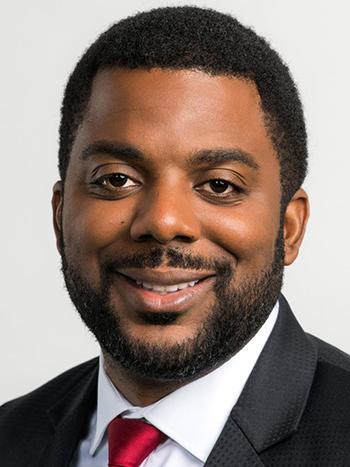
Rodney Harrell is Vice President of Family, Home and Community at AARP, leading AARP Public Policy Institute’s team of issue experts related to LTSS, Family Caregiving and Livable Communities. His research on housing preferences, neighborhood choice and community livability are integral to the world-renowned AARP Livability Index that measures every US neighborhood. He is also a speaker, researcher and blogger on livable communities' issues and leads AARP’s Future of Housing work.
-
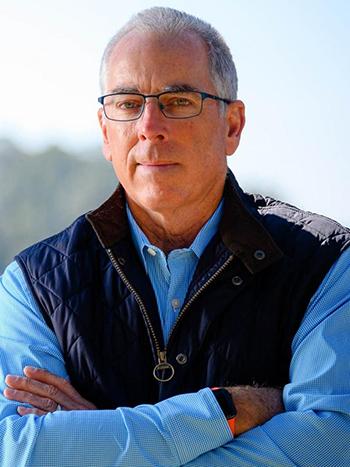
Scott Rider was diagnosed with Parkinson’s disease at age 47. A native of Columbus, Ohio, Scott is now retired at age 62 and lives with his wife Kelly in Beaufort, South Carolina. Scott Rider is a Parkinson’s Foundation Aware in Care Ambassador, National Development Committee Member and Carolinas Chapter Advisory Board Member.


Want more?
Don't forget to subscribe! There are many ways to listen: Apple Podcasts, TuneIn (Amazon Echo), Spotify or RSS Feed. (Need help subscribing? See our quick guide.)
For all of our Substantial Matters podcast episodes, visit Parkinson.org/Podcast.