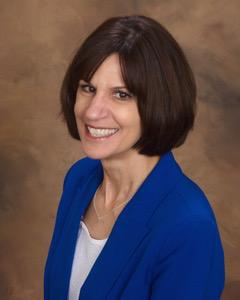
Dan Keller 0:09
Welcome to this episode of Substantial Matters: Life and Science of Parkinson's. I'm your host, Dan Keller, at the Parkinson's Foundation. We want all people with Parkinson's and their families to get the care and support they need. Better care starts with better research and leads to better lives. In this podcast series, we highlight the fruits of that research—the treatments and techniques that can help you live a better life now, as well as research that can bring a better tomorrow.
The 2021 Parkinson's Foundation Care Partner Summit is coming up in May, and will be all online later. We'll tell you how you can participate in the various days of the summit in English or Spanish. So, in anticipation of these events, we thought we'd bring you one couple's journey from Parkinson's diagnosis up to today. In the words of the care partner, Marlene Perdan has been very active in the Parkinson's community and is on the committee for the Care Partner Summit. Her husband, Bill, received his diagnosis when he was in his early 50s, and in this episode, Marlene describes the emotions and challenges, but also the good times they've experienced along the way. In one sense, their story is not unusual, but as she makes clear, no two cases of the disease or its path are the same. One thing that comes through very strongly is that knowledge, preparation, and staying informed can help to make the path smoother as the disease progresses and new situations arise. I asked her to describe her experience when Bill was first diagnosed.
Marlene Perdan 2:01
Felt a lot of shock and disbelief, you know, the whole idea of "I can't believe this is happening" and "Is this really happening to us?" He was 51 at diagnosis, and it took a couple of years to get the diagnosis, so we still felt pretty young. So it was a lot of shock and disbelief, and just a lot of uncertainty—you know, scared of what's going to happen to us, what's going to happen next. And so that was really what we were feeling first off.
Dan Keller 2:30
Have you more come to terms with it? How have your feelings changed since that time?
Marlene Perdan 2:36
Yeah, there's been a lot of acceptance, just because we know a little bit more about Parkinson's. We didn't know a lot about it, and we really weren't thinking that he had Parkinson's, so it was a surprise. Now we have accepted it, and a lot better, and we know a lot more what to expect, especially by learning a lot about Parkinson's and going to different conferences and being involved in Parkinson's Foundation information. So that's really helped a lot for us to accept the diagnosis and also know what to do going forward, because that's the scariest part when you don't know what to do and you're so afraid of it. But once you get some more information, that helps a lot.
Dan Keller 3:19
How do you stay connected with him? You know, your relationship pre-diagnosis has probably evolved up till now.
Marlene Perdan 3:29
Yeah, it's really difficult. I think that's one of the hardest things is to stay connected to each other. We've been married a long time, and we've known each other a long time. And personality changes, especially for Bill... he deals with some cognitive issues with the Parkinson's, and so the personality changes have been pretty profound over the last couple of years. Especially the first couple of years, not so much. But lately, now that we're into year 12, it's harder and harder. You feel like, "I'm losing my friend a little bit" because he's changed so much. But at the same time, he's still who he is. At the core, he's still him, and I try to remind myself of that—you know, what was good about our relationship this whole time, and everything we've built together.
Those are the hardest things to deal with for us, I think, are the non-motor symptoms: the cognitive changes, the personality changes. One of the things we've tried to do lately is to try to find some new things to do together. We started taking dancing lessons, which was new for both of us. So, instead of trying to fit into the old mold, we've tried to do some new things together, so we can both fumble through it together, and maybe laugh together, and have fun together, instead of trying to just keep fitting into that old mold that just doesn't seem to work for us anymore.
Dan Keller 4:54
Right. So it sounds like it's really the relationship issues and personality things that are the biggest struggle, not physical limitations or things like that. Do I read that right?
Marlene Perdan 5:06
For us, I'd say the non-motor symptoms are the hardest. Bill struggles a lot with the cognitive issues and the low blood pressure issues, and those types of things. He does have some struggles with movement, but not as much as some other people. He had a tremor in the beginning that's under control. He's still able to move around pretty well, but you know there are some issues, especially with fine motor and being able to do things like even use utensils or opening things, medication bottles, and things like that. I've had to take over a lot of that. But for us, yeah, I would say the non-motor symptoms have been the hardest.
The whole journey changes you—not necessarily all bad, but it's just a struggle. And like I said, we felt fairly young, although we're getting older now, but it seems like you don't expect to do this, and you're trying so hard to just live it every day, take what comes.
Dan Keller 6:10
As a care partner, how do you take care of yourself, find emotional support, or what do you do to help your own head?
Marlene Perdan 6:19
It's hard, because some days, you know, he has problems with memory, and then there's problems with the blood pressure, and it seems like problems with walking, and by the end of the day, it's like I've got nothing done. And so it's really, really hard. You have to really make time for it.
I think turning, for me, it's turning to those people that I've always been able to talk to: my daughter, my sisters, finding some friends that you're able to lean on, and trying to be honest—you know, saying, "It's not going so well" or "I need a sympathetic ear." One of the things that we've found is through support groups and Parkinson's groups, just other care partners, seeing what they're going through, and talking to them, knowing that they understand what you're going through, even though all our journeys are different. My faith has been a big support for me, working out, just trying to really stay on it. I know it's so important to exercise with the person with Parkinson's, but it's just as important for the care partner so that we can, you know, keep up. So when Bill exercises, I try to exercise too, and so that's been a big way of trying to take care of myself.
Dan Keller 7:29
I know the Parkinson's Foundation has these Mindfulness Mondays. Have you ever tried those?
Marlene Perdan 7:36
I think I have. I think it's the meditation sessions. We've done a lot of the Parkinson's—especially during the pandemic—the different Parkinson's days, the Mindfulness Mondays, I think it's Wellness Wednesdays, where they have different programs that give you information, help you deal with Parkinson's, and different ideas.
I know meditation has been a really... not that I'm doing it a lot right now, I have in the past done more, but just trying to give yourself a break. I'm really trying to do more of that: stopping and being in the moment, and trying to slow Bill down a lot too, because that's one of the problems we deal with. He wants to jump on to the next thing before we finish this thing, and so we're trying to slow each other down a lot, and be in the moment, and be grateful for what we have, and, you know, just be excited about what we can do.
Dan Keller 8:34
Has the COVID-19 pandemic affected your role as a care partner?
Marlene Perdan 8:41
I know I've talked to a lot of friends that are couples with and without Parkinson's, and the pandemic... you know, the togetherness of the pandemic has been a little bit much. Especially when we were in shutdown and my job went on hold. I was working part-time, and because of COVID, it went on hold, so I became even more of a care partner, being together all the time, because we couldn't get out and do the things that we normally like to do with other groups and separately, so that's been harder.
I know that's been hard for everybody, but it seems like I had to take more of a lead on trying to understand the disease, and Bill got a little bit more confused about it. And we went on a couple of the different Zooms and online information classes and things to try to learn more about it and how it affected Parkinson's and that whole piece, so I had to take a little bit more of a lead on that kind of thing and try to keep up with the information.
But COVID has been hard. We're trying not to say that we're depressed, but it's been hard, because it does make you feel depressed and sad, and we're trying to, you know, deal with it just like everyone. But then with the Parkinson's, I think it has maybe exacerbated the symptoms a little bit, and so then it makes it even harder to deal with on a daily basis.
Dan Keller 10:04
Whether it's during a time of a pandemic or just in normal times, what advice would you give to someone who has recently become a care partner, whose partner was recently diagnosed?
Marlene Perdan 10:17
I think one of the things I wish I would have done early on is I wouldn't have waited so long to look into getting information. Try to get as much information as you can about the disease, but also about your life. We were so scared when Bill first got diagnosed—was he going to be able to keep his job, and what was that going to look like financially? And we were so afraid, and we held on so tight, and we just didn't look at it; we almost put our heads in the sand.
So I'd say get information, get clear information, whether it's about your finances or your job situation or your living situation, even if you don't have to make any decisions right away. But the more information you have, it's going to take the fear out of it, and I wish I would have realized that. I finally had to get all that information because Bill quit working about six years ago. When we finally got all the information together, it wasn't nearly as scary as I thought it was going to be, and even if it is, at least you have the information that you can start doing something or making decisions. I was just so afraid of all that.
So, I would say try to learn as much as you can, try to, you know, look at the hard issues, even though you don't want to, because even if you don't have to make a decision right away, you can at least, you know, have that information. It really does take the fear out of things. It makes it a lot easier to go forward.
Dan Keller 11:47
It sounds like you sort of have your options covered. I guess you can't really foresee necessarily what direction the Parkinson's will take, but if you have your options in hand, it's a lot better than doing a mad scramble at the time.
Marlene Perdan 12:03
Right? Yeah, because like I said, we were so afraid, and he worked for about six years after the diagnosis. Well, we didn't know, you know, that first day we were so afraid of what was going to happen, and that's the thing with Parkinson's—you just don't know the trajectory of the disease, because everyone's journey is different. How fast and what happens, you just don't always know, so you just try to take it, you know, step by step. But having some information at hand really helps, and really helps you say, "Okay, well, maybe someday I'll have to look at that." But if you at least have an idea of what it might be, you're not as afraid, and so, yeah, you know, having the options, just kind of being aware.
And that's where a lot of, like, the foundation gives a lot of information and classes about planning for the future, and no one wants to look at that stuff, especially when, you know, we weren't thinking that he was going to stop working at 56. That would be my suggestion for people going forward, that and, you know, being really nice to yourself.
Someone told me when I was really going through a rough time with it... they said not to compare yourself to other people, and I think that's hard, especially when you're doing this every day, and you just get down on yourself, and you feel like you're not doing a good job. Even when you go to a support group and you start looking at everyone, and you say, "Oh, they've all got it under control, and I don't." But the Parkinson's journey is so different for each person, so you can't compare your journey either to anyone else. You're doing a good job, you're trying hard, you're getting all the information you can, and you're taking it day by day. So, I'd say as much as you can, try not to compare yourself, and just know you're doing a good job.
Dan Keller 13:55
Have we missed anything important, or anything interesting to add?
Marlene Perdan 14:00
We have done a lot with Parkinson's. My husband, like I said, was diagnosed in 2009. His father had Parkinson's as well; he passed away last year. We have other family members with Parkinson's, and we've tried to, you know, get involved with fundraising and Moving Day, promoting awareness—and not just raising money, but also promoting awareness. And I think that's helped us a lot too, because it connected us to a lot of people going through the same type of journey, but also it empowers you a little bit. It feels like here's something you can do and make a difference.
That's been a real blessing for us to be able to do that, and working on the Care Partner Summit. I just really want people to know that they're not alone. This whole... you feel like, you know, "This isn't fair," but we're all trying to do it together. Just don't doubt yourself, believe in yourself, but it's hard, you know. I go through it too, every day.
Dan Keller 15:05
That's been very informative, and probably helpful to lots of people who are going to listen to this. The 2021 Care Partner Summit will go live through the PD Health @ Home program on May 3, and on May 17 in Spanish with the first of four Mindfulness Monday sessions led by positive psychologist Maria Sirois, focusing on cultivating resilience as a care partner. We'll kick off Wellness Wednesdays on May 5, and on May 19 in Spanish with Dr. Hach, chief of the Movement Disorders Division at the University of Miami, presenting on your role in medication management.
You can register today at parkinson.org/summit or at parkinson.org/cumbre for Spanish. You can also visit parkinson.org/library to see all resources we have available for care partners, including our Caring and Coping publication, available in both English and Spanish.
If you have questions about today's topic or anything else having to do with Parkinson's, our information specialists can provide answers in English or Spanish. You can reach them at 1-800-4PD-INFO. News and updates about future events and resources are available by joining our email list at the bottom of our website's homepage. If you want to leave feedback on this podcast or any other subject, you can do it at parkinson.org/feedback.
If you enjoyed this podcast, be sure to subscribe and rate and review the series on Apple Podcasts or wherever you get your podcasts. At the Parkinson's Foundation, our mission is to help every person diagnosed with Parkinson's live the best possible life today. To that end, we'll be bringing you a new episode in this podcast series every other week. Until then, for more information and resources, visit parkinson.org or call our toll-free helpline at 1-800-4PD-INFO, that's 1-800-473-4636. Thank you for listening.