Episode 86: Personalized Medicine: The Voice of the Patient
-
Dan Keller 0:02
Welcome to this episode of Substantial Matters: Life and Science of Parkinson's. I'm your host, Dan Keller. At the Parkinson's Foundation, we want all people with Parkinson's and their families to get the care and support they need. Better care starts with better research and leads to better lives. In this podcast series, we highlight the fruits of that research—the treatments and techniques that can help you live a better life now, as well as research that can bring a better tomorrow.
One area of medical practice that's getting a lot of attention is personalized medicine. Healthcare practitioners are using methods to determine what factors affect individuals' health, disease processes, and possible best treatments. Some of these methods look at biomarkers in their blood or tissues, their genetics, family history, diet, and environment. One personal factor that has often been overlooked in personalized medicine is how a person relates to their health and disease, and often the best way to discover it is to listen to the voice of the patient. With so many people on the healthcare team, they may all hear the patient, but who will be responsible for making sure that that voice is acted upon?
I asked Dr. Bas Bloem, Professor of Movement Disorder Neurology at Radboud University Medical Center in the Netherlands, about incorporating the voice of the patient into personalized medicine, and what he sees for the future. We've heard about personalized medicine that seems to focus on certain drugs for certain people based on things like blood draws and their genes, but what is really more personalized than that?
Dr. Bas Bloem 2:04
Yeah, that's a good question. I think pharmacogenomics, that you just described, is definitely part of personalized or precision medicine, if you will, but I think just listening to the voice of the customer and looking at personal preferences and needs, I think, is really the core of personalized medicine.
And just to give you an example, we learned in a partnership with Kaiser Permanente, a large healthcare organization in the US, they use a methodology called "the voice of the customer"—and was borrowed from industry—to really arrive at the core needs and wishes of your clients, and we applied that in a large group of Dutch patients with Parkinson's, and that led to a top 10 of their most dire wishes. But the number one wish was to have a single point of access and readily accessible person who can easily address simple questions or help you to navigate in the right direction. If the nurse—we think it could probably be a nurse—can't answer the question him or herself, but point you in the right direction, who can answer that question?
Dan Keller 3:03
So, what's the study you're doing to look into this problem?
Dr. Bas Bloem 3:08
We received a generous donation from an English patient, plus a contribution of the Dutch government, which altogether is a 13 million euro project to invest literally in a little army of nurses who will act as an intermediate between the hospital and the patients' homes. Our goal is to bring care back to the patients' homes, to take it out of the hospital, to heavily invest in self-monitoring of patients at home. This could be done with self-report, it could be done with wearable sensors, and if all the traffic lights are green, there's no need to go to the hospital, which is now the case. We ask our patients to come to the hospital three times a year, and if it's okay, you know, you gain time on your consultation, which it's silly. Conversely, if a traffic light turns orange, we don't wait for the fire to really grow, but the nurse will proactively intervene.
The project is called Prime, and the P and the R is for proactive care, and we will try to kill the fire before it really grows. A wonderful example is urinary tract infections. It's one of the main cost drivers in healthcare, because it may lead to a psychosis. Patients need to be admitted, they're in the hospital for weeks. If you now have a nurse who does simple measures, such as drink more, maybe have a prophylactic antibiotic, or take vitamin C to make the urine more acid, that could lead to prevention of these costly admissions.
Dan Keller 4:33
You also gave an example of someone complaining of a knee problem, and it takes several months to come in to see you. The person thinks it's related to his Parkinson's.
Dr. Bas Bloem 4:44
Yeah, that's exactly right. Or another example is patient waits again four months for an appointment with the professor and says, "I'm lonely." That is related to Parkinson's. The knee could be related to a meniscus problem. So what we see in healthcare is people go to the most expensive person in the healthcare system, the medical specialist, often for the wrong problems, so the nurse can address simple questions, can do triage, and tell the patient who is the most appropriate person to solve that specific question. It'll make healthcare, I'm convinced, better, more personalized, and cheaper for society.
Dan Keller 5:21
Will that nurse see the patient in their own home?
Dr. Bas Bloem 5:25
If needed. I think a lot can be done with telemedicine visits. I think there's wonderful work out there now. For example, the work done by Jori Fleisher and Ray Dorsey with telemedicine bringing care back into the patients' homes. So, I think video consultations can go a long way. In fact, a telephone discussion can go a long way, and if needed, yes, you can send the nurse to the patient's homes and to observe them in their own environment, but I don't think it's necessarily the case for every patient.
Dan Keller 5:51
Since this is a study, we always look for outcomes. What are you going to measure?
Dr. Bas Bloem 5:56
That's a good question. I think the main outcome, of course, is quality of life for patients, their ability to self-manage and adapt. I think there's a new definition of health, which I really like. The old definition is the absence of any disease or discomfort, and then nobody listening to this podcast is healthy. The new definition of health is the ability to adapt and self-manage, so then you can be, quote unquote, "healthy" with Parkinson's. So a primary outcome is the ability of patients to lead a meaningful life in their own homes, despite having Parkinson's.
We are, of course, going to look at the economic benefits, the number of visits to the hospital, which I think will dramatically go down. We will look at disease complications like hip fractures, or psychosis, or urinary tract infections, but it's the quality of life and the independence at home that will be the prime drivers of the study.
Dan Keller 6:48
If the study proves successful as a new way of doing medicine, how do you get it adopted? Do you approach legislators or administrators? If you can save money, they all love it.
Dr. Bas Bloem 7:00
Yeah, so I think one strength, if I may say, of the Dutch group in Nijmegen is our ability to scale. Our Dutch ParkinsonNet started as a local initiative in my own city, is now a nationwide healthcare network with branches now in California, in Rochester, in Norway, in Luxembourg, and soon in other countries. So we have a very good ability to scale, and we are good at scaling because we involve stakeholders right from the outset. So, in the Prime project, the Dutch insurers are involved from day one. We want an early buy-in, and if they say, "If you prove this and this outcome, or this and this cost saving, we will promise you that we will structurally reimburse the extra investment in nurses," so I think that early involvement of stakeholders is critical.
Dan Keller 7:47
Do you foresee adopting more things that have been developed in other fields, especially in industry? I mean, you're talking about the voice of the customer—that's a customer relationship, you've got patients, but in essence, that's how you're viewing them for this, or at least that model. Many years ago, Toyota had a system where if anyone on the assembly line saw a problem, they could stop the assembly line. That now has migrated to operating rooms; anybody can stop the procedure. So, do you see other things you could import from industry or other disciplines?
Dr. Bas Bloem 8:22
Well, one particularly exciting development I think is wearable sensors and remote monitoring. We now ask patients to come to the hospital, where patients, paradoxically, function very well, much to the frustration of the spouses. You know, for example, freezing of gait, which is a debilitating symptom of Parkinson's—it's the number one cause of falls—is typically absent in the hospital at the moment when the doctor looks at patients, only to return on the parking lot when they return to the car. So, with remote sensors—for example, smartwatches or sensors attached to the waist or the ankle—I think we can get a more reliable picture of patients by unobtrusively monitoring them 24/7 in their own homes. That's an example of an important development that will be incorporated in the Prime project.
Dan Keller 9:07
I think Nike, a few years ago, was making some sensors that would go in shoes, you could probably measure gait or how much pressure is on one leg versus the other. You know, there's unlimited possibilities, and the sensors have become so small.
Dr. Bas Bloem 9:20
Yeah, I'm a strong believer in public-private partnerships, and you're right. The sensors used to be very ugly and bulky. They will soon be incorporated into the people's clothes, maybe in a belt, in a shirt, in the shoes, and the unobtrusive character, I think, is critical for compliance and adoption by patients. You know, one of the major developments in healthcare is we tend to look at patients as sick individuals, and we look at their symptoms, but most of the time these people are individuals, persons wanting to lead a meaningful life, and Parkinson's should be a smaller part of that. They're not continuously patients, and in that regard, any type of monitoring should be unobtrusive, because people don't want to be confronted with their disease 24/7.
Dan Keller 10:00
So, do you think you would actually be able to reform your healthcare system based on results like this?
Dr. Bas Bloem 10:07
People tell me that I carry a gene mutation in the gene for optimism. I'm convinced that we can help contribute. I don't think we're the only ones. There are many people doing wonderful stuff. We mentioned persons like Ray Dorsey and Michael Okun. There are other people in the field doing wonderful innovations in healthcare, but I think together, if we put our brains behind it, we can, and we should, transform healthcare into a world where the wishes and needs of individuals living independently at home will be at the core of healthcare, instead of trying to facilitate doctors working in hospitals, which is what we tend to do today.
Dan Keller 10:42
Is there anything interesting or important to add?
Dr. Bas Bloem 10:45
I think having the voice of the patients also in science is critical. So, Prime is not only a healthcare innovation, it's also a research evaluation, and there again we sit down with patients from day one. So, I think the time when well-intended projects were done for patients is beyond us. You now work with patients, so in both in the design of the innovations as well as the design of the studies, patients are at the table as a serious partner from day one.
Dan Keller 11:15
Very good. Thank you. Bye.
Dan Keller 11:24
The United States government has recognized the value of patient input. As of last year, the US Food and Drug Administration had conducted 24 disease-specific public Patient-Focused Drug Development, or PFDD, meetings. Each meeting gathered patients and patient representatives' perspectives on their condition and available therapies, which were then summarized in a "Voice of the Patient" report. Five of the 10 people with Parkinson's and care partners chosen to provide testimony at the PFDD meeting on Parkinson's were foundation research advocates.
PFDD reports are available by searching online for FDA Voice of the Patient. Scrolling down the page, you'll find a link to materials on Parkinson's disease, including a 22-page summary report from a meeting in 2016 and a transcript of the meeting. At the Parkinson's Foundation, we prioritized the voice of the patient by pairing people with PD and care partners, called research advocates, with teams of scientists on a variety of projects. We learned that we can make research more efficient and effective by ensuring that people with Parkinson's and care partners are primary partners in research, alongside researchers at academic centers, industry, and government.
Our signature National Parkinson's Foundation Research Advocacy Program makes this partnership a reality by bringing together the people who live with Parkinson's and the people developing new treatments. To learn more about this program, you can visit parkinson.org/pair and tune into episode 45 of this podcast series to hear from our senior director of community engagement at the Parkinson's Foundation, Carlin Schroeder, and research advocate in the program, Kevin Kwok, describe the program, its aims, and how to get involved.
And of course, our PD Information Specialists can answer questions and provide information in English or Spanish about today's topic, or anything else having to do with Parkinson's. You can reach them at 1-800-4PD-INFO. To receive news and updates about future events and resources, you can opt into our email list at the bottom of our website's homepage. If you have questions or want to leave feedback on this podcast or any other subject, you can do it at parkinson.org/feedback, or if you prefer, email us at podcast@parkinson.org.
If you enjoyed this podcast, be sure to subscribe and rate and review the series on Apple Podcasts, or wherever you get your podcasts. At the Parkinson's Foundation, our mission is to help every person diagnosed with Parkinson's live the best possible life today. To that end, we'll be bringing you a new episode in this podcast series every other week. Until then, for more information and resources, visit parkinson.org or call our toll-free helpline at 1-800-4PD-INFO, that's 1-800-473-4636. This episode is supported by a grant from Genentech, a member of the Roche Group. Thank you for listening.
Personalized medicine has garnered a lot of attention over the past decade. Usually it means determining the factors for each person that affect their health, their diseases, and potentially their treatments. Some examples are biomarkers that are found in their blood, their genetic make-up, diet and nutrition, behaviors, and environment. One example is the Parkinson’s Foundation’s PD GENEration initiative that offers free genetic testing and counseling for people with Parkinson’s disease (PD) to determine what genes and gene variants affect the course of their disease and response to treatments.
But despite all the scientific advances that allow these forms of personalized medicine, one crucial aspect of personalized medicine is the voice of the patient, both in each person’s encounters with the medical system and treatment team, as well as to inform the kinds of research that should be done and how to design and perform them. Dr. Bas Bloem, a professor of movement disorder neurology at Radboud University Medical Center in Nijmegen, the Netherlands, a Parkinson’s Foundation Center of Excellence, discusses how people with PD want to be heard and how a new definition of health may best put people’s disease into the overall context of their lives.
Released: July 28, 2020
-
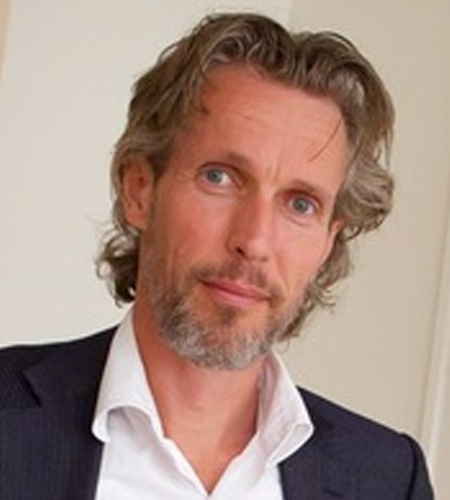
Professor Bas Bloem is a consultant neurologist at the Department of Neurology, Radboud University Medical Centre, Nijmegen, The Netherlands. He received his medical degree, with honours, at Leiden University Medical Centre in 1993 and obtained his PhD degree in 1994. He trained as a neurologist between 1994 and 2000, also at Leiden University Medical Centre. He received additional training as a movement disorders specialist during fellowships at The Parkinson's Institute, Sunnyvale, California, and at the Institute of Neurology, Queen Square, London. In September 2008, he was appointed professor of neurology, with movement disorders as special area of interest.
Professor Bloem is on the editorial board for several national and international journals and has published over 750 publications, including more than 640 peer-reviewed international papers. This includes a series of large clinical trials, all of which were published in high-end scientific journals. He has also supervised 48 successfully completed PhD dissertations. His H-index is 74 (Publons) / 86 (Research Gate) / 97 (Google Scholar).
Professor Bloem is past president of the International Society for Gait and Postural Research. He recently became an Officer (secretary-elect) for the International Parkinson and Movement Disorder Society. From 2009 until September 2017, he was part of the board of ZonMw (The Netherlands Organisation for Health Research and Development). In 2011, he was elected the National Healthcare Hero by the Dutch Ministry of Health and Citizen of the Year for the city of Nijmegen in 2012. Since 2017, he has served on the Executive Scientific Advisory Board of The Michael J Fox Foundation for Parkinson’s Research. In 2018, he was elected as member of the “Koninklijke Hollandsche Maatschappij der Wetenschappen” (the Royal Holland Society of Sciences and Humanities), the oldest scientific society in the Netherlands. In 2018, he won the Tom Isaacs award as a recognition of his longstanding achievements in the field of Parkinson’s disease.
Also in 2018, he was elected as member of the Academia Europaea. In 2019, he was elected as Fellow of the Royal College of Physicians of Edinburgh. In 2020, he was elected as member of the Royal Netherlands Academy of Arts and Sciences. Also in 2020, he became co-Editor in Chief of the Journal of Parkinson’s Disease.
In 2002, Professor Bloem founded and became director of the Radboudumc Centre of Expertise for Parkinson & Movement Disorders, which was recognised from 2005 onwards as a centre of excellence for Parkinson’s disease. Together with Dr Marten Munneke, he also developed ParkinsonNet, an innovative healthcare concept that now consists of 70 professional networks for Parkinson’s disease patients, covering all of The Netherlands (www.parkinsonnet.nl).
Because of the evidence-based quality improvement and significant cost reduction, ParkinsonNet has received multiple awards, including the Best Pearl for Healthcare Innovation prize in 2011. In 2015, ParkinsonNet was awarded with the Value-Based Health Care Prize.
Professor Bloem has two main research interests: cerebral compensatory mechanisms, especially in the field of gait and balance; and healthcare innovation, aiming to develop and scientifically evaluate patient-centred collaborative care. He also values the publication of remarkable observations in single patients.

Want more?
Don't forget to subscribe! There are many ways to listen: Apple Podcasts, TuneIn (Amazon Echo), Spotify or RSS Feed. (Need help subscribing? See our quick guide.)
For all of our Substantial Matters podcast episodes, visit Parkinson.org/Podcast.