Episode 71: A Western Perspective on PD: Understanding Complementary Medicine
-
Dan Keller 0:08
Welcome to this episode of Substantial Matters: Life and Science of Parkinson's. I'm your host, Dan Keller. At the Parkinson's Foundation, we want all people with Parkinson's and their families to get the care and support they need. Better care starts with better research and leads to better lives. In this podcast series, we highlight the fruits of that research—the treatments and techniques that can help you live a better life now, as well as research that can bring a better tomorrow. Many people with various health conditions avail themselves of modern Western medicine, with its drugs, surgeries, and rehabilitation therapies; but at times, some people with Parkinson's feel they need more and turn to complementary and alternative products and practitioners for help. A person's reaction to these products will vary, as some of these products and practices may provide relief, while some have no proven effect. Many of these treatments derive from traditional healing systems going back 1,000 years or more, often originating in Asia, and have a holistic view of the body, mind, and spirit. Dr. Benzi Kluger, now at the University of Rochester, is open to discussing these matters with his patients, and he offers us his perspective on complementary and alternative medicine in general and some treatments in particular. I asked him how modern Western medicine compares to the traditional medical systems, and what in complementary alternative medicine may be useful for Parkinson's disease.
Dr. Benzi Kluger 1:50
It seems like in the Western world that individual things—for instance, acupuncture or a single herb—are kind of taken in isolation. That parallels the Western use of vitamins and other things like that. So it tends to be more piecemeal than adopting a whole system.
Dan Keller 2:06
So what is a unified or holistic Western perspective?
Dr. Benzi Kluger 2:11
I don't know if there is a complete Western perspective. I mean, that's not typically done. I guess there are some people who adopt homeopathy in toto, and there may be possibly some rare pockets of people adopting Traditional Chinese Medicine. I have some patients, actually, who are from India, who go back for Ayurvedic treatments with an Ayurvedic doctor. There is a rise of integrative medicine and, more recently, functional medicine, which I think attempts to be more of a complete system, but these are relatively new and there is not a lot of evidence behind it.
Dan Keller 2:39
What about things that people do try in the US or in Western countries that are not necessarily mainstream—which ones have any evidence behind them? Which ones have evidence that they don't work? Which ones are still up in the air?
Dr. Benzi Kluger 2:53
As far as evidence, we can kind of go down the list. There's not very many. One of the most impressive that was recently published in the New England Journal of Medicine is Tai Chi. A very well-done study comparing Tai Chi to traditional physical therapy. In that study, Tai Chi showed benefits above and beyond typical physical therapy. And I think part of the reason for that may be the involvement of mindfulness and breathwork; part of it—and this actually gets to your earlier question—is I think Tai Chi does involve more of a whole system than physical therapy, which is kind of more piecemeal exercises. So it may make more sense. It may also be more enjoyable to practice than physical therapy exercises, which tend to be quite dry. There's good evidence for melatonin for sleep. There was a trial published on fermented milk for constipation. There's, you know, several large negative trials, two of which are still very commonly used by patients despite the negative trials, which are Coenzyme Q10 and Vitamin E. And the majority of complementary alternative medicine would fall into the inconclusive category—where there's quite a lot of anecdotal reports, quite a lot of things happening on the internet and on Google, but very little well-done research.
Dan Keller 4:02
You brought up a point of, say, Tai Chi, incorporating both meditation, mindfulness, and breathing as well as the physical movements. I think oftentimes we think of the mind being separate from the body, although people do get a better mood if they do exercise and things like that. But is there a movement among anyone to sort of incorporate the two and tie them together?
Dr. Benzi Kluger 4:25
Yeah, there are. One is called Feldenkrais, and one is called Alexander Technique, which are kind of systems of mindful movement. And there have been a few small trials of both of these techniques for Parkinson's disease that have shown some promise. Tai Chi has been well studied. There's been a few small trials of yoga, which also integrates breath and mindfulness and movement and has shown some efficacy. There have been a few small trials of Mindfulness-Based Stress Reduction without exercise that have shown small results of efficacy for a few isolated outcomes. I would say it's really just at its beginning. I think one of the things that's very intriguing and promising about it—and that's actually intrigued me from the get-go—has been the very large placebo effect that we see in Parkinson's disease. And there have been a number of studies, some of which using dopamine transporters, showing that—often quoted—up to a 40% increase in dopamine in the brain objectively measured as a result of placebo. And it seems that dopamine is involved in placebo responses. And quite honestly, Parkinson's is one of those conditions like migraine and pain that has a large placebo response and often makes trial design difficult because the placebo response is so large. And so if there is a way to tap more directly into the placebo response, that would be very attractive. And I think mindfulness-based therapies kind of get into this mind-body connection, possibly more directly, and may be able to exaggerate and enhance that response and give patients some control over that response.
Dan Keller 5:48
I would think it would be tough to design some of these trials with a placebo, because people know what they're doing.
Dr. Benzi Kluger 5:55
That's been a problem. There was actually a workshop I was part of put on by the Parkinson's Foundation last year on complementary alternative medicines and Parkinson's disease, and one of the sessions was on trial design. And for some complementary medicines—for instance, herbal and vitamin treatments—placebo is fairly easy. For others, such as Tai Chi and yoga and mindfulness, it's much more difficult to decide what you're going to use for your placebo group. Some people have done waitlist controls and education controls, and there is some reason to think that if people know what they're getting, that they may actually have a worsening or have no response because it's not fully blinded. And we're actually in the midst of that right now with a music therapy study and trying to figure out what's going to be the best type of control. We want to do an active control, but our program officer had come back that people may do better in music therapy just because music is inherently stimulating and not have anything to do with the music therapy itself. And so trying to develop the right control for each type of comparative medicine can be difficult and sometimes, I think, in a way pointless, in that some of these effects are what's been termed "non-specific." I think the bottom line is that we want something that's clinically efficacious and effective, and if part of that may be non-specific and part of that may be placebo, then let's just take advantage of that and not get too hung up on it. But it does make it difficult. A recently published—or actually a few years ago published—acupuncture trial showed that both acupuncture, real and sham, showed a benefit for fatigue, which is a pretty intractable symptom for a lot of people. And in the discussion, it said—and, you know, and this has been the case for acupuncture studies for a long time—you know, there's a group of people, and I'm among them, that if it's safe and it works, then why not promote it? And other people who are like, "If there's no difference from placebo, then we shouldn't promote it." And in that case, and getting back to your point, is that people in the placebo group, you know, still came in twice a week. They still focused on their body, they still came in with this intention. They still had attention focused on them. And so there may be what have been termed non-specific effects in addition to the traditional placebo effects.
Dan Keller 7:54
And I guess people have talked recently about capitalizing on the placebo effect—if you can build it up and it works, who cares how it works?
Dr. Benzi Kluger 8:03
Absolutely. And there's ethical arguments both for and against that. There's certainly an ethical quandary in being purposefully deceptive. I don't think it's purposefully deceptive. And in some ways, you know, belief is part of the medicine. If both the doctor and the patient have this intention that it's going to work, then it is going to work. And so it may not be so much deceptive, and there's also a bit of work that shows that people can know they're getting a placebo and still get a placebo effect. And in our study on acupuncture, it's interesting that even after you unblinded people, they still had to go back to get acupuncture, even if they were in the placebo group. So conscious expectations probably play less of a role in placebo than unconscious processes.
Dan Keller 8:40
What about religion, or less organized but still spiritual kinds of activities or processes?
Dr. Benzi Kluger 8:48
I'm glad you brought that up. So it hasn't been well studied. We actually did a study in Colorado showing prayer, or some form of religious practice, that was used by about 70% of people with coping. I've over the last five years have been increasingly involved with palliative care as a system for Parkinson's disease, which is more of a person-centered approach as opposed to a disease-centered approach. And spiritual well-being is something that we pay a lot of attention to. I think it's been important in terms of helping patients with coping, with resilience, dealing with grief, and also finding meaning in the journey of having Parkinson's disease. Again, specifically, spiritual interventions haven't been well studied. There hasn't been any randomized controlled trial—I'm not sure how you would do such a thing—but nonetheless, it does appear to be a very important part of healing on the disease journey for a lot of people.
Dan Keller 9:36
You had mentioned, if something doesn't really present any harm, why not do it? But can you identify some things that actually can be harmful that people are doing in complementary medicine, that they really should look out for?
Dr. Benzi Kluger 9:48
Absolutely. And this would also be something that fits in the Western perspective—both Eastern and Western medicine, I think, have their own long and storied histories of "snake oil." And in the Western world, the snake oil has tended to be driven by advances in science. So around the turn of the century, electricity and magnetism was a big thing in science. And so there were a whole host of electric and magnetic gadgets that were used to heal any number of diseases. Then vitamins were discovered, and then hormones were discovered. And I think the most recent phase, which is actually quite dangerous, is stem cells. Stem cells. And so in the United States, but particularly, you know, prevalent outside of the United States, are clinics that will offer stem cell therapies to patients. Oftentimes these are infused; sometimes they're infused directly into the CSF. These are very expensive, typically running to $20,000 to $40,000 per treatment. There have been well-documented CNS cancers that have come up as a result of the cells that have been infused. And there's really no evidence that the way these stem cells are being used would have any benefit for people with Parkinson's disease. They're clearly dangerous; they're clearly expensive. They're something that I try as best as I can to steer my patients away from.
Dan Keller 11:02
There's also cannabis, which some people do find helpful. But are there downsides to it also?
Dr. Benzi Kluger 11:08
Absolutely. They again would fall into the category of complementary alternative medicines that I would say the evidence currently is mostly inconclusive. To date, there have been, I believe, three or four randomized control trials. They were all small, fairly underpowered. There was not really, as you would find in a pharmaceutical study, any real attempt at finding the right dose or the right combination of cannabinoids. And there's been a number of anecdotal reports, as well as a lot of hype suggesting some benefits, particularly for non-motor symptoms. The potential downsides of cannabis are, I think most significantly, hypotension and falls, and this has come up in both clinical practice as well as in the randomized control trials. Not surprisingly, there's cognitive side effects. With the use of THC, there's a risk for worsening of paranoia and psychosis, and there was an uncontrolled trial not for PD, but for other dementias that showed worsening of psychosis. And the last thing, which has come up more anecdotally than in trials, has been worsening of apathy. None of these things are very surprising, you know, just given the common effects and side effects that we know about from cannabis or marijuana.
Dan Keller 12:16
Worsening of apathy, but benefits on appetite?
Dr. Benzi Kluger 12:21
Absolutely. Living in the state of Colorado, where cannabis is legal for both medical and recreational purposes, it does come up kind of an increasing amount in our clinic. And I would say the non-motor symptoms are the symptoms that it's more reliably beneficial for. And so we definitely do use it for appetite. And there's a long history of using cannabis for appetite from the cancer literature. We use it for pain. And there's actually been some better studies in MS—some very large randomized control trials showing help for pain and for spasticity. And that's been my experience as well in Parkinson's, although it hasn't been done yet: anxiety and sleep. Again, things that are not very surprising and can be helpful. I guess another potential danger which has come out of literature outside of Parkinson's disease can be a worsening of depression. That being said, in uncontrolled studies where people have done surveys of patients taking cannabis, including with Parkinson's disease, depression has been one of the target symptoms that people are taking it for, and they feel like it may help their depression; but it's again something that I would take with a grain of salt, given its potential for worsening depression.
Dan Keller 13:23
Any final watchwords for people with Parkinson's disease or their caregivers/care partners to either look out for or just sort of a general summary of how to approach different therapies other than standard pharmaceutical therapy?
Dr. Benzi Kluger 13:38
Yeah, and one of the things I didn't mention is kind of another potential danger of complementary alternative medicines is that they are, you know, for the most part, not regulated. And as a result of that—it does actually come up in the state of New York, that the New York Attorney General, in doing an investigative review, found that, particularly with General Nutrition Center and Walgreens and Walmart, that their complementary alternative medicine products tended to contain house plants and rice powder and did not contain any of the herbs that were on the bottle. Fortunately, house plants and rice powder are safe. There's also been a number of things that have come up, particularly in complementary alternative medicines that have come from India and China: heavy metal toxicity, sometimes pharmaceuticals that are mixed in with the complementary alternative medicine—for instance, Viagra being mixed in with, quote, "natural" erectile dysfunction herbs. There's definitely a "buyer beware" with that. There's also a number of things that come up on the internet, and these come up continuously, that claim to be cures for Parkinson's as well as other things. And I would just be very skeptical of anything that comes up. Ideally, I think people have a good, open communication with their neurologist that they could bring up these things that come up on the internet and have an open discussion about them and see what the evidence is behind it. My typical stance with patients is to look into things, see if there's any evidence for it. See if there's any risk of adverse events or safety. If something looks safe, then I kind of leave it up to the patient what they want to spend their money on. If there are things that don't look safe, I'll definitely try to dissuade them from pursuing it, and I'll always give them the caveat that these things are unregulated, that there's oftentimes a very large business and profit motive behind these alternative medicines, and so people just need to be careful. And as best I can, I like to try to steer them toward things that are helpful, which tend to be more exercise-based therapies.
Dan Keller 15:26
Very good. I appreciate it. Thanks.
Dan Keller 15:34
For more on complementary and alternative medicine as it relates to Parkinson's disease, go to parkinson.org/library. You'll find articles on over-the-counter and complementary therapies, as well as non-drug therapies such as dance, movement, and martial arts. Also, Episode 26 in this podcast series is a discussion of medical marijuana with Dr. Danny Bega of the Parkinson's Foundation Center of Excellence at Northwestern University in Chicago. As always, our PD Information Specialists can answer questions and provide information in English or Spanish about this topic or anything else having to do with Parkinson's. You can reach them at 1-800-4PD-INFO. If you have questions or want to leave feedback on this podcast or any other subject, you can do it at parkinson.org/feedback. If you enjoyed this podcast, be sure to subscribe and rate and review the series on Apple Podcasts or wherever you get your podcasts. At the Parkinson's Foundation, our mission is to help every person diagnosed with Parkinson's live the best possible life. Today, to that end, we'll be bringing you a new episode in this podcast series every other week. Until then, for more information and resources, visit parkinson.org or call our toll-free helpline at 1-800-4PD-INFO, that's 1-800-473-4636. Thank you for listening.
When we think of medicine from a Western perspective, we often think of treatments including things such as drugs, surgical operations, or rehabilitation therapies like physical, occupational, or speech therapy. While these treatments may be coordinated by a neurology or movement disorders office, most often they are not.
However, in many Eastern cultures, medicine exists as integrated systems. For example, there is traditional Chinese medicine that considers a vital energy (“ch’i”) circulating in channels throughout the body, with disease seen as disharmony of the complementary aspects of yin and yang. This is addressed with the use of herbs, acupuncture, massage, exercise, dietary therapy, and other techniques aimed at restoring a healthy balance. Similarly, Indian Ayurvedic medicine is a holistic healing system based on the concept that health and wellness depend on a delicate balance among the mind, body, and spirit.
However, most if not all of the herbs, supplements, and other compounds that are sold in the West for use in traditional Ayurveda or Chinese medicine and alternative/complementary medicine in general are not tested by the Food and Drug Administration, or FDA, to be determined as safe, and they may not even contain what they are purported to be. In this episode, Dr. Benzi Kluger, Professor and neuropalliative care specialist at the University of Rochester, a Parkinson’s Foundation Center of Excellence, discusses complementary/alternative medicine from a Western perspective, with an eye on what may be safe to try, as well as some cautions.
Released: December 31, 2019
-
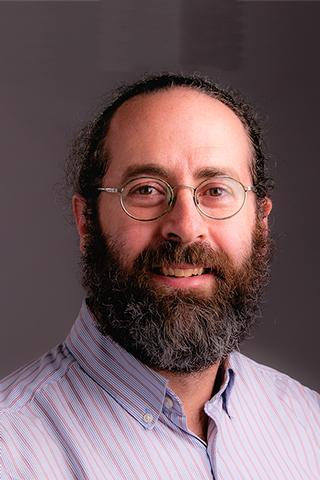
Benzi Kluger is a Professor of Neurology and Medicine and the founding Director of the Division of Neuropalliative Care and the Palliative Care Research Center at the University of Rochester in New York where he recently moved. He is internationally recognized for his pioneering efforts to bring a palliative care approach to improve outcomes for persons affected by neurologic illnesses. He also pursues research to improve therapies for nonmotor symptoms in Parkinson's disease, particularly fatigue and cognitive impairment. His research has been funded by the National Institutes of Health, the Patient Centered Outcomes Research Institute, the Michael J Fox Foundation, and the Department of Defense.

Want more?
Don't forget to subscribe! There are many ways to listen: Apple Podcasts, TuneIn (Amazon Echo), Spotify or RSS Feed. (Need help subscribing? See our quick guide.)
For all of our Substantial Matters podcast episodes, visit Parkinson.org/Podcast.