Episode 69: Parkinson’s Foundation Center of Excellence: What Does it Take and What Does it Mean?
-
Dan Keller 0:08
Welcome to this episode of Substantial Matters: Life and Science of Parkinson's. I'm your host, Dan Keller. At the Parkinson's Foundation, we want all people with Parkinson's and their families to get the care and support they need. Better care starts with better research and leads to better lives. In this podcast series, we highlight the fruits of that research—the treatments and techniques that can help you live a better life now, as well as research that can bring a better tomorrow. Second opinions in medicine are fairly routine these days. Sometimes they confirm a diagnosis and treatment plan, and sometimes they propose an approach different from the original one. It is then up to a patient or family to decide which way to go. Fortunately for Parkinson's disease, there are movement disorder specialists and, in particular, Parkinson's Foundation Centers of Excellence to turn to. These are medical facilities that have met the criteria and the highest standards of the foundation for expertise and comprehensive care. In this episode, Clarissa Martinez-Rubio, Senior Director of Clinical Affairs of the Parkinson's Foundation, describes what these centers are, what they do, and what it takes to earn a Center of Excellence designation. Then we hear an example of the value of going to a Center of Excellence for a second opinion. A friend of mine, Joe Salvatore, talks about his family's journey to finally reach a diagnosis and treatment plan for his mother that they now feel comfortable with.
Dan Keller 1:51
Basically, what is a Center of Excellence, as the Parkinson's Foundation designates it?
Clarissa Martinez-Rubio 1:58
Centers of Excellence are institutions that have been recognized experts in care, outreach, education, and research in Parkinson's disease. Currently, we have 45 designated centers around the world, with 31 in the US and 14 international.
Dan Keller 2:22
What does it take to become a Center of Excellence?
Clarissa Martinez-Rubio 2:26
The Center of Excellence criteria is very hard in order to meet. For example, the care aspect of the criteria: each center must have a multidisciplinary care approach to Parkinson's. This means there is a holistic approach, from the neurologist to the rehab to the counseling. Everybody is involved in the treatment and care of the patient. When we talk about the research aspect, every center must be conducting innovative research and clinical trials to be available to give the opportunity for patients to participate and contribute to the research in Parkinson's disease. Now the hardest, I would say, part of the criteria that some centers find difficult to meet is the outreach and education. And the reason is because the foundation recognizes the centers to be the experts, the leaders in the field. That means that we hold them responsible to train the next generation of experts in Parkinson's disease and educate the patients, the community, and the family of each of the patients in Parkinson's, and not just in the vicinity of their centers. We expect them to go beyond the walls of the centers and reach underserved communities.
Dan Keller 3:56
What is the process to select a center, and are all required facilities or services under one roof?
Clarissa Martinez-Rubio 4:07
There are currently three different models that the foundation supports for a Center of Excellence. The first model, which is "all in one," means that all of the services are under one roof within the same center, but we understand that this is a very difficult thing to accomplish. So we also support an overlapping model, which means that not all of the experts are under one roof, but they are within the institution. So that means that to refer a patient to PT, OT, or speech, you might have to refer them to the rehab department. But then there's a third model. There are certain professionals that are needed and important in the care of Parkinson's disease that there are not a lot of them available. There's a huge need for experts in Parkinson's disease, for example, in mental health. So some of the centers really rely on the community professionals to be able to offer the services to the patients. So each of these three models are equally supported, and what it shows is that it's easier for the patient—one-stop shop—but as long as you use those referrals and you have those community networks built within your care, you can offer fantastic care to that patient. If you're a Center of Excellence today, that doesn't mean that you're a Center of Excellence forever. Every five years, each center has to reapply for the designation, and the reason that we do this is to make sure that the centers are keeping up with the criteria, that they are pushing the boundaries and being innovative to improve the quality of life of people affected by Parkinson's. And I say people because the foundation holds the centers responsible, not just for the care of the patient, but also for the support of the caregiver and the family.
Dan Keller 6:09
How does visiting a Center of Excellence help a person in their journey with Parkinson's?
Clarissa Martinez-Rubio 6:17
Well, as a Center of Excellence, you are expected to provide the support that a person needs from the moment of diagnosis and through the entire journey, and that support includes not just the care, but also the compassion, the expertise, having all of these services at the right time, preventive medicine. How can I help you improve your quality of life? If you can come to me, I will come to you. How is the caregiver? How are you feeling? Is the caregiver being incorporated in the treatment of their loved one? When you come to a Center of Excellence, you are treated as a person. You're not a number who's coming into the clinic. You're not just a patient; you're a person. And this is what we expect and demand from our centers, and you have the expertise for every single expert or professional that is needed in your care—from your neurologist to the nurses, to the physical therapist, occupational therapist, speech therapist, social worker, counseling, palliative care—whatever you need and whatever is required, it is the center's responsibility to provide it for you. And that is one of the advantages of coming into a Center of Excellence: that everybody in that center is an expert. They're not knowledgeable; they're experts. And by having this expertise, it increases the chances of having a better quality of life. It doesn't mean that you can't get great care in other places; it just means that you're coming to a center that has a lot of experience in this diagnosis.
Dan Keller 8:12
Is there a value in coming to a Center of Excellence, or at least a movement disorder specialist, for a second opinion if someone has a movement disorder, whether it's Parkinson's or other?
Clarissa Martinez-Rubio 8:25
Nowadays, I think that with a lot of diagnoses and conditions that are harder to diagnose, I think there's more people doing second opinions, and I don't think any reputable institution will consider it an insult if a person decides to get a second opinion. So getting a second opinion from a Center of Excellence definitely could be consoling to the patient. It can be innovative to the patient. But also, I think we need to understand that some people have difficulties coping and accepting their diagnosis, so sometimes getting that second opinion just helps them digest better their diagnosis. So yeah, I think there is definitely value in coming to a Center of Excellence for a second opinion.
Dan Keller 9:13
Joe Salvatore is someone who knows the value of a second opinion at a Center of Excellence. His mother initially received a diagnosis at a large hospital that is part of a university health system in Philadelphia, and then went for a second opinion. Hi, Joe, what was your family's experience?
Joe Salvatore 9:31
Well, my mom had experienced difficulty with her mobility for about four years now. Three years ago, we were recommended to go to a suburban hospital, and she had been diagnosed by the doctor there with Multiple System Atrophy, and she was put on a medication. The doctor did not think that any physical therapy would help her, and unfortunately, he had explained what she was diagnosed with is worse than Parkinson's—meaning it was less treatable and progressed more rapidly. And the medication really didn't seem to help my mom's mobility. We were going to the doctors for two and a half years; every three to four months, we would go in for a checkup with this doctor. And I was sitting there and I was thinking to myself, "Okay, at this point, nothing's even being said. There's no change. There's no other options." And she's getting worse, and her handwriting is getting worse, and her posture is getting worse, and her ability to get around her house is very difficult at this point. And when we get her out in public now, she's in a wheelchair, and I just felt like at this point, I wanted to try anything to be able to say that I tried everything for my mom to get her better. And so we were recommended by you to go to check out Penn, and even though it's not easy to get into the city with my mom, we figured we would give it a shot and see what they had to say. So we did that. And the doctor at Penn—it was actually two doctors at Penn—we got an appointment for four months, but we waited just to get that four-month appointment. And the doctor was very good with my mother; put her through a whole series of tests. And she had commiserated with another doctor there that my mom had been misdiagnosed, that they didn't really think she had Multiple System Atrophy. They thought it was strictly Parkinson's. They thought that the medication my mom was on at that time would have been something that they would have started someone out on, whereas my mom was pretty well advanced with what she had. So they doubled her medication. They also suggested doing a brain MRI to see if there was anything else going on that they need to know about. So we did the brain MRI, and that came back good. There was no tumor, there was no bleeding, there was no hydrocephaly, there was no stroke. So that was good. They also felt like physical therapy could help my mother, and so we started doing physical therapy. And within three days—three, four days—of the increased dosage (they doubled the dosage of her medicine, I don't recall the name of it), but we noticed an improvement in my mom. And that's the first time I could say we noticed any type of improvement in the past three years, where there was a little bit of an upswing. Her mobility was a little bit better, but she was freezing up and shaking in her house. I said, "Okay, we've really got a problem now." The freezing and the shaking had ceased. Now, you know, it wasn't a great ballgame, but it was better. And her handwriting—we noticed an improvement. Her posture—we noticed an improvement. And after a few weeks, maybe a month, she sort of plateaued at that level. So I emailed the doctor at Penn, and she got right back to me and said that we could increase the dosage a little bit more and see how that does. It improved a little bit. Now, my mom's next appointment to go into the city at Penn is the day after Labor Day, and we're anxiously waiting for that, just because, you know, we feel like we have somebody who's really in tune with my mom and listening and just giving us very good feedback and is responsive to our questions. So maybe they'll increase her medication even more, try a different physical therapist, so we'll see. But you know, we feel like it was really worth going for that second opinion. She had been misdiagnosed. They doubled her medication; we saw improvement. Physical therapy; some improvement. So the first time in three years, we noticed a little improvement. So we're very happy with that.
Dan Keller 13:57
Not to take anything away from good community neurologists, but I think second opinions are probably almost routine these days. No doctor really should be objecting to them. Have you been in touch with the original neurologist at all?
Joe Salvatore 14:14
We have been very pleased with my mom's visit with Penn; we decided just to stop going to the previous doctor. So we are strictly a Penn patient at this point.
Dan Keller 14:26
Penn is one of the Parkinson's Foundation Centers of Excellence, and I think to get that designation, they need to have the whole team put together—physical therapists, occupational therapists, speech language ones. Was she evaluated by other people, or just a neurologist? And is she interacting with anyone else there?
Joe Salvatore 14:46
At this point, just the two neurologists that were there that day—the one with the appointment, and she went out and spoke with another doctor, and he came in and put my mom through a whole series of both mental and physical tests. She'll be 82, and mentally she's still very sharp, especially for that age. The physical test, that's where she struggles. They both, though, did not think that she had Multiple System Atrophy. So that was enlightening.
Dan Keller 15:15
I suppose, you know, as you had mentioned, you found out about this kind of place—a Center of Excellence or a movement disorder specialist—from me. I know about it because, yes, I'm doing this podcast series. But how else do you think anyone could find out about it? It seems like you go to a large hospital, well-regarded, and you get treatment, but it's sort of the invisible thing out there that other people would need to discover somehow.
Joe Salvatore 15:44
You need to listen to your little voice when I'm sitting there and I'm saying, "Why are we here? Nothing's being said anymore. Nothing's being done anymore." For my mom, she's getting worse, and I feel sort of lost at this point. And if they're speaking with you, and we started to do some research—and you know, like I said, it's not easy going to Center City parking and getting her there, but it really wasn't that bad at all. It was definitely worth that second opinion, going to Penn. We do have some of the best health systems in the country here, so I felt like I wanted to at least give that a shot, give that a try to see what they had to say. And we were very happy that we did.
Dan Keller 16:26
Great. How's she doing now?
Joe Salvatore 16:28
She's doing okay. You know, she's seen some improvement; she sort of plateaued. We have that second appointment, and we're looking forward to that to see—maybe increase the dosage a little bit more. They did say that she still had some room to increase that dosage even further. The previous doctor actually had said—I meant to say this also—that "Well, if the medicine isn't helping, then you should stop taking it." So that was surprising. When we went to Penn and they said, "Well, we would like to double your dosage." So that was very enlightening, the difference in the opinion. I really feel like my mom wouldn't even be able to get around her house at this point if we hadn't gone to Penn. With the way her mobility was going, stop taking the medication, I think we would be in a much different place than we are right now.
Dan Keller 17:16
I don't want to make this sound like an advertisement for the University of Pennsylvania, but we're in the Philadelphia area. That's one of the places here. There are other ones around the country, and people probably can avail themselves of them if they know about them. Is there anything you want to add or we've missed that's important?
Joe Salvatore 17:36
It was a good example, I feel, of going for that second opinion, listening to yourself when you're sitting there saying, "This is not working for us," and doing further research on where we should go and what we should do. At this point, we were happy that we did.
Dan Keller 17:51
Great. I'm glad she's doing better, and you sound a little more relieved. So thanks for speaking with me. Thank you. For more on our Centers of Excellence, or to find one near you, go to our website and search on Centers of Excellence. You'll see information on the latest three institutions to achieve that designation at the University of Colorado, Jefferson University, and the University of Indiana. That updates the total to 48 in all, with 34 in the US. You can find information on second opinions, including their value, personal stories about getting them, and what to do once a diagnosis has been confirmed. Also, in Episode 48 in this podcast series, Dr. Carlos Singer of the University of Miami Miller School of Medicine talks about what to expect and what to ask the neurologist when getting a second opinion, as well as how different people come to terms with and accept their new diagnosis. As always, our PD Information Specialists can answer questions and provide information in English or Spanish about this topic or anything else having to do with Parkinson's. They can help you find resources in your area or direct you to ones online. You can reach them at 1-800-4PD-INFO. If you have questions or want to leave feedback on this podcast or any other subject, you can do it at parkinson.org/feedback. If you enjoyed this podcast, be sure to subscribe and rate and review the series on Apple Podcasts or wherever you get your podcasts. At the Parkinson's Foundation, our mission is to help every person diagnosed with Parkinson's live the best possible life. Today, to that end, we'll be bringing you a new episode in this podcast series every other week. Until then, for more information and resources, visit parkinson.org or call our toll-free helpline at 1-800-4PD-INFO, that's 1-800-473-4636. Thank you for listening. Thank you.
Since the early 2000’s, centers of excellence for various diseases or procedures have become common. These are specialized programs within healthcare institutions that bring together experts and resources to target different aspects of the disease or condition to give patients a unified resource for addressing their needs in a comprehensive manner. Besides optimizing resources for patients, the centers of excellence provide advantages for healthcare providers by integrating experts and resources to draw upon within one organization.
Much work goes into assembling and being designated a Parkinson’s Foundation Center of Excellence. At this point, the Parkinson’s Foundation has recognized 47 CoE’s – 34 in the United States and 14 international. Not only do they have to have clinical expertise, but part of their mandate is to do research, education, and community outreach to underserved communities that otherwise could not access the CoE or find appropriate care within their own locales.
In this episode Clarissa Martinez-Rubio, Senior Director of Clinical Affairs of the Parkinson’s Foundation, describes what these centers are and the criteria for earning a designation as a CoE. Then Joe Salvatore talks about his mother’s experience getting a second opinion at a Parkinson’s Foundation CoE and how it helped change the course of her disease.
Released: December 3, 2019
-
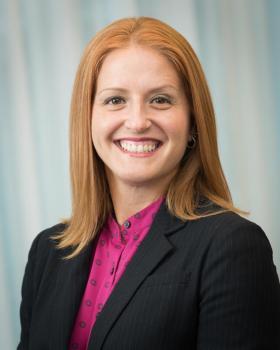
Clarissa Martinez-Rubio is the Sr. Director of Clinical Affairs at the Parkinson's Foundation. She completed her PhD in Anatomy and Neurobiology at the University of Puerto Rico, Medical Center followed by her postdoctoral training at the Massachusetts General Hospital/Harvard Medical School focusing in Deep Brain Stimulation and Neuromodulation. She worked at the Massachusetts General Hospital/Harvard Medical School as an Instructor in Neurosurgery for 3 years before joining the Parkinson’s Foundation in 2016. Since joining, Clarissa has led the foundation’s global Centers of Excellence network with designated centers in 9 countries, 34 US and 14 international.
-
Joseph M. Salvatore joined Miller Tabak Asset Management in October 2008 as Senior Municipal Credit Analyst. Mr. Salvatore has analyzed municipal bond credits since 1990. At MTAM, Mr. Salvatore reviews and approves (or denies) all municipal bonds before purchase and assigns internal ratings and credit trends to all municipal holdings. Mr. Salvatore maintains strategic relationships with issuers, rating agencies, and credit enhancers. Prior to joining MTAM, he was a municipal consultant for MacKay Shields (New York Life Insurance Company’s investment subsidiary). He was responsible for the credit research of all municipal assets and made buy/sell recommendations with the criteria of no defaults and no surprise rating downgrades. Prior to this experience, Mr. Salvatore spent 16 years at BlackRock in their Fixed Income Municipal Credit Research Department where he became a Director. He is an active member of the National Federation of Municipal Analysts and the Philadelphia Area Municipal Analyst Society. Mr. Salvatore holds an MBA from LaSalle University in Philadelphia. Mr. Salvatore is also a history buff, sports enthusiast, and amateur chef. He lives in Worcester, PA with his partner of 20 years.



Want more?
Don't forget to subscribe! There are many ways to listen: Apple Podcasts, TuneIn (Amazon Echo), Spotify or RSS Feed. (Need help subscribing? See our quick guide.)
For all of our Substantial Matters podcast episodes, visit Parkinson.org/Podcast.