Episode 60: What is a Disease Modifying Therapy in PD?
-
Dan Keller 0:08
Welcome to this episode of Substantial Matters: Life and Science of Parkinson's. I'm your host, Dan Keller. At the Parkinson's Foundation, we want all people with Parkinson's and their families to get the care and support they need. Better care starts with better research and leads to better lives. In this podcast series, we highlight the fruits of that research, the treatments and techniques that can help you live a better life now, as well as research that can bring a better tomorrow. While there may be various underlying biological causes of Parkinson's disease, there is a final common result: a deficit of dopamine in the brain. In our previous podcast, Dr. Alberto Espay made the case for why we need to develop biomarkers to be able to better define any variants of Parkinson's disease. Biomarkers are physical, chemical, or other signals in the body that may help indicate the underlying causes or the state of PD. Today, Dr. Anthony Lang of the Toronto Western Hospital expands on this theme, making the case that better biomarkers are needed for better clinical trials, especially ones testing potential treatments that can slow or stop progression of the disease—so-called disease-modifying therapies. These markers can help define more precisely the populations to enroll in clinical trials for testing new drugs. But so far, without them, trials of disease-modifying therapies have failed. Dr. Lang has some ideas why. First of all, what is a disease-modifying therapy?
Dr. Lang 1:59
So Parkinson's is a slowly progressive disorder. It inexorably progresses, and so something that would modify the disease would change its course, hopefully slow it down and ideally halt it in its tracks. An old term that we recognize now is probably inappropriate was neuroprotection—altering the progressive degeneration and changing the process that underlies Parkinson's. There are many ways of modifying the disease that might not do that, though. So for example, we think that there are processes in the brain that modify the way people present with the disease and probably serve as compensatory mechanisms. Patients might not present to a neurologist until the dopamine loss is about 60 to 70% of normal, and so there must be some mechanisms that compensate for that loss. And so if we could bolster those mechanisms, if we could allow the mechanisms that compensate to become more active or successful, we wouldn't really be changing the underlying degeneration, but we would be modifying the course. So there are many ways that we could modify the disease without actually addressing the underlying causes of the disease. Ideally, our treatment that modifies the disease truly would be protective, would change the degenerative process, and that's the holy grail of Parkinson's from most people's perspective.
Dan Keller 3:32
Have there been a lot of trials trying to do this, and what's happened?
Dr. Lang 3:36
Yeah, unfortunately, we've got lots of tombstones in the history of Parkinson's disease clinical trials. We've carried out many trials attempting to find disease modification. The first real big trial was an NIH-funded trial that I was a part of—I actually cut my teeth on clinical trials in this trial—and that was called DATATOP: D-A-T-A-T-O-P. And it was using deprenyl, or selegiline, as well as Vitamin E, which is tocopherol—that was the T in TOP. So DATATOP was a trial where we used two drugs that had somewhat different mechanisms of action, and we hoped that that would slow the progression—either one or both of them in combination would slow progression. We actually thought we had won. We thought when we first analyzed the data that, in fact, deprenyl was protective or disease-modifying. So we had thought that we had the result showing a positive effect of deprenyl, but then subsequent analysis really told us that this treatment improved the symptoms of Parkinson's and probably didn't change the course. And at that point, we recognized one of the biggest problems in trials that attempt to slow the course of the disease is if you have a drug that improves symptoms—symptomatic therapy, levodopa being the best treatment to improve symptoms—that then you have this tremendous confound. If you improve symptoms, patients feel better, they function better, they may need less treatment in other respects, and so you can fool yourself into thinking you've actually modified the disease when, in fact, all you've done is mask symptoms the way we think levodopa works. So all of the subsequent trials have really had this challenge of trying to exclude a symptomatic effect and prove a disease-modifying effect, and unfortunately, we've done many trials, and so far none of them have proven to be effective.
Dan Keller 5:35
So would that entail withdrawing the drug for a while and see if you've actually gotten rid of the disease? And I would think for progression, you'd have to study people a long time.
Dr. Lang 5:43
There are two challenges that you raise. One: do you withdraw the drug? Withdrawing the drug you're using is usually pretty easy if it's not got big-time symptomatic effects. But the problem is that if we follow people over the course of time—normally, in these trials, we recruit early, untreated Parkinson's. That's the vast majority of these studies. We've taken very early patients because if you don't have the superimposed masking effect of levodopa and other drugs that we would use to improve symptoms as they get worse—if you don't have that, then you think you're looking at a less complicated situation. You're looking at something that is less tainted by that symptomatic effect. The problem is that over the course of time, as you follow these patients, they need levodopa, they need the dopamine agonist, they need the treatment, and those can't be withdrawn because their symptoms are worse and withdrawing would cause considerable disability and hardship on the part of the patient. And so once you're into the point two, three, four years down the line—and you've pointed out you need to follow these patients for a long term to see about disease modification—once you're into that duration, you can't afford to withdraw the symptomatic treatment that has come on since you began your trial. So once you've got all the symptomatic effect, for example, of levodopa, you're masking any protective or disease-modifying effect of the treatment you initiated some time ago. So that's a big problem with these trials, and this is one of the reasons, in fact, that many of the trials that have been done recently have attempted to follow people longer and have actually used what we call outcomes. When you're doing a trial, you use an outcome to tell you whether you've accomplished what you set out to do. We tend to concentrate on those outcomes that are less affected by levodopa, for example. So we might use a composite outcome looking at gait and falls and imbalance, or speech problems or quality of life, and things that—if you mix cognitive features, for example—those things that we know are less affected by the symptomatic effects of levodopa. So the need to follow long term, the need to look at features that are less affected by the potent symptomatic effects of levodopa, for example—these are all challenges to this field.
Dan Keller 8:06
What are current trials doing to modify the course of the disease? What are they testing?
Dr. Lang 8:10
So there are three or four big trials now in what we call Phase II or Phase III study. One, for example, is designed to block certain calcium channels in the brain, because calcium channels are very important to the pacemaking properties of certain cells, like dopamine cells, for example. And it's believed that these very active pacemakers may cause a lot of challenge to the neurons—cause the neurons to be very stressed metabolically—and so if you can block those channels, maybe the metabolic stress on the cells diminishes and you protect the cells. So that's one approach. A calcium channel blocker called isradipine is being studied by the Parkinson's Study Group. Another possible way of protecting nerve cells is by using what are called antioxidants. And this was actually the basis of that DATATOP trial that I told you about. And it turns out that the most potent natural antioxidant that we have in our blood is urate. When you have too much uric acid, you get gout, so you don't want too much. But in fact, maybe just enough—not too little. It's like Goldilocks. If you have just enough uric acid, you may actually protect nerve cells. And so again, the Parkinson's Study Group is using a drug called inosine in people who have low levels of uric acid. So this is one of the few trials that has actually recruited people on the basis of a specific biochemical criteria: you have to have a lowish level of uric acid, and then, in a controlled fashion, they've given this inosine to drive the uric acid levels up and see whether that's protective. There have been a couple of other approaches, and probably one of the most exciting things that is going on now is using treatment that is trying to address a very, very important part of Parkinson's disease, and that is the accumulation and aggregation of a protein that most of your listeners have probably heard of, called alpha-synuclein. We know that alpha-synuclein accumulates in the brain of Parkinson's. We know it's the largest protein constituent of these little inclusions in nerve cells called Lewy bodies—they've probably heard of Lewy bodies—and we know that Lewy bodies are a hallmark of Parkinson's under the microscope. And so the accumulation and aggregation of alpha-synuclein somehow—and we don't exactly know how—drives the degeneration or contributes to the degeneration of Parkinson's. And so one of the ways that is being studied very, very actively now is to give an antibody—what's called a monoclonal antibody—directed at alpha-synuclein. And there are two large trials being conducted by multinational pharmaceutical companies with what is called passive immunization: giving a monoclonal antibody, infusing the antibody into patients, giving it by intravenous. And the hope is that this will reduce the amount of alpha-synuclein that we think is traveling between cells and resulting in the spread of the disease and the progression of the disease. So that's a very exciting prospect. And then there are a lot of other treatments that are theoretically possible that would maybe reduce the amount of alpha-synuclein you make, or make it less aggregating, or whatever. But those are still all on the drawing board.
Dan Keller 11:43
There's a lot of work on the genetics of Parkinson's disease, looking at LRRK2 and GBA and dozens of other genes. Is Parkinson's disease one disease, or sort of a common presentation of various causes? And if you test these treatments on people who may be not affected by the treatment, but some people are, are you really blinding yourself, diluting out the results and missing what could be an effective treatment?
Dr. Lang 12:14
Yeah, so you're raising some really important points in this field. The first is the multiple genetic forms of Parkinson's really has educated us to understand that it probably isn't a single disease. It probably is many diseases. Some people will hope that those genes fall into various pathways that are all involved in the final outcome, and so you would think of a sort of a linear pathway down a single direction that finally results in Parkinson's disease. The reality may be that there are multiple pathways that can run in parallel and get to what we call Parkinson's disease, but maybe they're all different forms of Parkinson's disease. Just on the genetic front, I should mention that there are treatments being developed that are directed specifically at genetic subtypes of Parkinson's. Probably the one that's farthest ahead is the glucocerebrosidase gene—trying to alter the outcome of an abnormal function of the glucocerebrosidase, or GBA gene—and that's actually advanced to the point that patients are being treated now in experimental trials. The question is: can you use those same treatments, then, for all patients with Parkinson's? Is there enough commonality to allow a treatment that's designed for one genetic form to be applied to many different types of Parkinson's? We don't know the answer to that. Maybe GBA will be applicable to other forms of Parkinson's. But there are other forms of genetic Parkinson's—for example, forms that are more commonly inherited as an autosomal recessive type of Parkinson's: genes called Parkin or PINK1 or DJ-1. And these are genes that seem to be very much involved in the function of the mitochondria, the energy powerhouse of cells. And these treatments directed specifically at these genes might not affect run-of-the-mill or typical Parkinson's disease to sufficient extent. We don't know that, but it really then raises the question, coming back to your question: by taking patients with early Parkinson's—you remember I said that most of these trials take early, untreated Parkinson's—and what we've generally done is: you have a bit of tremor and a bit of slowness, and you fulfill a clinical criteria for the disease as me, as a neurologist, would be comfortable, and we lump everybody together, and we put them into a clinical trial, we use a single drug, and then we hope that they're all going to respond to the drug in the same way if, in fact, that drug is effective. And we found, as I've mentioned, all these tombstones—all of these treatments have failed. Whereas had we understood the disease better than we understand now—had we been able to select and enrich patients for certain types of Parkinson's, certain types of biochemical pathways that are most abnormal in causing the disease—had we been able to do that, we might have found, in fact, that the treatments that we've sort of thrown away or stopped considering as effective might have been helpful. And so maybe we've thrown the baby away with the bathwater here, and I think that there may come a time we've got to go back and explore some of the treatments that we've discarded. So I think the future really is trying to understand the subtypes, trying to then separate out patients. Remember I said that the uric acid story—the inosine group of patients have low uric acid—that's very reasonable. It's a logical way of separating out patients who might tend to respond to this increasing uric acid methodology. I think definitely we need to be able to do that in many other respects. We need to be able to separate out subtypes and then enrich our sample in these trials for patients who are much more likely to benefit from a treatment that is designed to treat Pathway X or Process Y, and maybe then, I think we'll succeed. And so success in disease modification may not be a 30% reduction or a 50% reduction in the speed of progression of everybody that comes into the trial; it may be an even more pronounced effect on a very tiny subcomponent of what we're now calling Parkinson's. So the first success may be a success in only 5% of people that we now call Parkinson's disease. But if we succeed in 5% now, and then another 5%, and then another 10%, these incremental changes after separating out the patients more likely to respond may be the way we're going to have to go. The analogy that I think is really important is cancer. Neurodegeneration and cancer have far more to do with one another than we believe. And cancer doesn't make a diagnosis of cancer; it makes a diagnosis of a particular kind of cancer—breast cancer, for example. And then you look at the type of breast cancer under the microscope, and then you subdivide the types of receptors that that breast cancer has, and then you subdivide the types of genes that have become abnormal that caused the type of breast cancer. And then you decide, once you've made this multiple separation—you then decide what treatment that individual, that person, might respond to best. And so this is what's called precision medicine. It's a buzzword now in medical field, but I think it's something we need to think about in Parkinson's. And then furthering the analogy with cancer, I think we also need to think about combination therapies. And all of these trials that I've been telling you about, largely—except for that one that I told you about that we started with, with DATATOP, which had two drugs—they've all had single drugs. And maybe that's another reason for failure. Maybe we have to hit these pathways at multiple stages with cocktails of therapy exactly the way that it's done in cancer. So I think that's where the field probably needs to go if we're going to succeed.
Dan Keller 18:18
Since I spoke with Dr. Lang, two of the trials he mentioned have produced results—unfortunately, negative ones. One was the trial on the blood pressure drug isradipine; after three years, the drug showed no difference from placebo on measures of PD. The other one on inosine to raise blood levels of urate was stopped early because it was obvious that it was not affecting the course of the disease. Dr. Michael Schwarzschild, the leader of the study, commented that urate may still be a useful target, but inosine is probably not the way to go. To learn more about biomarkers, search our website at parkinson.org/biomarkers. You'll find a blog entry called "What's Hot in PD: The Importance of Imaging Biomarkers to Diagnose and Track Parkinson's Disease Progression." You can also check out our previous podcast in this series with Dr. Alberto Espay. For a primer on preclinical studies and clinical trials, search parkinson.org/clinical-trials, where there are also many more resources on research. As always, our PD information specialists are available on our helpline. They can answer questions and provide information about this topic or anything else having to do with Parkinson's. You can reach them at 1-800-4PD-INFO. If you have any questions about the topics discussed today, or if you want to leave feedback on this podcast or any other subject, you can do it at parkinson.org/feedback. If you enjoyed this podcast, be sure to subscribe, rate, and review the series on Apple Podcasts or wherever you get your podcasts. At the Parkinson's Foundation, our mission is to help every person diagnosed with Parkinson's live the best possible life today. To that end, we'll be bringing you a new episode in this podcast series every other week. Until then, for more information and resources, visit parkinson.org or call our toll-free helpline at 1-800-4PD-INFO. That's 1-800-473-4636. Thank you for listening.
Researchers and clinicians are learning that Parkinson’s disease (PD) is an umbrella term that covers similar but distinct variants of the disease that may result from differences in biology. Symptoms may be similar, but each person’s disease may have different features, rate of progression, needs, and treatments connected to the specific underlying cause. In this era of “personalized” medicine, a goal is to treat each person’s condition according to their unique disease. To do so, neurologists will need to be able to define and identify those differences (“biomarkers”) that will allow a truly personalized approach to treatment. A biomarker is a measurable indicator of a normal or abnormal bodily function. Examples are imaging such as MRI, chemicals in the blood or brain, brain wave patterns, sleep cycles, or even specific signs and symptoms.
Having biomarkers indicative of specific variants of the disease could help to design clinical trials to test therapies. It would allow researchers to include individuals with similar underlying biology when they test a potential new drug to be able to understand if it works for that form of PD. In a trial that included people falling under the umbrella term of “PD,” for example, researchers could see who benefited from the drug and then examine them to see what biomarkers they had in common. In this podcast, Dr. Anthony Lang, Director of the Edmond J. Safra Program in Parkinson’s Disease at the Toronto Western Hospital in Canada, discusses the need for biomarkers when searching for disease-modifying therapies – those treatments that can actually modify the course of PD and not just treat its symptoms. And he tells us why it is sometimes hard to tell the two apart.
Released: July 30, 2019
-
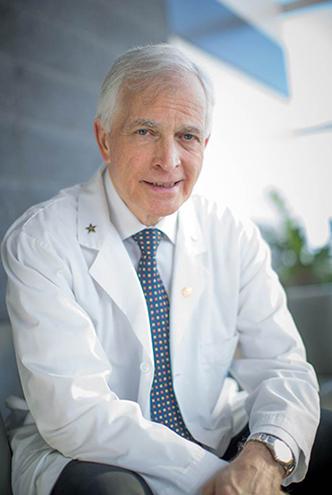
Dr. Lang is a Professor and previous Director of the Division of Neurology at the University of Toronto where he holds the Jack Clark Chair for Parkinson’s Disease Research. He is the Director of the Edmond J. Safra Program in Parkinson’s Disease and the Morton and Gloria Shulman Movement Disorders Clinic and holds the Lily Safra Chair in Movement Disorders at the Toronto Western Hospital, University Health Network. He is one of the most highly cited investigators in the field of Movement Disorders with over 700 peer-reviewed papers published or in press.
Dr. Lang has served the International Parkinson and Movement Disorder Society (MDS) in many capacities: on the MDS Executive Committee as Treasurer from 1988-1992, Secretary from 1996-1998 and then President from 2007- 2009 and CoEditor-in-Chief of the Movement Disorders between 1996 and 2003 inclusive and in 2014 he was made an Honorary Member of the Society and received the first MDS Pan-American Section Leadership Award in 2017.
He has given many named lectures including the MDS Stanley Fahn Lecture and the World Federation of Neurology’s Melvin Yahr lectureship, both in 2011, and the Association of British Neurologists’ Gordon Holmes Lecture in 2015. Among his awards and distinctions he was appointed as an Officer of the Order of Canada in 2010; in 2011 he was elected a Fellow of both the Canadian Academy of Health Sciences and the Royal Society of Canada; in 2014 he received the Scopus Award from the Canadian Friends of Hebrew University for “outstanding contributions to the field of movement disorders” and was elected by the International Parkinson and Movement Disorder Society (MDS) as an Honorary Member “in recognition of his extraordinary contribution to the field of Movement Disorders”; and In 2017 he was the recipient of the first MDS Pan-American Section Leadership Award. In 2018 he received the Weston Brain Institute International Outstanding Achievement Award for work in accelerating the development of therapeutics for neurodegenerative diseases of aging.

Want more?
Don't forget to subscribe! There are many ways to listen: Apple Podcasts, TuneIn (Amazon Echo), Spotify or RSS Feed. (Need help subscribing? See our quick guide.)
For all of our Substantial Matters podcast episodes, visit Parkinson.org/Podcast.