Episode 56: Alleviating Voice Challenges with PD
-
Dan Keller 0:00
Welcome to this episode of Substantial Matters: Life and Science of Parkinson's. I'm your host, Dan Keller. At the Parkinson's Foundation, we want all people with Parkinson's and their families to get the care and support they need. Better care starts with better research and leads to better lives. In this podcast series, we highlight the fruits of that research—the treatments and techniques that can help you live a better life now, as well as research that can bring a better tomorrow.
Just as Parkinson's disease can affect movement throughout the body, it can also affect the mouth, face, and throat muscles that produce speech. Since speech is so central to our interactions with other people, voice problems can severely limit social interactions, opportunities for work, or just getting by day-to-day. In addition, facial expression and gestures help convey our emotions and intent—all part of communication and all impacted by PD. Darla Freeman, a speech-language pathologist at the Florida Center for Voice and Swallowing, discusses voice problems and solutions to alleviate these difficulties, as well as some other techniques to facilitate communication. When I spoke with her, she started off by explaining the physical origin of these problems.
Darla Freeman 1:38
The reason why patients with Parkinson's have difficulty with voice and communication is because an overall decline of the movement of muscles. Oftentimes, you'll hear the word "hypo" coming before we discuss voice or swallowing or communication. In general, your voice works off of three subsystems. Those subsystems include respiratory support, phonatory support, and resonating support. So with Parkinson's patients, the respiratory drive is usually decreased, and that impacts that fuel that needs to be given to the vocal cords. So as that air moves up to the vocal cords, the vocal cords sometimes just can't handle the respiratory support that it doesn't have at this point. Oftentimes the vocal cords may not close completely. That's called being spindled, or you have bowed vocal cords, and so in that difficulty, patients have a hard time getting their voices loud. So often, what you'll hear is the voice can't be heard, and it's very weakened.
Dan Keller 2:48
How does this lead to communication difficulties? People communicate with their voice, but a lot more of expression and gesture and things like that—are they also limited by not being able to do these other motor things that would be cues to what they're saying?
Darla Freeman 3:03
Oh yes, most definitely. So not only can they not be heard, maybe in a communication situation, such as being at a restaurant, being in a noisy situation, sometimes even one-on-one can be challenging. We have something called hypomemia, and that is decreased facial expressions, and facial expressions give us so much. It can tell us whether we're happy, whether we're sad, whether we're disappointed, and so that can change the interpretation of what someone's trying to communicate. Another thing that may change and be a challenge is the intonational patterns in our voice. So when someone is letting you know they're happy or they're sad, those can be missing because the contours of intonation decline as well with Parkinson's.
Dan Keller 3:52
Is there a typical stage at which these problems arise?
Darla Freeman 3:58
Well, typically we'll see this happening towards the end of the mid-stage, on into the later stages of Parkinson's. But you don't want to discount that that couldn't happen at the beginning and the early stages and the beginning of mid-stages, because it can.
Dan Keller 4:12
What are some of the strategies to help people who have voice problems?
Darla Freeman 4:17
Okay, so we'll first address those as strategies. Strategies could be as simple as reducing noise—background noise—making sure that you're looking directly at the person face-to-face, sometimes shortening your message so that you can be clear and concise. Things like over-exaggerating your speech so that you're moving your articulators more precise so it can be understood, and also speaking loudly. Those would be specific strategies, very low-level ways that you can improve your communication.
Dan Keller 4:51
It seems that people would have to be sort of clued into these are possible strategies. Do they really need training in the strategy? Or once they are alerted to them, they can just do them?
Darla Freeman 5:03
Once they're alerted, they can just do them, although we always recommend for patients to be seen by speech pathologists so that we can monitor those types of behaviors, because that is a behavioral approach to improvement. And as well, educating and working with care partners is also crucial. So our goal is always to train the patient to be functional and independent within their community and at home. So that's our anticipation. Although we would want them to be seen in therapy.
Dan Keller 5:32
I assume you evaluate them overall—swallowing and language and speech and things like that?
Darla Freeman 5:38
Most definitely, most definitely.
Dan Keller 5:41
What are some of the voice training techniques or programs?
Darla Freeman 5:45
Well, we have some wonderful programs most people have heard of. Think loud, speak loud. That's the Lee Silverman Voice Treatment that originated back in 1987. A wonderful program, certifiable, meaning that the speech pathologists are trained. They receive a certificate, and folks can find that information on LSVT Global. You can actually locate a speech pathologist in your area to receive those services. And the second upcoming program is called Speak Out, which was developed out of Richland, Texas. And that program also works to increase the loudness of the patient's voice, but also what we enjoy is it adds in a cognitive component. We found, also in research, that these types of therapies can help promote swallowing simply because it's increasing the respiratory drive, increasing how those vocal cords adduct or close and help protect the system when patients are swallowing.
Dan Keller 6:47
How common are these problems? Do they happen to everybody?
Darla Freeman 6:50
They don't happen to everyone. But the percentage is quite high. We'd estimate over 80% of patients are going to have some type of communication difficulty or challenge along the process of the disease.
Dan Keller 7:03
Does it get worse? Or once they learn techniques, they can carry them for several years?
Darla Freeman 7:08
It really depends on the patient, obviously, but if you have an onset of mild cognitive impairment, that may impact the type of strategy that you have been using. So at that time, you'd want to see a speech pathologist. If you notice that the techniques that you have been using, or maybe the training that you had, is not as quite effective any longer, you might need a "reboot," as we call it. They'll come back in for a booster of, say, LSVT, or a booster of Speak Out. A way of continuing to have good voice production is joining a group. And so we have groups called The Loud Crowd; that stems from the Speak Out program. We have the—I think it's LOUD for Life; it's a group through LSVT that's very new. And so those types of programs can really help you to maintain those skills.
Dan Keller 8:02
Do things like just exercise and fitness and even music and dance, or especially singing help?
Darla Freeman 8:10
Oh, most definitely. We have a lot of groups that are formed. One known widely here in the United States is the Tremble Clefs choir. Music provides so many things: just the community bond, it takes away from social isolation, and as well, it increases and helps stimulate memory. So you're just getting so many wonderful benefits out of singing, not just to improve the voice and speech production, but as I've mentioned already, many things that are helping with communication.
Dan Keller 8:42
What are some self-advocacy strategies or techniques?
Darla Freeman 8:47
Self-advocacy means educating people. So as a patient with Parkinson's or even their care partners, if you know that you're going to be put in a situation where communication may be challenging, letting others know: "I have Parkinson's, and sometimes you may not be able to hear me, but I will do my best to speak up loud. I'll do my best to give you great eye contact." Just letting people know so that you're avoiding some of those questions that we know we don't like, which is, "I can't hear you. Can you tell me that again?" So I think we would be very surprised how empathetic or open people are when they already know what they're dealing with.
Dan Keller 9:30
I find that with all sorts of disabilities, people sort of rise to the occasion—not the person with the disability, but the ones who they're with or are helping them or whatever.
Dan Keller 9:40
What have we missed, or is important to add, or a good take-home message for people with potential voice problems?
Darla Freeman 9:47
The take-home message from a speech pathologist's point of view would be early intervention. You don't have to present with a communication problem to learn about communication or to benefit from it. We know that in our population, there are a lot of people that have voice and communication issues, yet they do not seek treatment. We're finding that approximately only 10% of people with Parkinson's at the early stages will be seen by speech pathology. So I advocate for seeing a speech pathologist early on, so that we can educate you. We can talk to you about the options that are available, so that when that time comes, you're able to make the best decision.
Dan Keller 10:39
Is there more fallout if people just don't get help? I mean, things like social isolation in various diseases leads to cognitive decline. So it sounds like improving your voice can improve lots of aspects of the disease.
Darla Freeman 10:56
Oh, most definitely, most definitely. So it could lead into you becoming more active. Patients that I work with that have been doing therapy since the onset, their schedules are so busy—I don't know how they fit in everything within a day—but it brings about so much confidence. They're the biggest educators out there and advocators. So again, beginning early definitely has its benefits.
Dan Keller 11:22
Very good. Thanks a lot. To learn more about overcoming voice challenges, make sure to check out the newly updated speech and swallowing book authored by Angela Roberts. Just go to parkinson.org/store and you'll find the publication, along with our extended library of resources. You can also listen to Dr. Roberts' presentation on communication and PD from the 2018 Caregiver Summit at parkinson.org/summit. You can learn more about how speech-language pathologists can help on our blog post titled "The Expert Care Experience: Speech, Swallowing and Parkinson's," available at parkinson.org/slpblog. There are also a couple of Expert Briefings related to the subject. One is titled "Improving Communication in Parkinson's Disease: One Voice, Many Listeners," and the other is called "What's Missing? Communication and the PD Partnership," which includes information on aspects of nonverbal communication. Just go to parkinson.org/eb and click on past webinars.
As always, you can contact our PD information specialists on our helpline at 1-800-4PD-INFO. They can help you locate a speech-language pathologist in your area, and they can answer questions and provide information about this topic or anything else having to do with Parkinson's. If you have any questions about the topics discussed today, or if you want to leave feedback on this podcast or any other subject, you can do it at parkinson.org/feedback. At the Parkinson's Foundation, our mission is to help every person diagnosed with Parkinson's live the best possible life. Today, to that end, we'll be bringing you a new episode in this podcast series every other week. Until then, for more information and resources, visit parkinson.org or call our toll-free helpline at 1-800-4PD-INFO. That's 1-800-473-4636. Thank you for listening.
Just as Parkinson’s disease (PD) affects movements in other parts of the body, it can affect muscles of the face, mouth, and throat, leading to problems with speech and swallowing. People with PD may experience voice problems during the course of their disease. The problems tend to increase as the disease progresses but may occur at any stage. Speech is one way we communicate and stay socially engaged, but facial expressions and gestures also convey meaning and intent. Thus, PD can hamper communication in multiple ways. Some signs of voice problems include feedback that you are speaking too quickly or slowly, being told that companions cannot hear or understand you clearly or having to strain to speak loudly enough to be heard. Darla Freeman is a Speech-Language Pathologist at the Florida Center for Voice and Swallowing in Tampa with special interests in the evaluation, diagnosis, and management of voice disorders. In this podcast, she discusses voice problems in PD, some methods to alleviate them, and overall communication.
Released: June 4, 2019
-
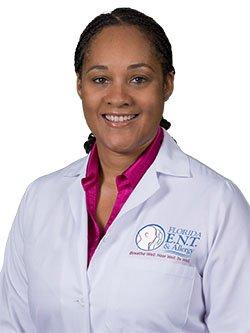
Darla Freeman is a licensed and certified Speech-Language Pathologist at the Florida Center for Voice and Swallowing where she specializes in the evaluation and treatment of voice and swallowing disorders. She received her B.A. from the University of Pittsburgh and M.A. in Speech-Language Pathology from the Ohio State University. Ms. Freeman is Lee Silverman Voice Therapy® (LSVT-LOUD) certified, trained in the use of the Speechvive device and trained in the Speak Out® program for Parkinson’s. From 2001-2016 she served as a Clinical Instructor in the Department of Communication Sciences and Disorders at the University of South Florida (USF). While at USF she initiated collaboration with the Movement Disorders Center for Excellence by providing speech, voice and swallowing screenings, training and education for patients with Parkinson’s disease and their caregivers. Ms. Freeman is a member of the American Speech-Language-Hearing Association (ASHA) including their special interest division group for voice and airway disorders. Darla serves on the executive board for the Tampa Bay Medical Speech Pathology Association and is founder (2016) of the Tremble Clefs choir of Tampa, FL. Accepted by Northwestern University Ms. Freeman is currently seeking her clinical doctorate in speech-language pathology.

Want more?
Don't forget to subscribe! There are many ways to listen: Apple Podcasts, TuneIn (Amazon Echo), Spotify or RSS Feed. (Need help subscribing? See our quick guide.)
For all of our Substantial Matters podcast episodes, visit Parkinson.org/Podcast.