Episode 50: Encountering Gender Differences: Women and PD Initiative
-
Dan Keller 0:08
Welcome to this episode of Substantial Matters: Life and Science of Parkinson's. I'm your host, Dan Keller. At the Parkinson's Foundation, we want all people with Parkinson's and their families to get the care and support they need. Better Care starts with better research and leads to better lives. In this podcast series, we highlight the fruits of that research, the treatments and techniques that can help you live a better life now, as well as research that can bring a better tomorrow. Although Parkinson's disease may affect women and men in similar ways, there are gender differences. Women have particular needs and issues in dealing with their disease that have not been adequately addressed up to now. So the Parkinson's Foundation has begun a two-year project to identify, prioritize, and address gender disparities in Parkinson's research and care. This effort, the Women in PD Talk project, will develop new patient-centered recommendations to improve the health of women living with Parkinson's nationally. Ten sites are engaging experts from the patient research and health care communities to identify women's needs, prioritize solutions, and create the recommendations. Using these insights, the Parkinson's Foundation and leadership teams will develop action plans to improve Parkinson's care for women. A number of months ago, I spoke with Megan Feeney, a Community Engagement Senior Manager at the Parkinson's Foundation, and Jessica Shurer, a clinical social worker and Center Coordinator of the Parkinson's Foundation Center of Excellence at the University of North Carolina in Chapel Hill. They walked me through the reasons for the project, the personnel involved in it, how it will run, and its goals. First, Megan, what is the Women in PD Talk, and what does TALK stand for?Megan Feeney 2:15
So Women in PD Talk is a project hosted by the Parkinson's Foundation. It is Women with Parkinson's Teams to Advance Learning and Knowledge. So that's what the TALK stands for. It's a PCORI-funded award that will run for two years, and the project will develop the very first Women in Parkinson's research agenda that will work towards addressing unmet needs and research priorities for women with Parkinson's.Dan Keller 2:43
And you mentioned PCORI, which is Patient-Centered Outcomes Research Institute, which is government-funded and really involves patients in what is needed to go forward?Megan Feeney 2:53
Yes, absolutely. So the core principles of PCORI and the core principles of the Parkinson's Foundation in terms of involving people with Parkinson's in any project really align. And so for this project, women with Parkinson's have been involved and in instances actually leading so many stages of this project. So there are four key personnel on the project: Ronnie Todaro, Allison Willis out of the University of Pennsylvania, and Sharon Krischer, who is a woman with Parkinson's in Los Angeles, and myself. And the key personnel for the project with the national team, who actually has developed and led all of the content that's come out of this project, has four women with Parkinson's on the team really leading this project and communicating what needs to be shared. And all of the PowerPoints and the fact sheet and everything that you see that comes out of this project was developed by the national team. Each regional team hosting a regional forum has one to two women with Parkinson's developing the forum itself. And then participants who are attending the forum are about half women with Parkinson's, half what we are calling stakeholders, which are allied health professionals, doctors, care partners, anyone who's directly involved with women in Parkinson's. So women in Parkinson's are not only involved in the project, but they're actually driving the project at times.Dan Keller 4:09
Why do you need to distinguish women from men in Parkinson's? Are there gender differences?Megan Feeney 4:15
So there's actually a lot of disparities for women with Parkinson's. Although they're diagnosed less often than men, what we found is a lot of their quality of life and health outcomes are worse than men. And so some of these examples are women are less likely than men to see a neurologist or movement disorder specialist for their Parkinson's care. Women are less likely to utilize allied health services such as speech therapy, occupational therapy, and physical therapy, which we know are critical to optimal care for Parkinson's. Women are more likely to experience medication fluctuations, experience off time and dyskinesias. And then women are also more likely to both attend doctor's appointments alone and live alone in old age. And so there are a lot of these factors that are at play that are influencing the health outcomes for women with Parkinson's. So it's important for this initiative to really focus on what might be driving those factors so that we can take steps in this research agenda to kind of correct and do what we can to really optimize quality of life for women with Parkinson's.Dan Keller 5:21
It's ongoing now, and it's a two-year project, but are you already getting results out of it, or are you going to wait till the end to see what it produces?Megan Feeney 5:28
So I think that's where actually Jessica can speak to some of this. So it is an ongoing project. The agenda will come out in early 2019. We're waiting for the formal piece of it until then. But I think with each regional forum that we're hosting, the communities themselves are learning a lot of information, and so some of that particular component of it, I've heard from several regional team leaders that they hadn't known about something in their community, and they're taking steps already to implement something in their community because of it. Or, for example, with Jessica's team in Chapel Hill, one of the components of something that one of their other team leaders, Nina Browner, said at the forum, we've actually incorporated into all of the forums moving forward because of the real impact that we saw that it had on the community. And I can let Jessica speak to that.Jessica Shurer 6:20
I think that's something that you've mentioned to me, Megan, too, that is interesting is that every forum you've done, you're learning from each experience too and how there might be geographical differences in the gender disparities as well. So for example, I remember us talking about with our forum, I had a lot of trouble getting women to sign up to come because they didn't feel like they had transportation to come. They didn't want to drive on the highway themselves. Their care partner couldn't take them, compared to some other locations where you're like, the women just came alone, and it wasn't an issue at all. And so that speaks to maybe where you live and how that affects your experience as a woman with PD as well.Dan Keller 7:00
Is that something that didn't occur to the project before it got going, but kind of fell out of it?Megan Feeney 7:06
So Jessica did this awesome thing that has kind of kicked off again. What we did at the national forum, we're working with the Chapel Hill team, we were saying, you know, what's something regional that you can pull into this, or what's something that you can use and implement in your own community. And Jessica pulled all of their comprehensive care data from their clinic to see the proportion of women and men who had been cared for, to see if they needed to analyze something in their own clinic and maybe bring light to certain situations or certain experiences. And so it kind of forced us to then go back to the other forums and say, is there something you want to pull that this forum had done? And they were able to see in their own practice whether or not they're really helping maximize quality-of-life issues for women or whether or not there's really room to grow. Whether it's this comprehensive care piece of incorporating physical therapists and allied health professionals more frequently or if it's making sure that their transportation barriers aren't at play when it comes to all this stuff.Jessica Shurer 8:06
Just sort of to go back to your question, Dan, that you were asking about the results of it, I think at the end of all this we're going to pull it all together and try to get the main data, but you're sort of a learning experience along the way for the teams, as well as them seeing what's coming out of this, what's being reported, how each area is unique. But yeah, that was something for us that I wanted to really use this as an opportunity to reflect on our own center and our population. And I did find that we see more men than women patients, and then of course more men are diagnosed with Parkinson's, but it made us question the transportation barriers. Or are we seeing women and then not seeing them for years? Are they ending up in nursing homes? And I do know that is something that we see often, something that came out of this initiative too, that women with Parkinson's are more likely to end up in a nursing home, and once people are in nursing homes, they're less likely to continue care with their neurologist. And we might be seeing that in our clinics a little bit too. And when I was analyzing our data, I also noticed some women who came to us had been misdiagnosed more likely than men, or they were diagnosed with Parkinson's and we realized they actually had an atypical Parkinson's disorder that other neurologists hadn't caught, and that seemed to be a little bit more likely than men. Of course, I can't say it's statistically significant. It also made me do a lot of reflection on my Parkinson's support group that I run every month. And Meg and I were just talking about this, about how I have two parts of it. One's a full group where everybody comes together. But before that, it's a split group where it's care partners in one room and patients in one room. They can openly discuss whatever they'd like, and the care partners who attend are primarily women, and the people with Parkinson's who attend that group are primarily men. I just had it the other day, and we had eight men and one woman in it, and so every time we get a new woman to that group, I think it sort of perpetuates the cycle because she's a little intimidated that she's the only woman, and then she might not necessarily return. And I'll talk to her after saying I haven't seen you in support group in a while, and she'll say, I was the only woman. They were talking about symptoms I couldn't relate to, or they were overtalking me and I was just not comfortable. And then it becomes a cycle from there. So there's obviously unmet needs that we need to tap into as far as gender differences and how we treat and care for this population.Dan Keller 10:38
It sounds like certain things, once you identify them, are modifiable. Certain things are not modifiable, like what the proportion is of women being diagnosed versus men, or transportation or things like that. So how are you foreseeing improving care of women in light of what you find out, both in terms of the modifiable things, getting those implemented, and then the things you can't do anything about?Jessica Shurer 11:04
It's made us reflect on, like I said, what we're seeing in our clinic and our support groups. And I think the first step to making a greater change for something like unmet needs and gender differences is being aware of them. This might be one of the first times anyone's really thought about how I treat a man with Parkinson's different than a woman with Parkinson's, or I haven't seen that patient with Parkinson's in a while, I wonder why. Maybe I should be reaching out. Is it because she's caregiving for somebody else? Is it because she's living alone? We had people not come to the Women in PD Talk forum. She's not coming to our clinic because she's nervous to drive on the highway, or she lives out in a rural part of the state and it's hard for her to get there because she doesn't have anybody to drive her. So I think awareness is the first step, but then reaching out to them. I think if we could ideally come up with different transportation options, that would be great. In terms of support groups, I think there could be greater outreach to women to come to support groups or to start their own women's group, which might feel more comfortable for them. I think also reflecting on our communication styles and how that might be different with a man versus a woman with Parkinson's. Are we not asking questions because they're uncomfortable, or because it's a male neurologist not wanting to ask a kind of question like sexual dysfunction or incontinence to a woman, or a woman might be less likely to report that to her neurologist? So I think clinicians as well, that's something we can modify, is doing self-reflection on how are we communicating, and are there ways we can do it more effectively to meet the needs of this population.Dan Keller 12:59
For rural states or states with rural areas, have you considered electronic outreach, either by computer or even just by telephone conference call, sort of virtual women's support groups kinds of things?Megan Feeney 13:13
We really were strategic in where we selected the sites, and we hosted a forum in Sioux Falls, South Dakota, and they're looking into telemedicine as a clinic itself. But what they also do is they, once a month, send their neurologist. They have a movement disorder specialist coming in in August, but they send their neurologists out into the rural sites, and it's like a mobile clinic. So there's definitely that conversation of this transportation piece and these barriers to actually getting into a clinic. But I wanted to go back, if that's okay, to your previous question and talk about what can we actually do and what can we actually address. And I think you'd be surprised at how much of it we actually can pretty easily address. So there are definitely those national bigger-picture pieces about grant funding and research and all these items that we can as a national organization make a lot of noise with, which is something that's really wonderful to be able to have such a podium to stand on and talk about these issues, especially as they relate to policy issues and grant funding. But there's also so much that we can do just on a day-to-day that we've been able to find certain areas are doing so well and other areas may not know about. And Jessica talked to this, the communication piece is so important in how women are communicating with their providers and how providers are communicating with women. And really this piece about so many women are feeling isolated and so many women aren't really sure what they can ask about or what they can ask about in 15 minutes in a doctor's appointment. And so there have been so many strategies that we've heard at these forums that really address this communication barrier. And it's, you know, as simple as really women coming to every doctor's appointment with the notes that they want to share so that they don't forget them. We see often baseline surveys taken from when someone's diagnosed with Parkinson's, but we haven't necessarily seen them continuing throughout the Parkinson's progression. And in some of these locations that we've hosted these forums, they continue to do that at each six-month appointment so that they really have that piece and they can say, hey, you know, at your last appointment you didn't say this was a problem, and now you're marking it as a problem. Let's talk about it. Let's figure it out. And then there's this also communication piece with social networks. We've heard so often the importance of having an accountability person or support network. We've heard from women the value of support groups that are for women, and it doesn't have to be a women's-only support group, but it has to be a support group that really addresses issues that women are experiencing or is open to hearing about those issues. And so these types of items aren't these huge-picture items that are really hard to tackle. They're really these day-to-day pieces of making sure that we're putting women's issues just into the conversation and making sure that, like I said earlier, women aren't following up with a neurologist as frequently as men are. So maybe we need to, as Jessica said, bring this awareness piece to make sure that they're following up with a neurologist, or maybe putting them in physical therapy or speech therapy earlier than the first fall. Or earlier than when swallowing issues come out. And so it's stuff like that that really this clinical piece that we have the opportunity to really work on without making these drastic changes to our current health system.Jessica Shurer 16:45
I think something else that we need to be doing in relation to the communication piece is empowering these women to advocate for themselves, to make sure their own voice isn't lost. Because something that I see discussed in support groups and just one-on-one settings is that women and men do this too, but I'd say more comes from women, will say that when they're in their neurologist visit, the neurologist might turn to their male caregiver and ask them questions, so how has she been doing, instead of looking at the woman herself and asking, or if they're slow to speak and get their answer out, if it is asked to them directly, a male caregiver might jump in and finish that person's sentence or be disagreeing in the background, and they can feel like their voice is lost, and it further stigmatizes and isolates them. And so I think that we, like I said, need to empower them to be able to advocate for themselves and make sure that they still feel like they have a sense of dignity and independence in this process, even if it is still shared caregiving or it can be a partnership with them and their caregiver, and their caregiver should be allowed to chime in with a perspective as well, but at least make them feel a little bit more heard and on the same page.Dan Keller 18:05
Is there any way you can encapsulate a message to women how to think about this, advocate for themselves at this point, just something where they can take away a practical point so that their treatment is better?Megan Feeney 18:20
So again, I haven't fully analyzed all of this data, but something that we've heard time and time again is reaching out to either a foundation like the Parkinson's Foundation to find these resources, or reaching out to other women with Parkinson's. Several of our centers of excellence have kind of women that they work with really closely that have volunteered to be that person. And so if anybody's having a hard time with a diagnosis, several clinics and centers that will say, you know, reach out to this person and talk to them and see. You need to be interested in going to their support group, but really just reaching out is one of the first steps and knowing that the issues that they're experiencing, they're not alone in experiencing those issues. We've seen and had participants who are wheelchair-bound, late-stage speech difficulties, and we've been there to be able to somehow figure out whether they need a scribe or someone to speak for them to make sure that their voice is heard. But we've also had young-onset women with young kids who are really balancing. I'm a working mom with children and how do I juggle that? But we've heard a lot and there are so many stories that we've heard over and over again in each region that they thought that they were the only one who had experienced that or who was like that or who didn't have a care partner. And I would really encourage women to reach out either again to the foundation or to someone in their local network to be able to have the opportunity to just talk to someone else like the project says, to take those first steps in making sure that they're advocating for themselves enough to get the care that they deserve.Jessica Shurer 20:01
You mentioned the word story that you've been hearing these stories, and I think for me as one of the forum team leaders, that was the most powerful aspect of this forum was that we had them reflect on their Parkinson's experience and formulate their story. So the first half of this program, we had presentations about the research that's been found with the differences in risks and care and treatment and symptoms, but then the meat of it was really having them break out into groups and reflect on how this related to them, how their experience with Parkinson's may have been influenced by their gender, or think back to what do they feel like might have increased their risk of having Parkinson's, or how have their symptoms been different from what men in their support groups have reported, or have they had more difficulty communicating with their care providers because they don't want to speak up, or what's their identity as a woman with Parkinson's and how might that be different? And I think that asking them to reflect on the experience really made a big difference too. So I think that's a message that can come out of this that's very empowering to form your own identity as a woman with Parkinson's and how is that unique to them.Dan Keller 21:18
Very good. Thank you. I appreciate it. For more information on women and Parkinson's visit parkinson.org/women or to learn more specifically about the Women and PD Talk project, visit parkinson.org/womenandpd. As was mentioned in the interview, transportation problems can be a barrier to good care, and the website features an expert briefing webinar from September 2016 by Rebecca Gilbert and Sarah Rigger at parkinson.org/eb, as well as videos on travel and transportation. And of course, our PD information specialists are available on our toll-free helpline. They can answer questions and provide information about today's topic or anything else having to do with Parkinson's. You can reach them at 1-800-4PD-INFO. If you want to leave feedback on this podcast or any other subject, you can do it at parkinson.org/feedback. At the Parkinson's Foundation, our mission is to help every person diagnosed with Parkinson's live the best possible life today. To that end, we'll be bringing you a new episode in this podcast series every other week. Till then, for more information and resources, visit parkinson.org or call our toll-free helpline at 1-800-4PD-INFO, that's 1-800-473-4636. Thank you for listening.
Given the differences women may encounter when dealing with their Parkinson’s Disease (PD), the Parkinson’s Foundation is leading the first national effort to address gender disparities in Parkinson’s research and care as part of an overall Women and PD Initiative. The Women and PD Teams to Advance Learning and Knowledge project (Women and PD TALK, for short) aims to develop new patient-centered recommendations to improve the health of women living with PD.
Over the two-year term of the project, a national network of ten sites is engaging experts in the patient, research, and health care communities to identify women’s needs, prioritize solutions, and create the recommendations. Using these insights, the Parkinson’s Foundation and leadership teams will develop action plans to improve Parkinson’s care for women. In this podcast, Megan Feeney, a Senior Manager in the Community Engagement Department of the Parkinson’s Foundation, and Jessica Shurer, Clinical Social Worker and Center Coordinator of the Parkinson’s Foundation Center of Excellence at the University of North Carolina in Chapel Hill, discuss the reasons for the project, the personnel involved in it, how it will run, and its goals. While the project is just starting, it is already producing actionable insights.
Released: March 12, 2019
-
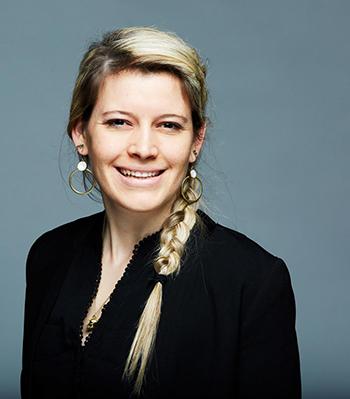
Megan Feeney, M.P.H. is Senior Manager, Community Engagement at the Parkinson’s Foundation. In this role, she manages several national patient leadership programs that engage the community in addressing critical unmet needs in Parkinson's. She manages the Women and PD Initiative, an innovative program that addresses long-standing gender disparities in Parkinson's. Within the Women and PD Initiative, her team received a $250,000 Patient-Centered Outcomes Research Institute (PCORI) Engagement Award titled, Women and PD Teams to Advance Learning and Knowledge (Women and PD TALK). Throughout her work, Megan collaborates closely with people with Parkinson’s, care partners, allied health professionals, researchers and industry representatives to promote patient engagement and involvement in Parkinson’s research and care. She received a Bachelor of Arts from the University of California, Los Angeles and a Master of Public Health from the New York University, School of Global Public Health.
-
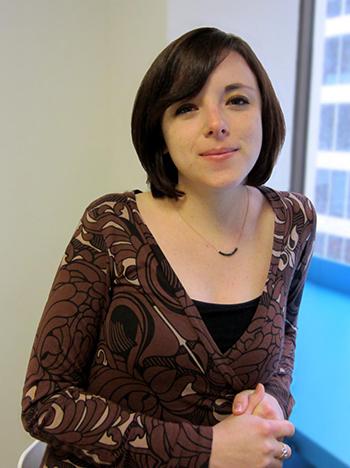
Jessica Shurer is the Center Coordinator and Clinical Social Worker of the Movement Disorders Center at the University of North Carolina at Chapel Hill, a Parkinson’s Foundation Center of Excellence and a CurePSP Center of Care. She graduated from Penn State University with a bachelor’s in psychology and minors in Human Development & Family Studies and Gerontology. She received her Master of Social Work from UNC Chapel Hill in 2012, where she also obtained a Certificate in Aging and was a participant in the Hartford Partnership Program for Aging Education. In her current role, Ms. Shurer works as a team with the movement disorders specialists to address patient and care partner psychosocial needs, mood and coping, as well as offers short-term problem-solving counseling and connection to community resources. In addition, Ms. Shurer works to grow a referral network of Parkinson’s-specialized rehabilitation clinicians across the state, coordinates two specialty interdisciplinary clinics, one for Parkinson’s and one for atypical Parkinsonism disorders, facilitates both the Chapel Hill Parkinson’s support group and a PSP & CBD support group, and organizes educational programs for patients and care partners.


Want more?
Don't forget to subscribe! There are many ways to listen: Apple Podcasts, TuneIn (Amazon Echo), Spotify or RSS Feed. (Need help subscribing? See our quick guide.)
For all of our Substantial Matters podcast episodes, visit Parkinson.org/Podcast.