Episode 28: Autonomic Problems
-
Dan Keller 00:08
Welcome to this episode of Substantial Matters: Life and Science of Parkinson's. I'm your host, Dan Keller. At the Parkinson's Foundation, we want all people with Parkinson's and their families to get the care and support they need. Better care starts with better research and leads to better lives. In this podcast series, we highlight the fruits of that research, the treatments and techniques that can help you live a better life now, as well as research that can bring a better tomorrow. Aside from motor symptoms, people with Parkinson's and their caregivers often face physical and interpersonal problems that may go unaddressed throughout their interactions with their clinical care team. Addressing troubling symptoms of lightheadedness or dizziness when standing up, urinary problems, sexual intimacy, and other aspects affecting quality of life may reveal effective ways of dealing with them. Alleviating these seemingly small problems can yield big improvements. Just think about how getting rid of a tiny mosquito in the room can make it a lot easier to sleep. At the Tel Aviv Medical Center in Israel, a Parkinson's Foundation Center of Excellence, Director Dr. Tanya Gurevich explores those factors that can improve quality of life and says patient happiness and comfort are the goals she strives for.Dr. Tanya Gurevich 01:39
When my patient said to me that his definition of Parkinson's is nothing hurts you and everything is painful. You don't know what is not good with you. You cannot put your finger on any specific place, but everything is in discomfort. I think it's a very good explanation. And after 20 years of working with these patients, I think that I feel by myself the feeling of discomfort, of rigidity, of this tremor, and we think that there is no reason not to think about very small symptoms that are not considered to be main symptoms, but they can make a change. As you know, it is said in advertising, small things may create large change.Dan Keller 02:49
How do these autonomic dysfunctions or problems manifest? Is it temperature regulation, digestion, gastrointestinal, other things?Dr. Tanya Gurevich 02:58
Let's start from the early beginning. We have in our body, actually, three types of nervous system. Main is the brain, and it is responsible for movements and for Parkinson's disease. There is the peripheral nervous system. There are nerves and muscles that perform the order that the brain gives us. And there is another system that is involitional. It doesn't depend on our mood, on our feelings—it depends on our feelings, but not on our decisions. It's an automatic system, and it's called autonomic. It's responsible for the job of our viscera, of the heart, of the lungs, gastrointestinal organs, of our thermoregulation, of our sweating, all of these things that patients with Parkinson's disease have some problems with, and they're not usually paid enough attention. So I'm speaking about all these small things that may cause a great discomfort. For example, constipation—constipation is a special autonomic sign. We know that constipation may be a very, very early sign of Parkinson's disease. It may appear even before the appearance of some motor features, and all of us know how disabling and disturbing it is, and we're looking for treatment, but we still have no good treatment. Recently, two or three days ago, I saw a new, interesting paper on electrical acupuncture for functional constipation. It is the constipation that Parkinsonian patients have. So maybe it's a new development. Then we're speaking about dizziness. There are a lot of posters in meetings about “Are you dizzy? Do you mind standing?” A very good paper of Dr. Perlmutter that is called “Do You Mind Standing?” And we know that our Parkinsonian patients, they mind standing because they may be dizzy and unstable. Sure, Parkinson's itself and its motor disturbances cause instability and maybe even dizziness, but orthostatic blood pressure changes also have a great contribution to it. What it is: when you are lying, you have blood pressure—for example, it can be normal, 130 on 85—but when you are standing, according to Newton's law, the blood from the head goes down. In healthy people, there is a special mechanism of vasoconstriction that prevents blood from going down to the legs. But one of the problems of Parkinson's is that this mechanism is damaged, and blood is really going from the brain to the legs, and we feel dizzy. It is expressed in the lowering of blood pressure. For example, we began from 130, I said, on 85, and now on standing the patient has 100 or 65. It's low. It is orthostatic hypotension, and it's a great contributor to neck pain, to dizziness, to blurred vision, sometimes even to inattentiveness. And now we have how to treat it. What we have is to ask the patient if they have all these feelings. Another very disturbing symptom that we have no good solution for is sweating. Patients may sweat. It may be such drenching sweating during off situations. It may also be in the on situation, and sometimes women describe it as hot flashes of menopause, and we still have no good solution for it, but we can try. There are some medications that can help, but it is very important to show the patient that we know that it disturbs them, to discuss it with them, or to explain to them that, yeah, we know that it's bad, but if we give some medication, it may be worse, it may have some other adverse events. The explanation is key for a good understanding, and sometimes it's enough. I have the same experience, by the way, with orthostatic hypotension. Patients are saying, I'm standing up, I'm dizzy, I can't walk. I'm afraid to fall. So I'm saying, you see, you have orthostatic hypotension. It is a drop of blood pressure. You have to stand and cross your legs for one minute after standing up. It will be better. You have to drink more, and you will feel better. So they feel better.Dan Keller 08:59
It sounds like each of these problems needs to be addressed separately. One thing doesn't cure all, and certainly getting levodopa doesn't relieve all of these things.Dr. Tanya Gurevich 09:08
Sure, sure, it is an issue. We know Parkinson's as trembling, falling, and rigidity, and fortunately, we have treatment for these symptoms. Levodopa is a good treatment. It has all its side effects later, but it's a good treatment. It's helpful, and these autonomic features sometimes even worsen on levodopa treatment, and it is a problem. So we have to look for other ways to help the patients without causing side effects. And I always say that we physicians of Parkinson's have to be very, very creative, to be all the time on the internet, in the books, to look for all innovations, also for motor symptoms, but for non-motor symptoms of Parkinson's. For example, many patients have drooling. It's very, very unpleasant. So we now have botulinum toxin injections to reduce it. We can help in small things. And another issue that I wanted to raise is about sleep. We know that patients with Parkinson's disease have this REM sleep disorder, that they are crying, they're acting their dream, actually, and it may be a very, very early symptom, even before motor manifestations of Parkinson's. And it may be disturbing not for patients, but for caregivers. I have a patient that was hospitalized on the ward, and then he was discharged and came to me for fine-tuning of the therapy. And I asked, as I always ask, how he's sleeping, if he has some kicking, some crying during the night. And his wife said, yes, he hits me. Sometimes he has a lot of movements, and he hits me. And I said, but we have treatment for that. Why didn't you say it on the ward? She said, why do I have to say to anybody that my husband hits me in the night? So I asked, why did you say it to me? You asked, you know this issue, so I said to you. And he was treated. He got medication. It was better. She was very thankful to me. So it's again, small things making a great difference.Dan Keller 11:54
Do patients and caregivers often not report these things spontaneously? Do they just assume that these things are either part of the disease or not even think they're connected to the disease? And do they have to be made aware to report anything that bothers them? And do physicians need to be educated to ask?Dr. Tanya Gurevich 12:15
Yeah, sure, it's a very important thing. Patients don't know that it is a part of Parkinson's. They think that it is other problems, maybe not so important, maybe too embarrassing to report, because the same with sexual issues. If you don't ask, they don't say. Once I asked a patient about his urological problems, so you're going to speak about a urologist—it gives you a way to ask about sexual function. And he said, thank you, doctor. Nobody asked me. He kissed my hand. It's very touching, and it's very important not to make a patient feel alone, especially with these autonomic things, because everybody sees that he is trembling and he is rigid and he stoops, but nobody feels how he feels, actually. And I think that we and our team now know how to do it.Dan Keller 13:24
Anything we've missed or important to add on the topic for patients and caregivers?Dr. Tanya Gurevich 13:28
Some tips. For example, it's always important when you are standing up to make your legs crossed for 20 seconds and maybe to contract your pelvic muscles. It will increase the blood pressure, and it will avoid this dizziness in the beginning of standing. And while you are walking, you can do the same things also. If you feel dizzy during walking, stand for a minute, contract your pelvic muscles and cross your legs—it will be better, I promise. And if, for example, on the plane now, before standing up in the plane, I advise to drink a glass of water—not cold water. People like cold water. I don't think that it's good. It has to be warm water, pleasant water. If you drink it quickly, you will stand up without dizziness.Dan Keller 14:36
Very good. I appreciate it. Thank you.Dan Keller 14:47
The Parkinson's Foundation website at parkinson.org has a variety of resources on non-motor symptoms and how to deal with them for people with Parkinson's as well as for health professionals. And as always, you can call our toll-free helpline to speak with our PD Information Specialists, who are here to answer questions and provide information about this topic or anything else having to do with Parkinson's. You can reach them at 1-800-4PD-INFO. If you have any questions about the topics discussed today, or if you want to leave feedback on this podcast or any other subject, you can do it at parkinson.org/feedback. At the Parkinson's Foundation, our mission is to help every person diagnosed with Parkinson's live the best possible life today. To that end, we'll be bringing you a new episode in this podcast series every other week. Until then, for more information and resources, visit parkinson.org or call our toll-free helpline at 1-800-4PD-INFO—that's 1-800-473-4636. Thank you for listening.
As people with Parkinson’s disease experience a variety of symptoms and challenges beyond movement problems, a comprehensive, team approach can benefit them with matters such as blood pressure drops, urinary symptoms, sleep disturbances, sexual and intimacy matters, and other quality of life issues affecting them and their caregivers. However, due to the associated stigma or potential feelings of embarrassment, people with PD may not bring these matters up with their clinicians. In this podcast, Dr. Tanya Gurevich, director of the Movement Disorders Center at Tel Aviv Medical Center in Israel, a Parkinson’s Foundation Center of Excellence, focuses on those problems that people with Parkinson’s often do not discuss with their care team but, for many of them, may have easy solutions.
Released: May 8, 2018
-
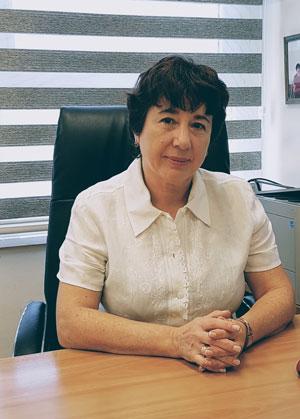
Dr. Tanya (Tatyana) Gurevich is a recognized specialist in the field of Neurology, movement disorders and neuroautonomic disturbances. She is a director of the interdisciplinary movement disorders unit, Parkinson’s foundation center of excellence, at the Neurological Institute, Tel Aviv Sourasky Medical Center. Main areas of her research include development and refinement of the interventions for different aspects and stages of Parkinson’s disease and other movement disorders, with a special focus on the treatment of dysautonomic manifestations, and implementation of the interactive multidisciplinary strategy for comprehensive disease management and the empowerment of patients and their families. Dr. Gurevich also focuses on collaborative clinical research of the lesser-known movement disorders (Multiple System Atrophy and others). She is a principal investigator in a number of clinical trials and receives competitive grants for the research support.
Dr. Gurevich is a senior lecturer at the Sackler Faculty of Medicine, Tel Aviv University and a faculty member of the Sagol Neuroscience School. She earned her MD from the Leningrad (Saint Petersburg) Pediatric Medical University, Russia, followed by a double residency in Neurology (Faculty of Neurology at the Leningrad Pediatric Medical University, Russia and then Tel-Aviv Medical Center, Israel). Dr. Gurevich completed a clinical fellowship in movement disorders in the Department of Neurology at Innsbruck Medical University, Austria, and a visiting physician program in the autonomic disorders in the Autonomic Laboratory at Mayo Clinic, Rochester, MN, USA. Dr Gurevich serves as a member of the Medical Advisory Boards of the Israeli Parkinson's Association, Jerusalem Tikvah4Pakinson organization and Israeli Huntington’s disease association.

Want more?
Don't forget to subscribe! There are many ways to listen: Apple Podcasts, TuneIn (Amazon Echo), Spotify or RSS Feed. (Need help subscribing? See our quick guide.)
For all of our Substantial Matters podcast episodes, visit Parkinson.org/Podcast.