Episode 22: Do You See What I See? Hallucinations and Parkinson’s Disease
-
Dan Keller 00:08
Welcome to this episode of Substantial Matters: Life and Science of Parkinson's. I'm your host, Dan Keller. At the Parkinson's Foundation, we want all people with Parkinson's and their families to get the care and support they need. Better care starts with better research and leads to better lives. In this podcast series, we highlight the fruits of that research, the treatments and techniques that can help you live a better life now, as well as research that can bring a better tomorrow. A hallucination is something you see, hear, smell, taste, or feel that is not actually there. Until recently, this was not a well-known or talked about symptom of Parkinson's. Many people didn't know hallucinations and delusions could be part of PD, and healthcare providers did not usually bring it up early in the disease course. For people with Parkinson's, a good understanding of all possible symptoms and your risk can help you manage the disease and be an active participant in your care. The Parkinson's Foundation has done research on hallucinations in PD. The Parkinson's Outcomes Project is the largest clinical study of Parkinson's, with more than 10,000 patients enrolled. Data from this study show that about 20% of all people with PD will experience some form of hallucinations or delusions. This number increases the longer you live with the disease. About 70% of people who have lived with PD for 20 years or more experience these symptoms. People may see or hear things that are not there or may have other sensory disturbances. This can limit day-to-day activities and can sometimes cause significant distress as Parkinson's advances and more medications are needed to treat it. Managing hallucinations can become a balancing act. In some cases, lessening dopaminergic medication can help control hallucinations, but you want to make sure movement symptoms are still well controlled. In other cases, specific antipsychotic drugs are needed. I spoke with Dr. Joseph Quinn of the Oregon Health and Science University, a Parkinson's Foundation Center of Excellence, about the scope of the problem of hallucinations in Parkinson's and ways to deal with it. How big a problem are hallucinations in Parkinson's disease?Dr. Joseph Quinn 02:45
There are really a big problem, particularly as the disease advances and as people need to be on higher doses of medications. By hallucinations, we're talking about seeing things that are not there, hearing things that are not there, although the visual hallucinations are the most common. They really are promoted by the medicines that are used to treat Parkinson's disease. Once the doses get up high enough, then people actually start to experience these usually visual phenomena. And in the beginning, they're mild and easy to distinguish from reality, and they're not particularly distressing to patients, but over time, they can become more distressing, and then they really become a real difficult management problem. Because the first instinct, and the first appropriate instinct, is to try to reduce the medication a little bit, and sometimes that will reduce the hallucinations, but at the cost of worsening the Parkinson's, and then you're in sort of a balancing act. Now there are medications that are designed in people without Parkinson's disease. They're designed to suppress hallucinations—antipsychotic medications. Those medicines have been around for a long time. The problem with those is that they suppress hallucinations, but they worsen Parkinson's. They can even make people without Parkinson's disease look like they have Parkinson's—they're that potent. So it's been a real conundrum for us for a long time, how to best manage this drug-induced problem in our patients with Parkinson's disease.Dan Keller 04:14
If they become more troublesome as the disease progresses, does that mean they become more frequent or more severe, and then people have a harder time distinguishing reality from hallucination?Dr. Joseph Quinn 04:26
It's all of the above. They become more frequent to the point where they're occurring on a daily basis. They become more severe in that they're more vivid, and they become more distressing because people have a harder time distinguishing these hallucinations from reality. It's at that point that I think everyone agrees we need to treat the patient. If it's distressing to the patient, we need to do something about it. Until recently, our options were really to reduce Parkinson's medicines or try antipsychotic medicines that were our best alternatives, but that were imperfect in many ways. That is, in some cases, they had sedating side effects. We chose the antipsychotic medications that were available that had the lowest risk of making Parkinson's worse. They still had other problems. So you either had to deal with a lot of sedation and actually a terribly effective antipsychotic effect, or people had to have very frequent monitoring for bad side effects, and by that I mean weekly blood tests to be on this one type of medicine. It's actually effective for hallucinations, but it's burdensome for the patient to have to get their blood tested every week before they can get their prescription for the week. So until recently, it's been a problem without a great alternative for us.Dan Keller 05:43
You said up till now, so is the implication that something better has come along?Dr. Joseph Quinn 05:47
Yeah, so a new class of medicine has come along. A new medicine was approved just a few months ago, and this new medicine, first of all, has been tested specifically in hallucinations—psychosis in Parkinson's disease—rather than in schizophrenia or some other disease and then sort of transferred over to Parkinson's disease. And what's more, this new medication does not have any direct effect on dopamine, which I think most of the listeners know is the key chemical in Parkinson's disease. We're trying to boost levels of dopamine to reduce the Parkinson's symptoms. Most of the traditional antipsychotic medications work by suppressing dopamine, so there's this dopamine battle going on when you're trying to balance between Parkinson's symptoms and hallucinations. This new medication works on a different neurotransmitter. It works on something different than dopamine, so it is able to achieve an effect on hallucinations without worsening Parkinsonism.Dan Keller 06:45
And this new medication is pimavanserin.Dr. Joseph Quinn 06:48
Yeah, that's right. Pimavanserin is the generic name for it.Dan Keller 06:52
How effective is it, and does it have any downsides?Dr. Joseph Quinn 06:54
My personal experience with it so far has been limited because it's just been available for several months now, so I haven't developed a great personal feel for how well it works. In the clinical trials, which were done according to the gold standard—double-blind, placebo-controlled trials—pimavanserin did reduce psychotic symptoms in the target population, people with Parkinson's disease with hallucinations, without worsening their motor scores, their tremor, and their slowness and all those sorts of things. There is some concern about side effects that are somewhat similar to the traditional antipsychotics in terms of some EKG changes and that sort of thing. So there is some routine monitoring that's done, and there's some concern about combination with some other medications. But really, in the scheme of things, when we think about prescription medicines in general, what we've seen from the clinical trials is not showing us a huge downside.Dan Keller 07:54
Does it look like the mechanism or the pathway that this acts on will open up the field to more drugs like it, or pursuit of similar things?Dr. Joseph Quinn 08:04
Yes, yeah, that's an excellent point to make. That's one of the, I think, exciting things. It's, of course, exciting just to have a new alternative that has fewer side effects. But the fact that this helps to point us in the direction of a new mechanism for treating this troublesome side effect without aggravating Parkinson's is a very real possibility, and I'm sure that a number of drug companies are already at work trying to make similar and maybe even better compounds than this one.Dan Keller 08:29
How much do hallucinations limit what people can do? I would think that even if they're mild, maybe you don't want to be driving because you might see something pop up in the road.Dr. Joseph Quinn 08:39
That's a good point, that even mild hallucinations can interfere with some functions like you described. And I think clinicians vary a little bit in how aggressively they feel that they have to treat the hallucinations. Some movement disorder specialists feel strongly that even the mild hallucinations need to be addressed before they turn into something more problematic. So the hallucinations, as you point out, even when they're not obviously distressing to the patients, can interfere with function. But the challenge that we've had in the past is not necessarily the hallucinations that end up limiting the patients; you have to back off on the other drugs, and then the patient's Parkinson's can become so severe that you just can't get the patients to a good level of day-to-day functioning.Dan Keller 09:19
This is one thing that may come up as the disease progresses and people are on medication longer. Do you have an opinion about informing patients when they're first diagnosed and first are treated, what's coming along, or is it better to do it in a stepwise fashion over the course of the disease?Dr. Joseph Quinn 09:37
That's a great question, and there's no right or wrong answer for it. I think the right answer is you do it sort of on a case-by-case basis. Anytime you start a drug that's got side effects, we are obligated to share the risk of side effects with the patients. And the way you share it, and the way you describe it, of course, is going to be tailored to the patient to some extent and to the clinical situation. But you know, I start talking about hallucinations relatively early on when I'm starting these medicines, let people know that this is a risk, but really at low doses, it's a low risk. I really don't expect it to happen when people are just on startup doses of dopaminergic medicines, but by introducing the idea early, then it becomes easier to talk about it as time goes on. That's probably how I manage informing people about most of these things. I don't feel compelled to give everyone the difficult news about the later stages of the illness when that's many, many years off, but I do tailor it to the situation. Some people want to know everything right up front, and if that's what they want to know, then I try to share with them the best I can. I don't start talking about late-stage complications the same day I give somebody a diagnosis.Dan Keller 10:42
Anything interesting or important to add on the topic?Dr. Joseph Quinn 10:47
Maybe I'll just make one other point about hallucinations. Hallucinations often occur in the context of declining cognitive abilities—not always, but that's often an accompaniment. So drugs that can help with cognitive function a little bit are another strategy for trying to reduce hallucinations a bit. And I'm talking about drugs like donepezil and rivastigmine. These are drugs that were originally developed for the treatment of Alzheimer's disease. They work on yet another neurotransmitter. But, you know, I think experienced movement disorder docs have observed that these drugs can actually help with hallucinations when they're in the milder phase. So it's an observation that's probably not as generally appreciated by general practitioners or even general neurologists. So that's another element to keep in mind when you're coping with the onset of hallucinations. Now that strategy is also being pushed a little further. That class of drugs had a limiting factor of upset stomach and nausea and that sort of thing, and now some strategies have been developed to improve the effect of the drugs on the chemical in the brain without doing the same thing in the stomach, so that way the desired effects in the brain can be achieved without an increase in the nausea. That new class of drugs has not been approved yet, but it's moving along in terms of development, in some cases in phase three studies.Dan Keller 12:08
Very good. I appreciate it. Thanks.Dan Keller 12:19
If you would like more information about hallucinations, please call our toll-free helpline at 1-800-4PD-INFO. Our PD information specialists can help you find healthcare professionals with experience in helping people deal with hallucinations, delusions, and other behaviors. The Parkinson's Foundation also has free resources on the topic. One of these resources is the book Psychosis, which you can order from one of our information specialists, or you can order the book online at parkinson.org/books. We're also hosting a webinar on hallucinations, delusions, and paranoia on February 27 at 1 PM Eastern Time. Ask the helpline for information or register online at parkinson.org/expertbriefings. Don't worry if you can't tune in at that time; all past Parkinson's Foundation webinars are available for viewing at parkinson.org/expertbriefings. If you have any questions about the topics discussed today, or if you want to leave feedback on this podcast or any other subject, you can do it at parkinson.org/feedback. At the Parkinson's Foundation, our mission is to help every person diagnosed with Parkinson's live the best possible life. Today, to that end, we'll be bringing you a new episode in this podcast series every other week. Until then, for more information and resources, visit parkinson.org or call our toll-free helpline at 1-800-473-4636.Dan Keller 14:08
Thank you for listening.
Hallucinations might not be something you associate with Parkinson’s disease (PD), but they are a possibility in PD and can be a big problem, especially as the disease progresses. Visual hallucinations are the most common, but auditory and other sensory hallucinations also may occur. At first, it may be easy to distinguish the hallucinations from reality, but over time they can become more distressing for the person with Parkinson’s and their family, as well as a challenge for medication management. Some hallucinations are caused by medications to treat PD, so management becomes a balancing act between motor symptom control and hallucinations. Dr. Joseph Quinn, professor of neurology at the Oregon Health and Science University in Portland, a Parkinson’s Foundation Center of Excellence, discusses the problem and how people with PD can deal with it.
Released: February 13, 2018
-
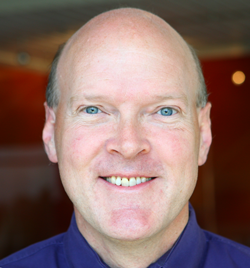
Dr. Quinn is a neurologist at Oregon Health and Science University and the Portland VA Medical Center, specializing in cognitive disorders and neurodegenerative disease. He became director of the Northwest VA Parkinson’s Disease Research, Education, and Clinical Care Center (PADRECC) in 2010, and director of the OHSU Parkinson’s Center in 2013. He also serves the Oregon Alzheimer’s Disease Center as Director of the Biomarker Core.
Dr. Quinn's overall research focus is on developing strategies for treating and preventing cognitive decline and dementia in individuals at risk, including patients with Parkinson’s disease. Specific research projects range from animal studies testing experimental agents in the preclinical setting, to small clinical studies using biomarkers, to large multi-center clinical trials of experimental strategies. Currently funded studies include preclinical studies of copper-modulating strategies for improving cognitive function, a clinical study of CSF microRNAs as biomarkers of neurodegenerative disease, and clinical studies of nutritional strategies for preventing cognitive decline, including omega 3 fatty acids and vitamin D.

Want more?
Don't forget to subscribe! There are many ways to listen: Apple Podcasts, TuneIn (Amazon Echo), Spotify or RSS Feed. (Need help subscribing? See our quick guide.)
For all of our Substantial Matters podcast episodes, visit Parkinson.org/Podcast.