Episode 172: Current Tools for Receiving a Parkinson’s Diagnosis
-
Dan Keller 0:08 Welcome to this episode of Substantial Matters: Life and Science of Parkinson's. I'm your host, Dan Keller. At the Parkinson's Foundation, we want all people with Parkinson's and their families to get the care and support they need. Better care starts with better research and leads to better lives. In this
podcast series, we highlight the fruits of that research, the treatments and techniques that can help you live a better li fe now, as well as research that can bring a better tomorrow. Some early cases of Parkinson's disease can be readily diagnosed if the person fits the current criteria for PD, which include classic symptoms such as bradykinesia, which is slowness of movement, accompanied by a shaking or tremor of a limb while at rest, stiffness or rigidity, or trouble with balance or falls, but some early cases are not so straightforward and may require multiple clinic visits before reaching a diagnosis of PD or a similar condition. Fortunately, several laboratory and imaging tests are available to aid in making a diagnosis. To find out about them and how they're used, I spoke with movement disorders neurologist Dr. Michael Okun, director of the Fixell Institute for Neurological Diseases at the University of Florida. What is the current process for receiving a clinical Parkinson's diagnosis, especially if there are not yet physical symptoms, and is that a common situation? Dr. Michael Okun 1:54 So it turns out that although there has been a flurry of activity in the scientific community, about developing laboratory-based tests, things like spinal fluid and blood and saliva, as well as imaging tests like the dopamine transporter scan or dat scan. Sometimes people use MRIs. There's also a skin biopsy. We still haven't agreed on any standard for the diagnosis of Parkinson's, and so as we look across multiple countries, we look across multiple regions, the number one most important thing that someone can do is to see a neurologist or someone that has some expertise in Parkinson's disease, and receive a really thorough history where they're going to ask you about things like, do you act out your dreams, have you lost smell, do you have things like constipation that have cropped up, and might there be other symptoms like depression or anxiety that may be a clue, and so once a clinical practitioner is done taking a history on you, they should examine you, and there are lots of things on the examination that could suggest that you may have the symptoms of Parkinson's, and one of the big mysteries about this disease is that it picks on one side of the body more than the other, and so you may see symptoms of slowing, which we call Bradykinesia. Brady, in many languages, means slow, and we look for things like stiffness, and there's a certain type of rigidity called cognitive rigidity, and we look for other features in short steps, maybe handwriting is smaller, and so there are a number of symptoms that, along with the history, can suggest that you have Parkinson's. Now it is tantalizing to think that we're getting closer and closer to having laboratory-based tests, where we might be able to perhaps run a specific blood test, or a test on somebody's spinal fluid, or an imaging study to be sure we have Parkinson's disease, and we're not there yet, and one of the challenges has been that even when those tests come up positive, there are other diseases that also can cause similar abnormalities on those tests, and so it still takes a human right now to be able to tell whether somebody has Parkinson's or not.
Dan Keller 4:37 You mentioned a variety of tests, so why is a mix of tests needed to make a diagnosis, either of Parkinson's, rule it out, or diagnose something similar?
Dr. Michael Okun 4:49 If we begin to then use some of the new technologies, and let me just say that these technologies are coming, and some have already arrived. Arrived, and we're just trying to understand when and how to apply them. When we begin to think about these different approaches, we can put together a picture of what may emerge as Parkinson's disease, but also it's super important for people to remember that we may change the way that we're thinking about the disorder as we learn more about the biology, and so one of the things that's most interesting about all of these tests is that they're helping us to understand biologically, meaning what are the changes that are going on in somebody's body and somebody's cells that might be leading to Parkinson's, and so when we start to think about, let's say, a blood test or a spinal tap test, there's been a great, great interest in, can we look at a protein that's commonly abnormal in a lot, but not all persons with Parkinson's disease, called synuclein, can we look at synuclein, which is this protein that occurs normally in people's bodies, but there's an abnormal form in Parkinson's, and can we pick up that abnormal form in spinal fluid, in body tissues, in biopsies, and other things to then give us a clue that there could be what we call a sin nucleonopathy, and so Parkinson's disease, people should understand, belongs to a family of disorders that we call sin nucleonopathies, and so there are others, like you may have heard of diffuse Lewy body disease, or some people refer to it as Lewy body disease or dementia with Lewy bodies, either in the literature under multiple names, that also has an abnormality that can be picked up in synuclein. We have other disorders, like another one that is common, is called multiple system atrophy, and so again we pick these things up, they take us on the road toward honing in on what a diagnosis may be, and certainly within research and clinical trials, there's been a huge, huge amount of interest in the ability to determine, does somebody have Parkinson's or not before they get into a trial, and also super early, maybe even before they're getting many or any symptoms that are evident to people that are around looking at them, and maybe even before a clinician, a doctor, or an advanced practice provider can pick them up.
Dan Keller 7:38 Are there any tests that are suggestive, indicative, or confirmatory for PD.
Dr. Michael Okun 7:45 So tests that you know we are interested in, when we see, let's say, a positive result or a suggestive result, include one that's called synuclein seeding, and so this is a test where we are actually measuring this abnormal protein called alpha synuclein, and we mix it together in kind of a concoction, and we can shake it for 20 hours, and we can see if the protein glows or if there's a change in the way that it conforms and we can pick that up on this test and it might tell us something about whether someone has synuclein and may be suggestive of Parkinson's disease, multiple system atrophy or dementia with lily bodies, for example, and so these tests, the method originally was called RT Quick, and of course it stands for something else. It doesn't stand for Quick, because it takes 20 hours to sort of shake and bake this thing to see what's going to happen, but the RT Quick, which we now call the synuclein seeding assay, so if you're a person with Parkinson's and you hear about a seeding assay, they're looking at synuclein and these blood tests, and they're highly suggestive that you have one of these forms of synuclein apathies. There's also another test that's a skin biopsy, and usually they take, you know, these little - I mean, they're very small, it sounds bigger than it is, but of course, anybody who's been to the dermatologist knows they'll shape little bits of skin off the air almost every single time they see you, and so they take a little bit of skin from the neck, from the arm, and from the ankle, and they can actually do some staining and take a look and see how much synuclein that they see on that particular test, and also look at, you know, the amount of what they call nerve fibers, and they can see if you've lost any nerve fibers, and that researchers are beginning to look at to see if might suggest one or another of the diagnoses, and also the pattern between the neck, the arm, and the leg may. Also be a clue we use DAT scans, those are dopamine transporter scans, and DAT scans tell us about this particular area of the brain called the putamen, and that area is super important to Parkinson's1, of the areas that these dopamine cells project to, and they look at a transporter, the dopamine transporter, and so not actually dopamine, but they're looking at dopamine transporter, and the abnormalities and the pattern of those abnormalities can be suggestive of one of the Parkinsonian syndromes, and that could mean not just Parkinson's disease, but that could be other things like Dudley Moore had PSP, progressive super nuclear palsy. It could be that they have multiple system atrophy, so it helps you to know whether you are dealing with something within the Parkinsonian realm, and also they might be normal if you have drug-induced Parkinson's. And so, sometimes folks will take a drug, and that drug might cause the symptoms or precipitate or trigger the symptoms of Parkinson's disease, and so we look at those things, and we think these are clues, and then another one that's coming and is under testing is there's been a rebirth of MRI-based technologies, and some folks will try to measure the pigment in the dopamine, which is called neuro melanin. There's another technique looking at free water, and then there's a whole bunch of these really interesting automated - everybody loves to say the words AI - there's automated artificial intelligence approaches, but we're beginning to see those approaches on some of the older tests, and you know fundamentally, if we can come to testing that is practical, that's available for folks, accessible, that doesn't cost a lot of money, then you're able to provide a boost to diagnosis and to understanding Parkinson's, both for enrolling clinical trials, but maybe even for getting earlier care to folks, and so the first, I think, challenge is perfecting these tests. Second is, if you package the tests together, perhaps they can increase the yield, so you can get closer to a specific diagnosis, so you're not stuck saying, "Oh, there's something in general wrong here that's one of the Parkinsonian syndromes, and you might have Parkinson's disease.
Dr. Michael Okun 12:32 And so, if we can actually begin to get more specific by putting tests together, maybe even using some of the new technologies and AI, that's going to be terrific. And then, third, think about all the folks all around the world that need access to clinical trials that don't have access to experts to examine them, and if you can have simple, cost-effective tests to get the diagnosis, and then also make sure that they can qualify for research studies that could be really exciting and important, but if we go too fast, we could leave out certain regions of the world, we could inadvertently exclude people from care or from research, and so it's really important that we row this boat together, and it's exciting, and I think we're moving closer to biomarkers and what they call biological definitions of Parkinson's disease, but we've still got a ways to go.
Dan Keller 13:31 Does a negative DAT scan rule out Parkinson's?
Dr. Michael Okun 13:35 So, it turns out that if you get a DAT scan and it's completely normal, it does not rule out Parkinson's disease, shocker. And in fact, there was some data from a really nice study by the Michael J. Fox Foundation called the Parkinson's Progressive Progression Biomarker Initiative. It's called the PPMI, and it is yielded just lots of really great gems and nuggets, and papers about early Parkinson's disease, and one of the papers talks about if you get a DAT scan, it's negative, meaning it's normal by your neurologist or radiologist, that actually turns out to be a risk factor for having a positive DAT scan later on, and so you need to follow the person, and you know one of the things that I think gets lost a bit here is how important it is for us to follow people. You know, we have this sense that we see somebody once and we're able to make the diagnosis, and you know, and congratulate ourselves, and everything's great, and we just go on, and we keep seeing the next person, and we call it ivory tower, you know, so these are the academic institution I'm guilty of this, because I'm at an academic institution that's very good, they would call this in the past. That's the ivory tower mentality, where you see somebody once you see the expert clinician or doctor, and the expert says you have this or you have that, they spend an hour or two with you, and you're done, and you never see them again. That approach is not the right approach for Parkinson's, and it's something that we should be teaching both providers, but also persons with disease, that it's so important to be seen and followed up over time. The DAT scan story is such an important one, and that is that somebody suspects you might have Parkinson's disease, maybe they don't have the expertise that other practitioners have, so they order a death scan, and it's negative, and they tell the person you don't have Parkinson's disease, but then keep popping up with symptoms, and they look through your chart, and they say, well, I have a negative death scan, I can't have Parkinson's disease, and finally somebody examines them and says, I think you have Parkinson's disease, and they get into an argument, and they say, oh my gosh, there's way, I have this death scan, they repeat the death scan, and it's positive, or they get a skin biopsy, and it's positive. So, the lesson here is that disease is dynamic. You may pick things up early. These tests aren't 100% particularly early on in the diseases, and we need to be vigilant as we see folks and as we follow them to make sure that we're doing the right thing for everyone, and one of the themes that I always tell the students that rotate with us, and the residents, the medical residents, and the neurologic residents, and the neurologic fellows is simple. Every day I practice medicine, I know a little less, and it turns out that in Parkinson's, and particularly in the area of biomarkers and diagnosis, we must be humble, because it turns out that symptoms can change, and we may even see somebody that we're sure has Parkinson's disease, and we follow them for five or six or seven or even 10 years, and go, oh my gosh, they have a form of progressive supranuclear palsy, or multiple system atrophy. If you meet an expert that tells you that has never happened to them, then I probably would not go to that expert. You know, it happens to everyone. People should be aware of that. Everybody should be vigilant, and each time we see a person, we should always ask ourselves the question, Do we have the diagnosis correct? It is a tricky, tricky area.
Dan Keller 17:32 You mentioned a variety of tests, which are going to produce a variety of data, and you also mentioned artificial intelligence, which is great for sorting through lots of data, I guess it would depend on having this data in some sort of registry or some accessible database where the AI could search through it, but do you think that all these tests in aggregate may give you a clue as to forms of the disease and also the disease process and better treatments for individuals.
Dr. Michael Okun 18:09 I think there's a fair chance that they will, but as you know, as we do science, science is beautiful, science is fun, and one question leads to 20 more questions, and I do think that as we look we got to see those bread crumbs, we got to see the clues that are being left for us, it's Parkinson's disease, and it's informing us about, you know, hey, there are a whole bunch, you know, a dozen or more mutations that cause Parkinson's, they account for less than 20% of Parkinson's, why you know, why is that, and so as we embark and go down this road of looking for biological markers, tests for folks that are going to potentially improve diagnosis and improve clinical trials, and maybe one day improve care, these types of data banks, databases, and then just sharing of knowledge, and I would just remind people that everybody keeps looking for the magic bullet. We probably need to stop looking for the magic bullet, and we need to just keep our eyes open and explore both the successes and the failures, and we're going to need more failures to get to more successes, and folks that are listening should understand that 90 95% of all research studies are failures, and that's what we want, and we got to increase that funnel in Parkinson's disease, which is Parkinson's diseases, it isn't just one disease, we've got to increase that funnel, make it a lot bigger, we got to be doing a lot more research.
Dan Keller 19:44 Well, I really appreciate it. Thanks for all the information you've explained. All these different tests really well. I'm sure people appreciate it. They hear about the test, but they don't know what they're really testing for. So, this is pretty enlightening. So, thanks.
Dr. Michael Okun 19:58 Well, I appreciate your questions to. Helps even a couple of people, that it's a good thing, right? So we appreciate all you're doing, and I like listening to your podcast, so thanks for all you're doing, Dan.
Dan Keller 20:16 To echo Dr. Okin's sentiments, getting involved in research is one way we can contribute to the ongoing effort to better understand how Parkinson's disease affects the body. Join our PD generation study, a national initiative that offers genetic testing and counseling for people with PD, by visiting parkinson.org/pd's generation. For more on the process of honing in on a diagnosis, visit parkinson.org's and search for diagnosis. You'll find blogs covering some of the tests we talked about, such as DAT scans and skin tests, and a podcast on how an artificial intelligence system in development may detect PD while you sleep. Despite all the modern tools and diagnostic tests, a correct diagnosis and appropriate care still boils down to finding a good neurologist, preferably one who is a movement disorder specialist. One way to do that is to call our helpline specialists and ask about resources in your area. There may be a nearby Parkinson's Foundation Center of Excellence, and if not, another good option is a university or other major medical center. If you want to leave feedback on this podcast or any other subject, you can do it at parkinson.org/feedback's If you enjoyed this podcast, be sure to subscribe and rate and review the series on Apple Podcast, or wherever you get your podcasts. This episode is sponsored by Biogen's Luma Study. For more information, visit Luma study.com That's L U M A S T U D y.com At the Parkinson's Foundation, our mission is to help every person diagnosed with Parkinson's live the best possible life today. To that end, we'll be bringing you a new episode in this podcast series eve
ry month till next time. For more information and resources, visit parkinson.org's or call our toll-free helpline at one 804 PD info. That's 1-800-473-4636 Thank you for listening,
Parkinson’s disease (PD) is a “clinical” diagnosis, based on a person’s medical history, symptoms, and physical exam. Although certain laboratory or imaging tests can be helpful in reaching a diagnosis, no single test can confirm PD. Among the tests currently used to support a PD diagnosis, or to rule out other conditions that can mimic PD, are magnetic resonance imaging (MRI) of the brain, the dopamine transporter scan (DaTscan) to look at how dopamine is transported in certain areas of the brain, Syn-One, or skin biopsies, and blood work.
Sometimes, a PD diagnosis is straightforward based on the presence of certain symptoms, but in other cases, it may take a number of clinic visits to make a definitive diagnosis. The best way to ensure a correct diagnosis of PD, or a similar condition, is to see a neurologist specializing in movement disorders. One of the leading Parkinson’s specialists is Dr. Michael Okun, National Medical Advisor for the Parkinson’s Foundation and Director of the Fixel Institute for Neurological Diseases at the University of Florida in Gainesville. In this podcast episode, he explains some of the current tools for making a Parkinson’s diagnosis, how they are used, and some of their limitations.
Released: October 22, 2024
-
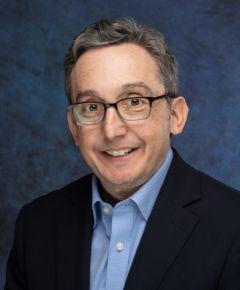
Michael S. Okun obtained his MD and co-founded the movement disorders program at the University of Florida in 2002. He is the former Chair of Neurology and currently one of only 5 faculty to ever hold the rank and honor of Distinguished Professor at the College of Medicine. He is the Executive Director and co-founder of the Norman Fixel Institute for Neurological Diseases at the University of Florida Health. Dr. Okun has served as the National Medical Director and most recently as the Medical Advisor for the Parkinson’s Foundation since 2006 as well as Medical Advisor to Tyler’s Hope for a Dystonia Cure. He has been supported by grants from the National Institutes of Health, the Smallwood Foundation, the Tourette Association of America, the Parkinson Alliance, the Bachmann-Strauss Foundation, the Parkinson’s Foundation, and the Michael J. Fox Foundation. Dr. Okun has an active research career and has been an integral part of some of the pioneering studies exploring the cognitive, behavioral, and mood effects of DBS and brain stimulation, and since 2005 his laboratory has been working to uncover the electrical brain signals associated with human tic. He has partnered with Drs Ayse Gunduz and Kelly Foote to develop first generation closed loop adaptive deep brain stimulation approaches for many disorders. He and his group have contributed data to support the FDA approval of several device related approaches now used to treat human disease. Dr. Okun holds the Adelaide Lackner Professorship in Neurology and has published over 500 peer reviewed articles. He is a poet (Lessons From the Bedside, 1995) and his book, Parkinson's Treatment: 10 Secrets to a Happier Life was translated into over 20 languages. His most recent co-authored books include Ending Parkinson’s Disease: A Prescription for Action and Living with Parkinson's Disease. Dr. Okun was recognized in a 2015 White House ceremony by the Obama administration as a Champion of Change for Parkinson’s Disease.


This podcast is sponsored by Biogen’s Luma study. For more information, go to LumaStudy.com.
Want more?
Don't forget to subscribe! There are many ways to listen: Apple Podcasts, TuneIn (Amazon Echo), Spotify or RSS Feed. (Need help subscribing? See our quick guide.)
For all of our Substantial Matters podcast episodes, visit Parkinson.org/Podcast.
Related Materials
Related Blog Posts

7 Things People Newly Diagnosed with Parkinson’s Should Know

