Episode 153: How People with PD Can Prepare for Routine Outpatient Procedures
-
Dan Keller 0:02 Welcome to this episode of Substantial Matters: Life and Science of Parkinson's. I'm your host, Dan Keller. At the Parkinson's Foundation, we want all people with Parkinson's and their families to get the care and support they need. Better care starts with better research and leads to better lives. In this podcast series, we highlight the fruits of that research, the treatments and techniques that can help you live a better life now, as well as research that can bring a better tomorrow. Routine outpatient health care procedures, from dental cleanings to MRIs or colonoscopies, could affect a person with Parkinson's disease differently from the general population, and special considerations are in order to assure optimal outcomes. The Parkinson's Foundation has developed a course that highlights key recommendations and strategies to promote optimal care and health outcomes for people with PD during planned and unplanned hospital stays, which can include inpatient, outpatient, and emergency department hospital encounters. This course includes the four-step safety protocol for common procedures, and people with PD can use a similar set of steps when preparing for and undergoing routine outpatient procedures. Overall, it involves planning before the procedure for the day of the procedure and what to do afterwards. When I spoke with movement disorders neurologist Dr. Muhammad Nashatizade of the University of Kansas Medical Center, I asked him to describe the four steps and then to give examples of how they apply to specific procedures. It seems like there's a two-way street: how Parkinson's disease can affect preparing for and having a routine medical or dental procedure, and how the procedure may affect one's disease and functioning. And you covered these topics in a hospital care course for clinicians, but now let's focus on the same issues from the point of view of people with Parkinson's and their care partners. So, let's talk in general terms first. You helped develop a four-step safety protocol for people with Parkinson's to help ensure a good outcome. Can you tell me about that? What are the four steps?
Dr. Muhammad Nashatizade 2:43 Well, this was a project that had already been going on for some time from the Parkinson's Foundation, and I think it just is born out of the fact that those of us who've worked with so many people with Parkinson's disease, with their family members, with their caregivers, you know, we hear a lot of feedback about what it's like for people to go through procedures, and what that's involved with, so I can't take credit for the four-step safety protocol, but I support this idea, because I think, you know, several of us have been working on this type of thing for a while. Many people, like—so you mentioned going to the dentist. Dentists, you know, they do dental procedures on a daily basis, and so they're very familiar with what that process is like, but when a patient or family member or caregiver is going through that process, they may be the first time that they're even familiar that anything like that could happen, and so the four-step process is a very conscientious effort to walk through what a patient may go through, and to be thinking about what that might mean from a Parkinson's standpoint, and that helps not only the patients and family members or caregivers, but it also helps the person doing the procedure to try to meet at the same page and be at the same part of the process. So, the four steps, the first one is to think about the specifics of the procedure being offered, and how that could impact or be impacted by Parkinson's disease. The second step would be to consider scheduling the procedure when a person's medications are most optimal in the day. So many patients with Parkinson's disease will say that their medications are working really well in the morning, but by the middle or late afternoon they're not functioning. Other people may have different times of day, and so if possible, if we can sort of optimize how that person would do something, that we want to at least be aware of and discuss. The third step is to prepare ahead of time by identifying any specific pre-procedural Parkinson's disease-related recommendations. Sometimes there may be certain aspects of the procedure that may be very relevant. It may be that there are certain medications that are being used, or certain types of anesthesia, even. And so, knowing what we're facing ahead of time can be helpful. And then the last step, step number four in this four-step safety protocol, is to identify specific post-procedure recommendations in advance to effectively accommodate patients transitioning afterwards. Where do I go from here? What should I be keeping an eye on? What are the next steps? Who should I contact if I have a problem? Now, these are usually things that most people would go through during a procedure, but I think what's unique about this four-step safety protocol is that we're trying to tailor it for people who have Parkinson's disease, so that also proceduralists can be more familiar with what those issues might be.
Dan Keller 5:40 Now, let's take a look at preparing for specific medical or dental procedures, one of which, or two of which, are esophagogastroduodenoscopy and colonoscopy. In simple terms, these are putting a tube in someone's body from either end to get a look at the gastrointestinal tract. Usually they require sedation or anesthesia, which would require the patient not to have anything by mouth, often after midnight or close to their procedure. So, how would they deal with their Parkinson's medications?
Dr. Muhammad Nashatizade 6:16 Well, these are procedures that are very common, and in fact, some of the latest guidelines recommend that all adults over the age of 45 now instead of 50, should have a screening colonoscopy. This because colon cancer is one of the most diagnosable and treatable types of cancer there is, and it's very common. As many as one person out of 17 is expected to die just of colon cancer. But when these types of endoscopy procedures, either an upper GI scope or esophagogastroduodenoscopy or a lower scope like a colonoscopy, are involved, one of the first things that happens is people are asked to not eat or drink anything after midnight, that's nothing by mouth, the abbreviation for this in medical terms is NPO, and so usually if somebody has Parkinson's disease, if they're going to take medications in the morning, trying to not eat or drink anything after midnight can be more of a challenge, and sometimes if they're undergoing anesthesia, there can also be some lingering effects that's going to stay in the system, so being aware of these things can be helpful. Being able to schedule these procedures around a person's Parkinson's symptoms is really—well, the goal is here, that's really the essential part of this process. And so trying to time procedures if a patient is taking levodopa or other Parkinson's medications, and those are working most effectively, scheduling those patients, for example, first thing in the day, the first part of the day, so medications can stay on schedule, and people can function and feel better. If somebody completely withholds their carbidopa-levodopa or other dopaminergic medications for several hours, or even an entire day, there are a few patients where this can be particularly dangerous, and people can sometimes have severe withdrawal effects. They could develop things like fever, extreme rigidity of muscles. Some of them can become confused or have unstable blood pressure and heart rate. There can even be very severe breakdown of muscle tissue, and this is usually bad enough where people would need to be hospitalized and potentially even treated in an intensive care unit, or ICU. The name for this condition is called Parkinson's Hyperpyrexia Syndrome, and so hyperpyrexia means elevated body temperature, like what you would see with a fever, and it's very similar, in fact clinically indistinguishable from another famous condition called neuroleptic malignant syndrome. So, there are carbidopa-levodopa tablets that are capable of dissolving directly under the tongue, and sometimes these can be prescribed ahead of time when even small amounts of water might increase the risk of nausea, vomiting, or even aspirating fluid into the lungs, and so, especially when you're having an upper GI scope, that's concerns that many of the doctors run into about even having small sips of water. The other thing that often happens the day before somebody is going to have a colonoscopy is that they may be drinking a large amount of fluid that's prepared to try to flush out the system, so that scope is able to travel through the GI tract and be able to see all of the tissue very clearly and very cleanly, and so usually when people are drinking this fluid the day ahead of time, there can be a lot of frequent trips to the bathroom, so that's an important consideration when people have Parkinson's disease, because of mobility concerns. So, staying close to the bathroom once they begin their colonoscopy prep, grab the drink, make sure to avoid rushing, removing if there's anything on the floor between where you're sitting and the bathroom—throw rugs, for example, can slip, and people can end up falling and having injury. Being aware that sudden movements can lead to potential falls, and then being dehydrated itself as you're drinking all this fluid. Sometimes the amount of fluid going in isn't matching up with the amount of stool and other fluid coming out, and so making sure you're drinking plenty of fluids to avoid dehydration and a sudden drop in blood pressure, orthostatic hypotension, and some people can even feel very lightheaded, faint, or even completely pass out. Also, people with Parkinson's disease can feel groggy or be slow to wake up after they've had anesthesia. Usually these anesthetics are chosen ahead of time to be very clear-acting, but sometimes when people have brain conditions, including Parkinson's disease, there can still be some slowness.
Many people with Parkinson's disease also say that they have lingering effects of anesthesia on their ability to chew or swallow, so it can be best to resume diet slowly rather than increase indigestion, nausea, and vomiting. Let's switch to something a little more routine. Colonoscopies are once every five or 10 years, depending on a person's previous findings, but routine dental cleaning can come up every six months, sometimes even every three months. What kind of precautions or preparations should people make for going to the dentist? Absolutely, and this is something that affects almost everybody very frequently, and so when we think about routine dental cleaning as it is, just having Parkinson's disease day in and day out, nearly half of all people with Parkinson's say that they have some sort of difficulty just doing their daily oral hygiene. It can be harder to swallow. There can be increased aspiration risk leading to pneumonia during oral treatments at the dentist. Some people may even have a heightened gag reflex, just as they have tools inside the mouth, or even a suctioning device. It can make it more difficult, from the rigidity of the jaw muscles, to open their mouth completely for X-rays. It might have to be that, rather than having the usual duration of a dental appointment, there might have to be more frequent breaks every few minutes, just to allow for suctioning of excess saliva, and to try to relax some of these tight jaw muscles. People who have levodopa, if they have a lot in their system, they may even have involuntary movements like dyskinesias of the jaw that can also create a challenge when you're undergoing dental cleaning, so again, like other procedures, scheduling dental visits around the patient's motor symptom control also seems wise. Early morning cleanings, when wait times are shorter, can make the exam easier and more comfortable. If finances allow, it might even be helpful for a person with Parkinson's disease to have shorter cleaning sessions more frequently than twice a year, maybe four times a year, maybe six times a year, especially since they can be at a higher risk of cavities due to dry mouth and these challenges I mentioned earlier with just daily oral hygiene. And if you are going to use anesthetics, this is true for dental procedures, as well as other minor procedures, or even major surgery. Somebody who is on a specific type of medication for Parkinson's disease, known as a monoamine oxidase B inhibitor, this includes medicines like selegiline or rasagiline, it's important that the person doing the anesthesia, whether that's the dentist or an anesthesiologist, for example, is familiar that you're on this medicine because there can be some interactions in trying to regulate blood pressure. The American Dental Association has estimated that 70% of dental practices using sedation use this type of anesthetic gas known as nitrous oxide, or $N_2O$. This is actually contraindicated, because inhalation of nitrous oxide can unmask hidden vitamin $B_{12}$ deficiency, and for people who already have this underlying $B_{12}$ deficiency, some of them can start to develop more spinal cord and nerve damage, and that can further complicate mobility. Parkinson's disease is also associated with a higher risk of anxiety, and so there are many people, even who don't have heart disease, for whom going to the dentist, frequently from the time they were children, is associated with a heightened anxiety or nervousness about what's going to happen. If there are anxiety medications that are prescribed ahead of time, being able to talk about how is that going to impact a person's wakefulness, or their thinking, or their memory, or their balance, tendency for falls. Extra assistance will be needed, driving the patient to and from the dentist. So, being aware of all that ahead of time is the other thing, and this may be a minor point, but one worth mentioning. It's fairly common that in Parkinson's disease they may be more likely to be depressed. There can also be some forgetfulness. So, rather than saying, "I'm going to go home and I'm going to schedule my next dental cleaning, you know, when I get around to it," before you leave the office, go ahead and schedule it immediately. That way, it's ideal, that way you don't have to follow up or worry about whether it's another task on the list that's not getting done. Let's talk about MRI imaging.
Dan Keller 15:30 There's another situation where people can be anxious because they have to lie on a table in a large machine for 30 or 40 minutes for the imaging to be done. First of all, if someone has a tremor, how do they lie still for that amount of time? And second of all, how do they tolerate it if they have anxiety?
Dr. Muhammad Nashatizade 15:51 That's a great point, Dan. Those are really important considerations. And as you mentioned, anxiety about having to hold still is a huge problem. It's estimated that probably 10% of people undergoing a brain MRI suffer from claustrophobia, and that's a very real problem, because if anybody has been in an MRI, you can actually see that it's very, very close to your face, and especially if it's an MRI of the head. If it's a limb or like an arm or a leg, that may be a little bit of a different scenario. You mentioned tremor, and so this is another key reason why it's really important to try to schedule when possible, especially for an outpatient procedure, these MRIs when medications are "on," so that the medicines are working, they're much more likely to have better tremor control. Many people say that their resting tremor is okay, but just the anxiety is making them have a lot more postural or kinetic tremor. While they're lying still, they're feeling either shaky on the inside or maybe they have a little bit of hand tremor, for example, and so much like doing other procedures, if anxiety medications can be prescribed ahead of time, you just want to make sure that wakefulness, thinking, memory, balance, tendency for falls, overall mobility are all being thought of. And where do we go after having the MRI? Is the person going to need extra help so that they're not falling, or they need, you know, special assistance to try to get back to the vehicle? An MRI can take anywhere from 30 to 40 minutes, depending on the part of the body that's being imaged, and so holding still for a long period of time, that stress of the situation can contribute to what's called enhanced physiologic tremor, and this is the same type of tremor, for example, that people have if they have had too much caffeine, or if they are on any type of asthma inhalers, so it's a faster sort of usually lower amplitude tremor, but some of that tremor can also affect the quality of the images that show up. The other thing is just crossing your t's and dotying your i's, making sure that the patient has transportation safety to and from the vehicle rather than having to drive themselves to the hospital or the imaging center where the MRI is going to take place. And then it's also really important to know, does this patient have a deep brain stimulator, because there are recommendations about doing an MRI. If you know that a person has a primary Parkinson's disease provider, whether that's a movement disorder specialist, neurologist, or even a primary care doctor, a quick phone call can help clarify what to do with specific stimulators, and even the companies that make deep brain stimulators are also available to try to help out with the MRI technicians. One detail about the duodenal levodopa: the pump itself is an electronic device, so it needs to be shut off, disconnected, and removed from the patient, and actually placed in a separate room outside where the MRI magnet is kept until after the procedure. Then, once the patient is transported out of the room, the device can be reconnected and turned back on to resume the pumping. And then similarly, if a person's deep brain stimulator has been turned off, some of the devices now that are out there, patients themselves can have either apps on their phone or other handheld devices where they can make settings adjustments or turn their stimulator on and off if they have already worked those details out with their primary provider, and so once the MRI is done, it's really important that people remember to turn the deep brain stimulator back on, just to make sure that they're functioning well and everything's working okay.
Dan Keller 19:32 Some MRI imaging is done with contrast media. Is there any interaction with Parkinson's drugs of the contrast media?
Dr. Muhammad Nashatizade 19:42 So usually when people have an MRI, the type of contrast that's used is different than what we would see with, like, a CT scan, and so the type of contrast for MRIs is gadolinium, and people with Parkinson's disease can use gadolinium with no problem. Sometimes there have been people who have chronic kidney disease, there's been some leeriness about using certain types of gadolinium, but some of the newer gadolinium contrasts that they have are much less likely to cause fibrosis or scarring of the kidneys. But usually people with Parkinson's disease, that's no problem to be able to have the MRI contrast.
Dan Keller 20:18 Are there any recommendations for cataract surgery?
Dr. Muhammad Nashatizade 20:22 So one of the things I would mention specifically about cataract surgery—you know, sometimes as a neurologist I feel like over the decades most of us have been taught that when we're working with patients who have neurological problems, and that's true for Parkinson's disease as well as many others, that we could try to steer our patients away from unnecessary surgeries or procedures, but specifically cataract surgery, I want to mention, is a very important and useful procedure, because there's a lot of evidence that not only with Parkinson's disease people developing more cognitive impairment over time, but even in conditions like Alzheimer's disease, multiple sclerosis, any type of neurodegenerative disease where you're more likely to have cognitive change over time, having improved visual input is such a huge part of being able to navigate your environment and knowing what's going on around you. It takes a lot of pressure off of your brain, and so normally, if somebody's undergoing a cataract procedure, the major thing to consider is that some patients end up having both eyes having cataracts, and so usually the ophthalmologist will schedule one eye at a time, because you need to be able to see out of the other eye and make sure that you're visually safe, not only just for mobility, but just being able to function in between surgeries, and a lot of times they might schedule them two weeks apart.
Dan Keller 21:46 Are there any key takeaways, nutshell messages that could help people keep this in perspective? All the stuff we've been talking about?
Dr. Muhammad Nashatizade 21:55 You know, I come back to the four-step safety protocol by itself. Just like going through any type of procedure, if you think about what are the steps involved in, for example, making a sandwich, you would want to make sure that you sort of get all the ingredients ahead of time and follow them in the correct order, and then have a finished product. And so what's nice about this four-step safety protocol is you're sort of taking a moment to walk through what's actually happening. How likely is it that their medications will be working, so that you're making things as optimal as possible, making sure that anything that is relevant to their Parkinson's disease is sort of addressed ahead of time. And then, how do you transition in the recovery? And I think if you just walk people through that, even if I imagine, you know, 30 years from now, or 50 years from now, if there are procedures that have not even been invented, if we were to apply these same concepts and principles and follow the four-step safety protocol, overall people would know what they're going into, their proceduralist or surgeon would be aware, and hopefully we can help them recuperate and continue them on their way of navigating with their Parkinson's.
Dan Keller 23:00 We've covered a lot of territory, but is there anything interesting or important to add?
Dr. Muhammad Nashatizade 23:06 I would just add it's been really great to work with people at the Parkinson's Foundation to try to develop this hospital course, and this course about procedures. I think some of the feedback that we're getting is that there are still a lot of people who have worked with patients with Parkinson's disease over the years, but they haven't really thought through all this process, and they find it to be useful and helpful, and to sort of see also what patients go through and where they're coming from.
Dan Keller 23:29 And it's good to do it from both sides, both educating the clinicians and raising awareness among the patients.
Dr. Muhammad Nashatizade 23:36 Absolutely.
Dan Keller 23:38 Thanks for taking all the time and great information.
Dr. Muhammad Nashatizade 23:42 It's really nice talking with you, and your podcast is really excellent. Like, you cover so many of the cutting-edge topics. What I really think people with Parkinson's disease need is to be able to have access to a lot of this information.
Dan Keller 24:01 Before having a routine outpatient procedure, let the clinician know in advance that you have Parkinson's, and even run through the four steps with them. Also, your Parkinson's neurologist may have some helpful advice along these lines. Planning the before, during, and after steps will optimize your outcomes. Just to reiterate, the steps are: first, think about how the specifics of the procedure could impact or be impacted by your Parkinson's disease. Second, try to schedule the procedure for when your medications are working best, making your symptoms most manageable. Third, prepare for the procedure ahead of time by identifying and carrying out any specific PD-related recommendations. And finally, identify and prepare any post-procedure recommendations, such as a ride home or dietary restrictions. To learn more about safety protocols for common procedures, visit the Parkinson's Foundation Learning Lab to register for the Optimizing Hospital Care for People with Parkinson's course, part of the Education Series for Community Providers. This course highlights key recommendations and strategies to promote optimal care and health outcomes for people with Parkinson's disease during planned and unplanned hospital stays. This can include inpatient, outpatient, and emergency department hospital encounters. You can register for this course by visiting education.parkinson.org/profcommproviders. News and updates about future events and resources are available by joining our email list at the bottom of our website's homepage. If you want to leave feedback on this podcast or any other subject, you can do it at parkinson.org/feedback. If you enjoyed this podcast, be sure to subscribe and rate and review the series on Apple Podcasts, or wherever you get your podcasts. At the Parkinson's Foundation, our mission is to help every person diagnosed with Parkinson's live the best possible life today. To that end, we'll be bringing you a new episode in this podcast series every other week. Till next time, for more information and resources, visit parkinson.org or call our toll-free helpline at 1-800-4PD-INFO, that's 1-800-473-4636. Thank you for listening.
Since routine outpatient procedures may pose special needs and risks for someone with Parkinson’s disease (PD), extra planning is in order for the period before, during, and after the procedure. The procedures may be medical or dental, for example, teeth cleanings, colonoscopy, or magnetic resonance imaging (MRI).
Fortunately, the Parkinson’s Foundation has developed a course that highlights key recommendations and strategies to promote optimal care and health outcomes for people with PD during planned and unplanned hospital stays, which can include inpatient, outpatient, and emergency department hospital encounters.
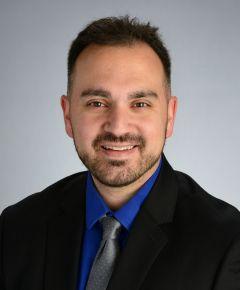
In this podcast episode, movement disorders neurologist Muhammad Nashatizadeh, MD of the University of Kansas Medical Center in Kansas City, a Parkinson’s Foundation Center of Excellence, discusses how people with PD can incorporate this same safety protocol to ensure optimal outcomes when they plan for and have routine outpatient healthcare procedures.
Released: June 27, 2023
-
Dr. Muhammad Nashatizadeh completed his undergraduate biology degree in 1998 with highest honors as a University Scholar at Emporia State University. He completed his medical degree at the University of Kansas School of Medicine in 2003, internal medicine internship in Wichita in 2004, and neurology residency in Kansas City in 2007. He served as chief resident before pursuing movement disorder fellowship training at Baylor College of Medicine in Houston, Texas returning home to Kansas in 2008. He is board-certified in neurology by the American Board of Psychiatry and Neurology (ABPN).
Known as "Dr. Muhammad" by numerous patients, he worked as a community neurohospitalist for over six years while seeing clinic patients with movement or cognitive disorders. He returned to the University of Kansas School of Medicine as faculty in 2015 and has been the Director of Inpatient Movement Disorders since 2017. Primarily covering the inpatient consultation service, he works with emergency medicine, internal medicine, rehabilitation and surgical teams to help manage neurological problems affecting hospitalized patients. He educates geriatrics fellows, residents from neurology, internal medicine and psychiatry, and medical students to understand how medical disorders affect patients neurologically and how multiple problem layers cumulatively contribute to illness. For these efforts, he was voted as the Neurology Educator of the Year (Student Voice Award) by third year medical students for four years straight and selected as a top five finalist for the prestigious Rainbow Award in 2018-2019 honoring altruism, excellence, and professionalism.

Want more?
Don't forget to subscribe! There are many ways to listen: Apple Podcasts, TuneIn (Amazon Echo), Spotify or RSS Feed. (Need help subscribing? See our quick guide.)
For all of our Substantial Matters podcast episodes, visit Parkinson.org/Podcast.
Related Materials
Related Blog Posts

How To Stay Safe During a Hospitalization with Parkinson’s
