Episode 136: Traveling with Parkinson’s Disease
-
Dan Keller 0:02 Welcome to this episode of Substantial Matters: Life and Science of Parkinson's. I'm your host, Dan Keller. At the Parkinson's Foundation, We want all people with Parkinson's and their families to get the care and support they need. Better care starts with better research and leads to better lives. In this podcast series, we highlight the fruits of that research, the treatments and techniques that can help you live a better life now, as well as research that can bring a better tomorrow.
Many people enjoy travel to see family and friends, revisit favorite places, make new friends, or experience new sites, cultures, and cuisines. Travelers would probably agree with Mark Twain's admonition that broad, wholesome, charitable views of men and things cannot be acquired by vegetating in one little corner of the earth all one's lifetime. Parkinson's disease may be a challenge, but with proper planning, enjoyment of life, including travel, can go on. Today's guests emphasize the importance of planning for extra time for tasks, for medication timing, extra medication supplies for unforeseen delays, and for alternate plans to deal with today's commonly disrupted travel schedules. Being prepared is a great stress reducer.
Our guests have valuable insights into travel with PD. Occupational therapist Julia Wood is with the Lewy Body Dementia Association and has also worked in the Parkinson's area for several years. Rebecca Miller is a clinical psychologist at Yale University in New Haven, Connecticut, and lives with Parkinson's. She had traveled to Boston, where we spoke. Let me ask you, first, Rebecca, how old were you when you were first diagnosed with Parkinson's?
Rebecca Miller 2:10 I was 39. My daughter was nine months old, although I'd had symptoms for probably about 10 years previous.
Dan Keller 2:17 When you travel, what sort of things do you have to do differently, or what's changed from, say, before you had symptoms?
Rebecca Miller 2:26 I think one of the major things that's changed is planning, so I start early, start often, just to make sure that I have everything organized, making sure that I have everything ready to go. I traveled up here from New Haven to Boston today, and when I left my house, you know, I had to do a mental checklist, basically to say, do I have my credit card and do I have my meds. Those are the two most important things. So, I think that's the other thing, is making sure always to have my meds.
Dan Keller 2:56 Is it more burdensome to do the kind of planning you've said, and you have to make sure, and it sounds like this is an effort?
Rebecca Miller 3:05 It is an effort in a way. I mean, I think it's just, you know, breaking it up into small parts over a longer period of time. So, it used to be that I'd be able to just kind of throw everything in a bag the night before and feel comfortable and walk out the door, and now some of that is maybe getting older, some of that is getting wiser, I hope, and some of it is having a kid, but I think it's also that I know that if I'm not feeling that well right before I need to go, that I'm not going to be able to manage right before, so I have to start earlier.
Dan Keller 3:37 I've traveled a lot to medical conferences, sometimes as much as once every two weeks, and it was like reinventing the wheel every time. I just hate packing. How old is your daughter, and do you travel together at all?
Rebecca Miller 3:52 Yeah, so she's now nine years old, and we do travel together. We just recently took a trip up from New Haven, Connecticut to Great Barrington, Massachusetts, which is not that long, but we still got organized early. I think one of the harder trips was when she was around nine months old, or so. I went solo with her to Seattle, so that was a real challenge, along with just trying to get myself organized, get her organized, and then get on a plane, etc.
Dan Keller 4:24 Traveling with a kid that age looks like a big ordeal anyway, getting all the stuff together.
Rebecca Miller 4:30 Yeah, but then with a layer on top of that, just the fatigue with the Parkinson's and kind of juggling my own symptoms, it was, it was a real challenge. I got to Seattle, and I kind of fell into my brother's arms, who I was visiting there, and just started crying, because it was really overwhelming. But I don't want to let it stop me from traveling, because traveling is something that's important to me, important for me to do with my daughter.
Dan Keller 4:55 How do you plan around the fatigue? And since you mentioned Seattle, how do you plan around time zone changes, especially with medication and sleep?
Rebecca Miller 5:05 It's certainly a challenge, especially three years ago I went to Kyoto for the World Parkinson's Congress, and that was definitely a challenge. And in fact, that's when I really started using a timer for my meds, so I do every four hours, so regardless of where I am in the world, I know that every four hours I need my meds, and since I take my meds on a 24-hour cycle, I'll wake up to take them during the night as well. So that four-hour timer system worked pretty well for me.
Dan Keller 5:33 Do you find that airports or train stations are particularly stressful? Would you prefer to drive, or doesn't it really matter?
Rebecca Miller 5:42 I think it depends. I mean, driving has its own set of challenges, in that if my symptoms start increasing, then I'll need to pull over if I don't feel like I'm able to drive safely at a certain point, and then just driving is exhausting. It is nice to have control and go exactly to your destination in your car, but I think that fatigue aspect, and you know, I recently had DBS, this past September, so that's helped a lot. I'm feeling more and more comfortable, but prior to that, it would be very challenging when driving, especially dyskinetic or off, you know, not feeling like it was safe for me to be on the road.
Dan Keller 6:21 Do you think there are things you haven't figured out yet to your satisfaction?
Rebecca Miller 6:26 My impulse is to answer no, of course not, I have everything figured out! But yeah, you know, I mean, traveling is an aspect that you always have kind of tips and tricks to make it easier, and I think I'm still working on figuring out what those things are. There was just recently a panel discussion on travel for people with Parkinson's, and hearing other people's tips and tricks is really helpful. So that's always good, and getting that kind of peer support around it is always helpful.
Dan Keller 6:53 Julia, what do you recommend that Rebecca may not have thought of yet, or that you've encountered from people?
Julia Wood 7:01 It's funny that she brings up planning, because that's the number one thing I think is plan early and often. Also, though, I think another point that could be made sometimes is working with your medical care team to help you plan for that. You may need the help from your doctor to have different notes for use of different medications or medical devices that you need to bring.
I think, also, physical therapy can be great for helping with tips and tricks around navigating with maybe using an assistive device in the airport, or for once you get there, because often I think that people take for granted using an assistive device is not an all-or-none. It's not that once you use a walker, once you use a wheelchair, you have to use it all the time. Maybe you just need it for getting from point A to point B for this one thing, and that's okay.
And then also, as an occupational therapist, I worked a lot with people on how to plan—how to plan around their fatigue, how to plan around their med cycle, how to pack and plan, having checklists, sometimes packing cubes, things like that, that can help organize your packing a little bit more. I think it really depends on the individual. There's a great article by a researcher named Aaron Foster and Joan Tolia, where they talk about the strategy around cognition, where you look at where the challenges might be and what could you do differently. How could you approach that differently? And I think that's a great strategy for most anything: Where do you think there might be challenges, and what can you do to meet those challenges?
Dan Keller 8:24 One thing I've seen suggested about assistive devices is put your name and contact information on everything, because in travel all sorts of things go to the four winds.
Julia Wood 8:34 Absolutely, absolutely. You don't want to end up with someone else's trekking poles or walker or wheelchair.
Dan Keller 8:41 What about stiffness during travel, sitting for a long time, and what do you do to relieve it then and afterwards?
Julia Wood 8:48 Oh, absolutely. Well, I think number one is trying to get up and move as you can. You can even do seated mobility exercises, you know, just tapping the toes, tapping the heels, so you're moving at the ankle, maybe marching in place before you try to get up on the airplane or get up on a train to move, you know, stopping if you're in the car and taking some movement breaks. I think that's really, really important, just to kind of, you know—motion is lotion, keeping the body moving as much as you can.
Dan Keller 9:16 You find that, Rebecca?
Rebecca Miller 9:17 Oh yeah, for sure. And I think another thing about planning is planning extra time for things. So previous to Parkinson's, I might try and schedule myself very tightly in terms of when I leave, when I get there, etc., like I can, you know, be able to make it, and all these kinds of things. But now I like to give myself some extra time on either end to try and have that, because I know I'll need to rest, or, you know, have the chance to kind of settle in. And then in terms of assistive devices, I love my fold-up cane that I can just stash in my backpack, so I can have that if I need it, and it kind of whips out, unfolds into a nice device, so that's helpful.
Dan Keller 9:54 Exercise is highly recommended in Parkinson's. How do you exercise on the road? What can you do?
Julia Wood 10:00 I think that's something that you can, number one, talk with your physical therapist or your occupational therapist, maybe even your exercise professional, about kind of having a packet of exercises that you know you're going to do on the road. You can check ahead and see if there are, you know, gym facilities or exercise facilities wherever you're staying, and plan with that. Some hotels, even now, have it where you can rent exercise clothing when you get where you're going, even shoes and things like that, so I think that, you know, once again it's that planning piece again that Becca mentioned. So really thinking ahead about when are you going to do your exercise, trying to stay on the same schedule is also important with your exercise as well as your meds, if possible, and keeping that routine going.
Dan Keller 10:37 It's too bad they don't have people you can hire to do the exercises for you.
Julia Wood 10:41 That's what everybody wants!
Dan Keller 10:45 What about taking advantage, knowing about, and taking advantage of accommodations at train stations, or in airports, or things? Do people not know about them, or ignore them, when it could actually be pretty helpful?
Rebecca Miller 10:59 I mean, I think, especially at airports, you know, getting to ride in that little cart to start, you might feel a little embarrassed about it, but I think there's a certain point where, at least for me, I've given up that kind of embarrassment, for you know, just that it helps me so much if I can take advantage of those kinds of things. Things like using the handicapped parking pass that I have, you know, even if I'm feeling good when I pull into the space and put up the placard, and I'm a little embarrassed that I get out and walk—I'm okay when I walk out of the car, but I know that there's always that possibility that when I come back, that I need to plan ahead for myself and know that that's a possibility for myself and take care of myself in that way.
Dan Keller 11:38 Do you have an Aware in Care kit? Do you take it with you?
Rebecca Miller 11:43 I do have an Aware in Care kit. I have taken it on longer trips. I just was suddenly embarrassed that I hadn't taken it today, but I'm just here for one night. But yes, I do have an Aware in Care kit. I'm actually an Aware in Care ambassador, so yes, I'm very familiar with it, and very happy to take it with me.
Dan Keller 12:00 Never needed to use it?
Rebecca Miller 12:02 Oh, I have, actually. Yes, I have. Unfortunately, it did come in handy.
Dan Keller 12:07 What are some ways that either of you know about to make travel less stressful? How can you plan ahead that lessens the stress?
Julia Wood 12:17 I think plan for the worst and hope for the best. You know, it's not that I want people to perseverate on the negative, but really thinking about what obstacles and what barriers and challenges might come up, and feeling like you're really prepared for those. You know, what happens if your meds go off? What happens if you have freezing of gait? All of those things that you can really plan and feel like you have kind of a plan of attack, I guess, of going into—I think that really helps relieve a lot of stress and anxiety around travel, and then will help people feel more prepared as well.
Dan Keller 12:49 What about planning nonstop flights, and/or carrying extra meds in case you get stuck somewhere, or a prescription, or a letter from a doctor explaining what's going on, are those all helpful things?
Rebecca Miller 13:04 Yeah, I find that for sure. I mean, I tend to take my med bottles, you know, with the original prescription information on them, as well as packing doses of meds in different places, just in case, so that I have it directly on me, as well as in my luggage—not checking my meds, for example, but instead keeping them in my carry-on, just so I know that I have it. And a letter from the doctor, I have one of those in my Aware in Care kit, also for COVID-19 accommodations, in particular in case I am hospitalized.
And I think, as Julia said, just planning ahead—being a single mom and traveling with my daughter, there is a lot of anxiety at times, you know, thinking about if I do have some kind of accident or hurt or symptoms come up while I'm on the road. That is nerve-wracking, but I think thinking those situations through ahead of time and coming up with a plan and talking to my daughter about what are things that you can do if Mommy is incapacitated, that helps me feel better, as well as helps her feel like she's more in control.
Julia Wood 14:04 I think it's important for people to know, too, that in addition to having that carry-on bag and that personal item, if you have assistive devices or medical equipment you're taking, that doesn't count in that, so you can have those items additional to your one carry-on and your personal item. And I encourage people to really conscientiously pack that carry-on item. Think of the things you don't want to be separated from, and put all of them in that bag, so they're with you all the time, and really keeping, I think, a tight rein, so to speak, on how you pack and prepare and plan, so that you feel confident knowing that you have the things with you, and you won't get separated from the things that you need to have.
Dan Keller 14:43 And I suppose if you've brought your medication with you, you should be bringing a little bottle of water with you, or something, knowing you could get some juice or something to take it. What about health insurance? How portable is that, especially if you're traveling outside the US?
Julia Wood 15:00 It really depends on your plan, and I think it's important to check ahead of time with your health insurance plan and see what your coverage is. Also, sometimes with travel insurance, you can get different types of plans or things to cover you when you travel. I know right now there are even specific COVID-19 travel plans that you can get that provide coverage if you're hospitalized somewhere in another country, so I think that it's a good idea to think about that and look at options for when you're traveling, so you make sure you've got all your bases covered and you feel comfortable that you could access healthcare if you need to. You can also reach out to the Parkinson's Foundation helpline too to see what maybe Centers of Excellence are in that area or people that are in the network that you could maybe connect with, if you need to.
Dan Keller 15:45 Anything interesting or important to add from either of you, maybe in a nutshell, advice, or just something we haven't covered yet?
Rebecca Miller 15:54 One thing would be just don't give up your dreams of travel just because you have Parkinson's. You still can do it, and there are ways, and all kinds of accommodations, and people are so willing to help, generally, when you ask.
Julia Wood 16:07 I think that's such an important point—not giving up things that are meaningful. I get on my little OT soapbox a little bit, that every time you give up something that's meaningful to you, you give up all of the therapeutic benefit of that activity. So, with travel, you know, there's cognitive aspects, there's all the stimulation, there's enjoyment, so it really does enrich our lives in a lot of ways. And so think about—maybe even if it's someone that doesn't feel comfortable traveling internationally anymore, maybe there are places within the United States or closer that you want to travel to. So I think, look at still, how can you participate in that activity in a way that's meaningful, and even think of it as like a therapeutic activity that you're working on—all these different skills with your mobility, your communication, your socialization, as well.
Dan Keller 16:54 Very good, very practical advice. I'm sure listeners will get a lot out of it. Thank you.
As both Rebecca and Julia noted, planning and preparation are the key to enjoyable, lower-stress travel. These are the variables that a traveler with PD can control to deal with the other possibilities that no traveler today can control, such as delayed or canceled flights, changed itineraries, or weather emergencies. Carrying extra medication is imperative, and knowing you have a contingency plan for unexpected events or delays can help reduce stress. A preparation checklist may also help; as you think of things in advance of the trip, jot them down in one place. Then be sure to keep the list for future travel.
As Rebecca mentioned, she has used her Aware in Care kit on occasion. These kits contain a medical alert wallet card, medication forms, a hospital action plan, and more. If you would like to order one, call our helpline or go to our website at parkinson.org. Click on the three stacked bars at the upper right, go to "Resources and Support" in the drop-down menu, and click on "Hospital Care Kits." The medication forms alone can be useful for travel.
As always, our helpline information specialists are available to answer questions in English or Spanish about today's topic, or anything else having to do with Parkinson's, including finding your way around our newly redesigned website. News and updates about future events and resources are available by joining our email list at the bottom of our website's homepage. If you want to leave feedback on this podcast or any other subject, you can do it at parkinson.org/feedback. If you enjoyed this podcast, be sure to subscribe and rate and review the series on Apple Podcasts or wherever you get your podcasts.
At the Parkinson's Foundation, our mission is to help every person diagnosed with Parkinson's live the best possible life today. To that end, we'll be bringing you a new episode in this podcast series every other week. Till next time, for more information and resources, visit parkinson.org or call our toll-free helpline at 1-800-4PD-INFO. That's 1-800-473-4636. Thank you for listening.
Parkinson’s disease (PD) can be an impediment to certain activities, but with proper planning, people can still pursue many of the things they have always enjoyed. One of those things is travel – to see family, visit friends, or explore new sights and cultures. One key to enjoying travel is planning. Pay special attention to issues that are known to affect how you feel and function.
Packing extra medications when traveling has always been a good idea, but with today’s unpredictability of flight schedule changes and cancellations, as well as the possibility of contracting COVID, it makes sense to carry even more than a few days’ supply of extra medication. Anticipate managing any shifts in medication timing if you are visiting a different time zone, interruptions to your exercise and sleep routines, in addition to unforeseeable events and changes.
In this episode, we hear from two people with valuable advice and tips for traveling with PD. Rebecca Miller, PhD is a clinical psychologist and Associate Professor of Psychiatry at Yale University School of Medicine and is a person living with PD. Occupational Therapist Julia Wood, MOT, OTR/L is Director of Professional and Community Education at the Lewy Body Dementia Association. An overriding message from both of them is “planning for the unpredictability of today's world.”
Released: September 6, 2022
-
Julia Wood, MOT, OTR/L is an occupational therapist specializing in assessment and treatment of people with Parkinson’s disease. Julia is currently the director of Professional & Community Education at the Lewy Body Dementia Association (LBDA). Julia has served as faculty for the Parkinson’s Foundation Team Training for Parkinson program since 2016 and served on the Parkinson’s Foundation Rehabilitation Task Force in 2021. She co-authored the first American Occupational Therapy Association Practice Guideline for Adults with Parkinson’s Disease in 2022 and serves on the Comprehensive Care Subcommittee for the World Parkinson’s Congress (WPC) in Barcelona, Spain in 2023.
-
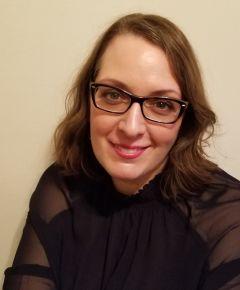
Rebecca (Becca) Miller, PhD, is a licensed clinical psychologist and Associate Professor at the Yale School of Medicine, Department of Psychiatry, New Haven CT, USA. She received her MA and PhD in Clinical Psychology from Long Island University, Brooklyn, and her BA from Barnard College. She serves as Director of Peer Support at Connecticut Mental Health Center in New Haven, using her lived experience with mental illness to inform her work. Her publications and other scholarship have focused on peer support for persons diagnosed with serious mental illnesses, person-centered and recovery-oriented approaches, alternative experiential approaches to clinical training programs, and deprescribing in psychiatry. She recently co-authored the book, Deprescribing in Psychiatry, published by Oxford University Press. Becca was diagnosed with Young Onset Parkinson’s Disease, at age 39 when her daughter was 9 months old, and after living with symptoms undiagnosed for 10 years prior. She has served as a delegate and spoken on YOPD and parenting at the World Parkinson Congress in Portland, OR and Kyoto, Japan. She finds it delightfully ironic that she discovered snails were her totem animal 20 years before diagnosis with YOPD. She currently lives in New Haven with her now 9-year-old daughter.



Want more?
Don't forget to subscribe! There are many ways to listen: Apple Podcasts, TuneIn (Amazon Echo), Spotify or RSS Feed. (Need help subscribing? See our quick guide.)
For all of our Substantial Matters podcast episodes, visit Parkinson.org/Podcast.
Related Materials
Related Blog Posts

How To Stay Safe During a Hospitalization with Parkinson’s
