Episode 113: Cell-Based Therapies for Parkinson’s Disease
-
Dan Keller 0:02 Welcome to this episode of Substantial Matters: Life and Science of Parkinson's. I'm your host, Dan Keller. At the Parkinson's Foundation, we want all people with Parkinson's and their families to get the care and support they need. Better care starts with better research and leads to better lives. In this podcast series, we highlight the fruits of that research—the treatments and techniques that can help you live a better life now, as well as research that can bring a better tomorrow.
Most people with Parkinson's disease start their treatment with levodopa and add other treatments as needed, but for several years researchers have been investigating the possibility of symptom control by making dopamine in the brain. Two approaches have been to inject dopamine-producing cells into specific areas of the brain where they have been lost, or to induce cells already in the brain to transform into dopamine producers. The research has proceeded along various lines, using several approaches in animal experiments and some limited human clinical trials to put what has been learned into perspective.
I spoke with Professor Roger Barker of the University of Cambridge in England, and based on what we now know, he offered his thoughts on what may be coming along and importantly, what people with Parkinson's should know, ask, expect, and be cautious of if they are contemplating entering a clinical trial of a cell-based therapy. I guess the most basic question would be, can you define what we mean by cell-based therapy?
Professor Roger Barker 1:59 It's a very good question, because people mean different things by it, but in essence, the core of what we're trying to do in Parkinson's disease with cell-based therapies is to replace the loss of the dopamine nerve cells, which are central to the problem you see in Parkinson's disease and underlying many of the features of that condition.
Dan Keller 2:19 Why is this approach being explored?
Professor Roger Barker 2:23 I mean, the main reason why we think there is an opportunity for this to be useful in Parkinson's disease is, we know that dopamine drugs work very well in people with Parkinson's, at least in the early stages, so giving dopamine cells should, in theory, work as well as dopamine drugs.
Secondly, and the reason why people are quite attracted by this, is that the number of dopamine cells you need to replace in the brain is relatively small. In Parkinson's, you have about half a million dopamine cells on either side of your brain in a normal state, and when you've lost half of that, i.e., a quarter of a million, you develop the early features of Parkinson's disease. So, the second main reason why it is an attractive approach is you only need to replace up to a quarter of a million dopamine cells, which might seem like quite a lot, but compared to the billions of cells you have in the brain, that's very tractable.
And the final reason why people are very attracted by this approach is, it would be, if it worked, a one-off therapy. You wouldn't need to take tablets every single day; you simply have the cells replaced in the brain, and not only would you have it as a one-off procedure, but the complications, which you can see with medication, so side effects from them would be avoided, because obviously you don't need to take the tablets. And the cells would be put at the place in the brain where dopamine is lost, and only where it's lost in Parkinson's. So some of the side effects you see with the drugs are due to stimulation of dopamine systems which are intact in the Parkinson's disease brain and not affected by the disease process.
Dan Keller 3:44 Would this be aimed at really relieving symptoms, mainly motor symptoms, or would other symptoms be included? And what about disease progression?
Professor Roger Barker 3:56 Yeah, so I think it's important to understand that this is a symptomatic therapy. In other words, what it's trying to do is trying to put dopamine into the brain in a more efficient way, so what it will help is it will help those aspects of Parkinson's which respond best to the dopamine drugs which we use in clinic at the moment, and that is predominantly the motor problems that you see, especially the stiffness and slowness of movement, less so the tremor. It probably will help least for things such as the walking and suchlike, but it's not a cure. It won't slow down the disease process, because obviously, what drives the problem in Parkinson's disease is the accumulation of proteins in cells in an abnormal way, and the cells will not be stopping that. They're simply trying to bypass the pathology, if you like, you see in the brain by replacing those which have been diseased, damaged, and lost to the disease process already.
Dan Keller 4:45 Is the implication there that these cells, too, would be susceptible to the accumulation of alpha-synuclein?
Professor Roger Barker 4:53 That is an assumption that has been shown to some extent with some of the earlier trials around using the sort of fetal dopamine cells rather than the engineered cells, which we're now taking towards the clinic. So, in those transplant studies from the '90s, it was shown that after 10 years, some of the grafted fetal dopamine cells did acquire the pathology of alpha-synuclein in the Parkinsonian brain.
Now, even at 24 years, which is the longest time we've ever studied a post-mortem on a patient who's had a transplant, while there is pathology of the Parkinsonian type in that transplant, the majority of the dopamine cells still remain free of the disease process, as far as we can see. So, while the graft would acquire the pathology of Parkinson's, it's not thought that it's likely to accumulate it at a rate that would compromise its function for many years.
Dan Keller 5:45 Are you sure that the cells you see long term are the ones you put in, or is there some way they are marked, or could they be inducing other cells to do what you want?
Professor Roger Barker 5:57 Yeah, it's a good question. I mean, we don't actually know the answer to that. The assumption is that they are the cells we put in, and the reason for thinking that is obviously they're at the site where the tissue was engrafted. We know from experimental animal models that the cells we engraft, which then survive and mature and differentiate, are the cells we've implanted.
So, for example, if we put human cells into a rodent, we can obviously stain for the human cells, and then we can show that the dopamine cells which we find in the transplant are of human origin. So, they must be the cells that were implanted. And the site at which we implant the cells, generally speaking, is in a structure called the striatum, which is not where dopamine nerve cells are normally found; it's where dopamine nerve fibers are normally found, so it would be very unusual for dopamine cells to be there at all unless we actually put them in there with our transplantations.
Dan Keller 6:52 There have been a good handful of clinical trials, as well as animal studies, but they've been done in many different ways with different cell sources and sites of implantation and immunosuppression. Can you synthesize or generalize what has been found so far?
Professor Roger Barker 7:09 Most of the work to date has involved using fundamentally tissue derived from fetuses, so this comes—so it's a very ethically contentious area, because the tissue is collected from termination of pregnancies, abortions, and the tissue is harvested from that, and then transplanted. That has been where the majority of the work has been done over the last 30 years.
And I think what we can conclude, as you intimated in your question, is that no two trials have really been the same. So, comparing them makes it very difficult indeed. I think what we can say is that when it works, it works very well. By which I mean that there are some patients who've had implants of these fetal dopamine cells who have come off all their dopamine medication for their Parkinson's disease. They've stayed off it for years. The dopamine levels in the brain have gone back to normal on imaging when they've died later on. So, when it works, it works very well.
It's also fair to say that there are a significant number of patients where the treatment has not benefited them. They have not improved; in some cases, that's even when the scans looking at dopamine levels in the brain have shown promising results. So that is a bit of a conundrum, and in some cases the patients themselves have actually developed side effects from the medication—they developed involuntary movements generated, it appears, by the transplant itself, and that has created, obviously, a lot of worry.
Because while everybody with Parkinson's disease will eventually develop side effects of a movement disorder, such as dyskinesias, with the use of L-DOPA, you can obviously always get rid of L-DOPA dyskinesias, because you can get rid of L-DOPA by stopping patients taking it. If you obviously have a graft-induced dyskinesia, you can't get the graft back, and that has created some anxiety in the field. It does respond to deep brain stimulation, as do L-DOPA-induced dyskinesias, but obviously, until we could better understand that, that was a major problem in the field advancing to where it is now.
Dan Keller 9:06 Which patients would be good candidates for this, if it ever comes to pass, or even for trials, ones who have mainly motor symptoms? Or how would you select patients?
Professor Roger Barker 9:17 I think this therapy won't be suitable for everybody, much the same way as deep brain stimulation for Parkinson's isn't suitable for everybody. I think the optimal group will be the people who've clearly got a disease that's very responsive to dopamine medication, because that would be the obvious group that will respond to dopamine cell therapies. They're probably people who are relatively younger compared to the average age people get Parkinson's, so these are probably people in their 50s, early 60s, more than people in their 70s and 80s.
It will probably be better used in earlier stage disease before people have developed some of the complications which they see with the oral medication. So I would imagine that the optimal group will be the younger onset, earlier stage patient with Parkinson's disease, who has a very marked and clear response to the dopamine drugs which they're taking, which in essence is very similar to the group that are chosen, if you like, or an ideal group for deep brain stimulation at the moment.
Dan Keller 10:11 The dogma used to be that as an adult you had a certain bunch of neurons, and that's all you would ever have, but with some animal experiments, they found stem cells. So rather than implanting cells, is there any thought to stimulating what you've already got to produce dopamine-producing neurons?
Professor Roger Barker 10:30 It would be a lovely idea if we could just get the brain to repair itself. Obviously, it doesn't do it in Parkinson's disease, which is why you get Parkinson's disease. So, one of the areas which has been very controversial, if you like, is the capacity of the human adult brain to produce new nerve cells. And while I think people are still arguing about it, there is probably evidence that some of these may be produced in an area of the brain called the hippocampus and have something a little bit to do with memory, and that there are probably some that are produced at the front of the brain that go up to what they call the olfactory bulb, which is just above the nose, which is involved with olfaction, with smell.
Whether there are new cells that can be made in the area where the dopamine cells die off in Parkinson's—namely in this top of the stem of the brain, the brain stem in the midbrain, in the substantia nigra in particular—I think most people would say there isn't much evidence that there's neurogenesis in the adult human nigra, so the idea that you could switch on an intrinsic process to make more dopamine cells for the ones that have been lost is probably something that's not viable.
Having said that, the alternative is: could you turn another population of cells in the brain into dopamine cells? And this has received quite a lot of interest in recent years. The idea that where we implant the dopamine cells in our trials, which is into this area called the striatum, it's obviously full of lots of different nerve cells and lots of supporting cells called the glial cells. Could we cleverly engineer, say, a quarter of a million of those glial cells, which you probably don't need all of them, and convince them that they could turn into dopamine cells by engineering them through the injections of different genes and viruses to do that? So there has been this idea that rather than implanting exogenous cells, you can reprogram endogenous cells, cells within the human brain itself—the patient's own brain—to take on the identity of the missing dopamine cells in the disease.
Dan Keller 12:24 So you'd be essentially making induced pluripotent cells, sort of de-differentiating them and sending them on another pathway towards dopamine-producing cells.
Professor Roger Barker 12:35 Yeah, they wouldn't be induced pluripotent stem cells, because obviously that's a process whereby you take an adult cell, say skin or blood, and you convert it into something that can proliferate forever, so it turns into a stem cell, and then you can convince that stem cell, that induced pluripotent stem cell, to become a dopamine cell.
What you're trying to do here is say, take a glial cell, a thing called an astrocyte in the brain, and say, "Can I convince that astrocyte through injecting a series of factors into it to stop being an astrocyte, directly turn into a nerve cell, and then become a dopamine nerve cell?" So, can I reprogram it and induce it to take on a new identity without it necessarily going through this sort of pluripotent stem cell state? It may go through, obviously, reprogram into some precursor state, but not back to a stem cell.
Dan Keller 13:23 Right. Okay. Do we also need to focus on understanding the natural process of aging, and especially what triggers Parkinson's disease to begin with?
Professor Roger Barker 13:34 Yeah, absolutely. I think it's critical that, you know, while we approach these strategies of cell-based therapies to repair bits of the brain that aren't working in Parkinson's, it would be much better if we could understand what went wrong in Parkinson's disease and correct that. So, can we actually stop the disease process?
And, as you say, I mean, there's lots of work going on with this, but the biggest risk factor for getting Parkinson's disease is age, and this is true for many diseases of the brain. So it's clear that whatever that aging process is—and this is obviously something that a lot of people spend a lot of time thinking about—age in nerve cells clearly predisposes them to getting disease and getting Parkinson's disease. So understanding that will give us insight not only into how we could better treat Parkinson's disease, but all age-related disease of the brain, like Alzheimer's and suchlike. So, it's definitely an area where people are interested in.
And ultimately, I would always say that these cell-based therapies shouldn't be seen of as being the only therapy. Ultimately, if we could see people with early Parkinson's disease, put in the new cells and then start them on some disease-modifying therapy, to all intents and purposes, it would be a cure if we could slow the disease down by 50% and put back the cells which are missing, which are giving them their early, early symptoms and signs.
Dan Keller 14:51 What sort of questions should people ask about cell-based therapy if they're considering participating in a trial?
Professor Roger Barker 14:58 This is a very difficult area, because there are lots of clinics and people around the world who are already offering cell-based therapies for Parkinson's. Relatively few of them actually have a sort of track record of preclinical work which would support a clinical trial. So, the questions I would always ask are, what is it they're implanting? So, what are those cells, and what are they hoping to achieve? Because many clinics offer cell-based therapies which aren't clearly designed around replacing dopamine cells. They're putting cells in which will have some function on the brain to make it better in Parkinson's disease, without that being very well specified. So, I think it's very important you understand what cells are being put in for what purpose.
I think it's very important to understand what is the preclinical evidence—i.e., what is the evidence from the lab that these cells do what they say they do, and is that being replicated elsewhere? So, how strong is the evidence that the cells will work in the way that they say?
And then, thirdly, I would say that all cell-based therapies at the moment have to be seen as experimental, so should be the subject of a trial. So, nobody should be paying to have any cell-based therapies for this condition, because they're unproven, and any trial should be properly funded to support the patient and their family through it, without them themselves having to pay anything towards that. So, I think that's very important, because a lot of people think that there are already cell-based therapies out there that work in Parkinson's because this clinic or that clinic's offering it to me, but there's no evidence that that clinic actually has a therapy which works in a way that they are necessarily claiming.
Dan Keller 16:29 Good, thanks for all this information in this discussion. For more on today's topic, search our website at parkinson.org for cell-based therapies with a hyphen between cell and based. You'll find information on stem cell therapies and questions to ask before participating in a clinical trial. Also, you can see information on induced pluripotent stem cells in an article by Michael Okun, national medical advisor for the Parkinson's Foundation. These are a person's or animal's own cells that can be reprogrammed to give them the ability to become various kinds of cells, including dopamine-producing neurons. The technique has already shown its potential using a rat model of Parkinson's.
You can also learn more about cell-based therapy in our Surgical Options: A Treatment Guide to Parkinson's Disease publication by visiting parkinson.org/library. In our next podcast, we'll continue our discussion with Professor Barker, when he will talk about how researchers are exploring the field of gene-based therapy for Parkinson's, and where it is going.
If you have questions about today's topic, or anything else having to do with Parkinson's, our information specialists can provide answers in English or Spanish. You can reach them at 1-800-4PD-INFO. News and updates about future events and resources are available by joining our email list at the bottom of our website's homepage.
If you want to leave feedback on this podcast or any other subject, you can do it at parkinson.org/feedback. If you enjoyed this podcast, be sure to subscribe and rate and review the series on Apple Podcasts, or wherever you get your podcasts. At the Parkinson's Foundation, our mission is to help every person diagnosed with Parkinson's live the best possible life today. To that end, we'll be bringing you a new episode in this podcast series every other week. Till next time, for more information and resources, visit parkinson.org or call our toll-free helpline at 1-800-4PD-INFO, that's 1-800-473-4636. Thank you for listening.
Dan Keller 0:02
Welcome to this episode of Substantial Matters: Life and Science of Parkinson's
. I'm your host, Dan Keller, at the Parkinson's Foundation . We want all people with Parkinson's and their families to get t he care and support they need . Better care starts with better research and leads to better lives . In this podcast series, we highlight the fruits of that research—the treatments and techniques that can help you live a better life now, as w ell as research that can bring a better tomorrow . Most people with Parkinson's disease start their treatment with levodopa and add other treatments as needed. For several years, however, researchers have been investigating the possibility of long-term symptom control by manufacturing dopamine directly in the brain. Two primary approaches have been to inject dopamine-producing cells into specific areas of the brain where they have been lost, or to induce cells already residing in the brain to transform into dopamine producers.
The research has proceeded along various lines, using several approaches in animal experiments and some limited human clinical trials. To put what has been learned into perspective, I spoke with Professor Roger Barker of the University of Cambridge in England. Based on what we now know, he offered his thoughts on what may be coming along and, importantly, what people with Parkinson's should know, ask, expect, and be cautious of if they are contemplating entering a clinical trial of a cell-based therapy.
I guess the most basic question would be: can you define what we mean by cell-based therapy?
Prof. Roger Barker 1:59
It's a very good question because people mean different things by it. In essence, the core of what we're trying to do in Parkinson's disease with cell-based therapies is to replace the lost dopamine nerve cells. These cells are central to the pathology you see in Parkinson's disease and underlie many of the clinical features of the condition.
Dan Keller 2:19
Why is this approach being explored?
Prof. Roger Barker 2:23
The main reason why we think there is an opportunity for this to be useful in Parkinson's is that we know dopamine-replacing drugs work very well in people, at least in the early stages of the disease. Therefore, providing functional dopamine cells should, in theory, work just as well as dopamine drugs.
Secondly—and the reason why people are quite attracted to this—is that the absolute number of dopamine cells you need to replace in the brain is relatively small. In a normal state, you have about half a million dopamine cells on either side of your brain. When you have lost roughly half of that population—meaning a quarter of a million cells—you begin to develop the early features of Parkinson's disease. So, you only need to replace up to a quarter of a million dopamine cells. While that might sound like a lot, compared to the billions of other cells you have in the brain, it is a very tractable target.
The final reason people are highly attracted to this approach is that, if it works, it would be a one-off therapy. You wouldn't need to take tablets every single day; you simply have the cells replaced in the brain. Furthermore, the complications and side effects that we frequently see with long-term oral medication could be completely avoided. The cells would be placed precisely at the site in the brain where dopamine is lost, and only where it is lost. Some of the side effects we see with standard drugs are due to the unintended stimulation of dopamine systems that are entirely intact in the Parkinson's brain and unaffected by the disease process.
Dan Keller 3:44
Would this be aimed at relieving symptoms—mainly motor symptoms—or would other symptoms be included? And what about disease progression?
Prof. Roger Barker 3:56
It is critical to understand that this is strictly a symptomatic therapy. In other words, what it is trying to do is deliver dopamine into the brain in a more efficient, continuous way. Consequently, it will only help those aspects of Parkinson's that respond best to the dopamine drugs we currently use in the clinic. That is predominantly the motor problems, especially rigidity, stiffness, and slowness of movement—or bradykinesia. It is less effective for tremor, and it probably will help the least for axial symptoms such as walking and balance issues.
Crucially, it is not a cure. It will not slow down the underlying disease process. What drives the degeneration in Parkinson's disease is the abnormal accumulation of proteins within cells, and the transplanted cells will not stop that process. They are simply trying to bypass the pathology by replacing the specific components that have been damaged and lost to the disease.
Dan Keller 4:45
Is the implication there that these transplanted cells, too, would eventually be susceptible to the accumulation of alpha-synuclein?
Prof. Roger Barker 4:53
That is an assumption that has been validated to some extent by earlier trials using fetal-derived dopamine cells, rather than the newer stem-cell-engineered cells we are currently taking toward the clinic.
In those pioneering transplant studies from the 1990s, post-mortem tissue analysis revealed that after 10 years, some of the grafted fetal dopamine cells did indeed acquire alpha-synuclein pathology from the host Parkinsonian brain. However, even at 24 years—which is the longest time we have ever studied a post-mortem patient who received a transplant—while there is Parkinson's-type pathology within the transplant, the vast majority of the grafted dopamine cells still remain entirely free of the disease process. So while the graft can slowly acquire the pathology of Parkinson's, it is not thought to accumulate it at a rate that would compromise its clinical function for many, many years.
Dan Keller 5:45
Are you certain that the cells you observe long-term are the actual ones you put in? Is there some way they are marked, or could they be inducing host cells to change behavior?
Prof. Roger Barker 5:57
We don't know the absolute answer to that in humans, but the assumption is that they are indeed the exact cells we implanted. The primary reason for thinking this is their precise location at the engraftment site.
We know definitively from experimental animal models that the cells we engraft are the ones that survive, mature, and differentiate. For example, if we transplant human cells into a rodent model, we can use specific immunohistochemical staining for human-specific markers to prove that the surviving dopamine cells are of human origin. Furthermore, the site at which we implant these cells is a structure called the striatum. The striatum is where dopamine nerve fibers normally terminate, but it is not where dopamine cell bodies are naturally found. It would be highly unusual for dopamine cell bodies to exist there at all unless we physically introduced them via transplantation.
Dan Keller 6:52
There have been a handful of clinical trials as well as animal studies, but they have been executed in many different ways with varying cell sources, implantation sites, and immunosuppression protocols. Can you synthesize or generalize what has been found so far?
Prof. Roger Barker 7:09
Most of the work to date has involved tissue derived from human fetuses. This is a highly ethically contentious area because the tissue must be collected following the elective termination of pregnancies. That has been the foundation for the majority of the clinical work over the last 30 years.
As you intimated in your question, no two historical trials were set up the same way, making direct comparisons very difficult. However, we can conclude that when this therapy works, it works exceptionally well. There are documented patients who received fetal dopamine cell implants who were able to completely discontinue all of their standard oral Parkinson's medications and remain off them for years. Their follow-up neuroimaging showed that dopamine levels in the brain had returned to normal ranges, which was later confirmed at post-mortem.
Conversely, it is also fair to say that a significant number of patients derived no clinical benefit from the treatment. They did not improve, and in some cases, that lack of benefit occurred even when their brain scans showed promising increases in dopamine levels. This remains a bit of a conundrum.
Furthermore, in some historical trials, patients developed a troubling side effect known as graft-induced dyskinesia—involuntary, writhing movements generated by the transplant itself. This created substantial anxiety in the field. With standard levodopa therapy, if a patient develops severe dyskinesia, you can manage it by adjusting or stopping the medication. If you induce a graft-induced dyskinesia, you cannot easily remove the transplanted cells. We have since learned that these involuntary movements do respond to deep brain stimulation (DBS), much like levodopa-induced dyskinesias do, but until we better understood the mechanism, it was a major roadblock to advancing the field.
Dan Keller 9:06
Which patients would be the ideal candidates for this if it becomes an approved therapy or for current clinical trials? Would it be those with predominantly motor symptoms, or how would you select them?
Prof. Roger Barker 9:17
This therapy certainly won't be suitable for everyone, much in the same way that deep brain stimulation isn't suitable for every person with Parkinson's.
The optimal candidate profile will consist of individuals whose symptoms are highly responsive to dopamine medications, because that is the clearest predictor of responding to a dopamine cell replacement therapy. They will likely be relatively younger than the average Parkinson's population—meaning people in their 50s or early 60s, rather than those in their 70s and 80s. It will also probably be most effective in the earlier stages of the disease, before patients have developed advanced, non-dopaminergic complications or severe side effects from their oral medications.
In essence, the ideal group—younger onset, earlier-stage patients with a clear, robust response to levodopa—carries almost the exact same criteria we use to select ideal candidates for deep brain stimulation right now.
Dan Keller 10:11
The old medical dogma was that as an adult, you had a fixed number of neurons and that was all you would ever have. However, animal experiments eventually discovered neural stem cells. Rather than implanting external cells, is there any research into stimulating the brain to produce its own dopamine neurons?
Prof. Roger Barker 10:30
It would be a wonderful solution if we could simply prompt the brain to repair itself. Clearly, the brain lacks the capacity to do this naturally in Parkinson's, which is why the disease progresses.
The capacity of the adult human brain to undergo neurogenesis—producing new functional nerve cells—has been a highly debated and controversial area of neuroscience. While researchers still debate the exact scale, there is solid evidence that new neurons are produced in the hippocampus, where they play a role in memory, and in the subventricular zone, migrating to the olfactory bulb just above the nose, which is involved in our sense of smell. However, when it comes to the substantia nigra in the midbrain where dopamine cells die off in Parkinson's, most neuroscientists agree there is no convincing evidence of adult human neurogenesis. Therefore, switching on an intrinsic process to sprout brand-new dopamine cells from scratch in that region is probably not a viable strategy.
The alternative approach that has generated immense interest in recent years is cellular reprogramming. The striatum—the area where we physically implant cells in our trials—is densely populated with different types of native neurons and supporting cells called glial cells, specifically astrocytes. The concept is: could we cleverly engineer, say, a quarter of a million of those local astrocytes and convince them to transform directly into dopamine cells? By injecting specific transcription factors via viral vectors, we might reprogram these endogenous cells within the patient's own brain to take on the identity and function of the missing dopamine neurons, completely bypassing the need for an exogenous cell transplant.
Dan Keller 12:24
So you would essentially be creating induced pluripotent stem cells—de-differentiating them and sending them down a new developmental pathway toward becoming dopamine-producing cells?
Prof. Roger Barker 12:35
Not exactly. They wouldn't technically be induced pluripotent stem cells (iPSCs). The iPSC process involves taking an adult somatic cell, like a skin or blood cell, and resetting it completely into an embryonic-like stem cell state that can proliferate indefinitely in a lab. From there, you guide that stem cell to differentiate into a dopamine neuron.
What we are talking about with in vivo reprogramming is direct lineage conversion. We take an existing astrocyte in the brain and inject a series of factors to make it cease being an astrocyte and directly transform into a neuron, specifically a dopamine neuron. We are forcing it to adopt a entirely new cellular identity without making it revert all the way back to a blank-slate, pluripotent stem cell state. It might transition through a brief progenitor or precursor stage, but it does not return to a true stem cell.
Dan Keller 13:23
Right, understood. Do we also need to stay heavily focused on understanding the natural process of aging, and specifically what triggers Parkinson's disease to begin with?
Prof. Roger Barker 13:34
Absolutely. It is critical. While we develop these cell-based strategies to patch up and repair the damaged circuits, it would be infinitely better if we could understand the primary upstream triggers of Parkinson's and prevent them entirely. Can we actually halt the degenerative process?
Epidemiologically, the single greatest risk factor for developing Parkinson's disease is advancing age. This holds true for many neurodegenerative conditions. It is clear that the biological aging process predisposes aging nerve cells to proteotoxic stress and degeneration. Cracking that aging mechanism will give us profound insights not just into Parkinson's, but into all age-related neurodegenerative diseases, including Alzheimer's.
Ultimately, cell-based therapies shouldn't be viewed in isolation. The ideal future protocol would be to identify patients at the earliest signs of Parkinson's, transplant healthy new cells to restore their immediate motor function, and simultaneously start them on a powerful disease-modifying therapy. If we could couple cellular repair with a therapy that slows the background disease progression down by 50%, we would, to all intents and purposes, have a functional cure.
Dan Keller 14:51
What specific questions should patients or their families ask about cell-based therapies if they are considering participating in a clinical trial?
Prof. Roger Barker 14:58
This is a highly problematic area because there are numerous commercial clinics worldwide already aggressively marketing unproven cell-based therapies for Parkinson's. Very few of these entities possess any legitimate preclinical data or peer-reviewed track record to justify a human trial.
If someone is contemplating this, the first question must always be: What exactly are you implanting? Patients need to know the precise cellular identity of the graft and its intended mechanism of action. Many commercial clinics offer vague stem cell interventions that are not designed to replace dopamine cells at all; they simply inject generic cells claiming they will broadly "heal" the brain without any scientific specificity.
The second question is: What is the peer-reviewed preclinical evidence? You must ask for the laboratory data proving that these exact cells survive, integrate, and function safely in animal models of the disease, and whether those findings have been independently replicated by other global research groups.
Thirdly, patients must understand that all legitimate cell-based therapies for Parkinson's right now are strictly experimental and must only occur within a formalized, approved clinical trial. No patient should ever have to pay out-of-pocket to receive a cell-based therapy. Legitimate clinical trials are fully funded by institutional grants or industry sponsors to support the participant and their family completely. If a clinic is charging you a fee to participate or receive a stem cell transplant, that is a massive red flag. There is currently no scientific evidence that those commercial offerings work in the way they claim.
Dan Keller 16:29
Excellent. Thank you for this highly informative discussion.
For more information on today's topic, you can search our website at parkinson.org for "cell-based therapies" using a hyphen between "cell" and "based." There you will find educational resources on stem cell research and a comprehensive list of questions to ask before participating in any clinical trial. You can also read an informative article on induced pluripotent stem cells written by Dr. Michael S. Okun, National Medical Advisor for the Parkinson's Foundation. These are a person's or animal's own adult cells that can be genetically reprogrammed in a lab, giving them the ability to differentiate into various cell types, including dopamine-producing neurons. This technique has already demonstrated significant potential in standard rat models of Parkinson's disease.
To learn more about these and other advanced surgical interventions, you can download or request our publication titled Surgical Options: A Treatment Guide to Parkinson's Disease by visiting parkinson.org/library.
In our next podcast episode, we will continue our conversation with Professor Barker as he shifts focus to how researchers are exploring the cutting-edge field of gene-based therapies for Parkinson's disease, and where that technology is headed.
If you have any questions about today's episode or any aspect of living with Parkinson's, our compassionate information specialists provide expert answers in both English and Spanish. You can reach the Parkinson's Foundation Helpline directly at 1-800-4PD-INFO. News, educational event announcements, and research updates are always available by subscribing to our email list at the bottom of our website's homepage.
If you would like to leave feedback regarding this podcast series, please visit parkinson.org/feedback. If you enjoyed this episode, please subscribe, rate, and review us on Apple Podcasts or wherever you access your favorite podcasts.
At the Parkinson's Foundation, our mission is to help every person diagnosed with Parkinson's live the best possible life today. To that end, we will be back with a brand-new episode in this podcast series every other week. Until next time, for additional resources, visit parkinson.org or call our toll-free helpline at 1-800-4PD-INFO, which is 1-800-473-4636. Thank you for listening.
Dan Keller 0:02
Welcome to this episode of Substantial Matters: Life and Science of Parkinson's
. I'm your host, Dan Keller, at the Parkinson's Foundation . We want all people with Parkinson's and their families to get t he care and support they need . Better care starts with better research and leads to better lives . In this podcast series, we highlight the fruits of that research—the treatments and techniques that can help you live a better life now, as w ell as research that can bring a better tomorrow . Most people with Parkinson's disease start their treatment with levodopa and add other treatments as needed. For several years, however, researchers have been investigating the possibility of long-term symptom control by manufacturing dopamine directly in the brain. Two primary approaches have been to inject dopamine-producing cells into specific areas of the brain where they have been lost, or to induce cells already residing in the brain to transform into dopamine producers.
The research has proceeded along various lines, using several approaches in animal experiments and some limited human clinical trials. To put what has been learned into perspective, I spoke with Professor Roger Barker of the University of Cambridge in England. Based on what we now know, he offered his thoughts on what may be coming along and, importantly, what people with Parkinson's should know, ask, expect, and be cautious of if they are contemplating entering a clinical trial of a cell-based therapy.
I guess the most basic question would be: can you define what we mean by cell-based therapy?
Prof. Roger Barker 1:59
It's a very good question because people mean different things by it. In essence, the core of what we're trying to do in Parkinson's disease with cell-based therapies is to replace the lost dopamine nerve cells. These cells are central to the pathology you see in Parkinson's disease and underlie many of the clinical features of the condition.
Dan Keller 2:19
Why is this approach being explored?
Prof. Roger Barker 2:23
The main reason why we think there is an opportunity for this to be useful in Parkinson's is that we know dopamine-replacing drugs work very well in people, at least in the early stages of the disease. Therefore, providing functional dopamine cells should, in theory, work just as well as dopamine drugs.
Secondly—and the reason why people are quite attracted to this—is that the absolute number of dopamine cells you need to replace in the brain is relatively small. In a normal state, you have about half a million dopamine cells on either side of your brain. When you have lost roughly half of that population—meaning a quarter of a million cells—you begin to develop the early features of Parkinson's disease. So, you only need to replace up to a quarter of a million dopamine cells. While that might sound like a lot, compared to the billions of other cells you have in the brain, it is a very tractable target.
The final reason people are highly attracted to this approach is that, if it works, it would be a one-off therapy. You wouldn't need to take tablets every single day; you simply have the cells replaced in the brain. Furthermore, the complications and side effects that we frequently see with long-term oral medication could be completely avoided. The cells would be placed precisely at the site in the brain where dopamine is lost, and only where it is lost. Some of the side effects we see with standard drugs are due to the unintended stimulation of dopamine systems that are entirely intact in the Parkinson's brain and unaffected by the disease process.
Dan Keller 3:44
Would this be aimed at relieving symptoms—mainly motor symptoms—or would other symptoms be included? And what about disease progression?
Prof. Roger Barker 3:56
It is critical to understand that this is strictly a symptomatic therapy. In other words, what it is trying to do is deliver dopamine into the brain in a more efficient, continuous way. Consequently, it will only help those aspects of Parkinson's that respond best to the dopamine drugs we currently use in the clinic. That is predominantly the motor problems, especially rigidity, stiffness, and slowness of movement—or bradykinesia. It is less effective for tremor, and it probably will help the least for axial symptoms such as walking and balance issues.
Crucially, it is not a cure. It will not slow down the underlying disease process. What drives the degeneration in Parkinson's disease is the abnormal accumulation of proteins within cells, and the transplanted cells will not stop that process. They are simply trying to bypass the pathology by replacing the specific components that have been damaged and lost to the disease.
Dan Keller 4:45
Is the implication there that these transplanted cells, too, would eventually be susceptible to the accumulation of alpha-synuclein?
Prof. Roger Barker 4:53
That is an assumption that has been validated to some extent by earlier trials using fetal-derived dopamine cells, rather than the newer stem-cell-engineered cells we are currently taking toward the clinic.
In those pioneering transplant studies from the 1990s, post-mortem tissue analysis revealed that after 10 years, some of the grafted fetal dopamine cells did indeed acquire alpha-synuclein pathology from the host Parkinsonian brain. However, even at 24 years—which is the longest time we have ever studied a post-mortem patient who received a transplant—while there is Parkinson's-type pathology within the transplant, the vast majority of the grafted dopamine cells still remain entirely free of the disease process. So while the graft can slowly acquire the pathology of Parkinson's, it is not thought to accumulate it at a rate that would compromise its clinical function for many, many years.
Dan Keller 5:45
Are you certain that the cells you observe long-term are the actual ones you put in? Is there some way they are marked, or could they be inducing host cells to change behavior?
Prof. Roger Barker 5:57
We don't know the absolute answer to that in humans, but the assumption is that they are indeed the exact cells we implanted. The primary reason for thinking this is their precise location at the engraftment site.
We know definitively from experimental animal models that the cells we engraft are the ones that survive, mature, and differentiate. For example, if we transplant human cells into a rodent model, we can use specific immunohistochemical staining for human-specific markers to prove that the surviving dopamine cells are of human origin. Furthermore, the site at which we implant these cells is a structure called the striatum. The striatum is where dopamine nerve fibers normally terminate, but it is not where dopamine cell bodies are naturally found. It would be highly unusual for dopamine cell bodies to exist there at all unless we physically introduced them via transplantation.
Dan Keller 6:52
There have been a handful of clinical trials as well as animal studies, but they have been executed in many different ways with varying cell sources, implantation sites, and immunosuppression protocols. Can you synthesize or generalize what has been found so far?
Prof. Roger Barker 7:09
Most of the work to date has involved tissue derived from human fetuses. This is a highly ethically contentious area because the tissue must be collected following the elective termination of pregnancies. That has been the foundation for the majority of the clinical work over the last 30 years.
As you intimated in your question, no two historical trials were set up the same way, making direct comparisons very difficult. However, we can conclude that when this therapy works, it works exceptionally well. There are documented patients who received fetal dopamine cell implants who were able to completely discontinue all of their standard oral Parkinson's medications and remain off them for years. Their follow-up neuroimaging showed that dopamine levels in the brain had returned to normal ranges, which was later confirmed at post-mortem.
Conversely, it is also fair to say that a significant number of patients derived no clinical benefit from the treatment. They did not improve, and in some cases, that lack of benefit occurred even when their brain scans showed promising increases in dopamine levels. This remains a bit of a conundrum.
Furthermore, in some historical trials, patients developed a troubling side effect known as graft-induced dyskinesia—involuntary, writhing movements generated by the transplant itself. This created substantial anxiety in the field. With standard levodopa therapy, if a patient develops severe dyskinesia, you can manage it by adjusting or stopping the medication. If you induce a graft-induced dyskinesia, you cannot easily remove the transplanted cells. We have since learned that these involuntary movements do respond to deep brain stimulation (DBS), much like levodopa-induced dyskinesias do, but until we better understood the mechanism, it was a major roadblock to advancing the field.
Dan Keller 9:06
Which patients would be the ideal candidates for this if it becomes an approved therapy or for current clinical trials? Would it be those with predominantly motor symptoms, or how would you select them?
Prof. Roger Barker 9:17
This therapy certainly won't be suitable for everyone, much in the same way that deep brain stimulation isn't suitable for every person with Parkinson's.
The optimal candidate profile will consist of individuals whose symptoms are highly responsive to dopamine medications, because that is the clearest predictor of responding to a dopamine cell replacement therapy. They will likely be relatively younger than the average Parkinson's population—meaning people in their 50s or early 60s, rather than those in their 70s and 80s. It will also probably be most effective in the earlier stages of the disease, before patients have developed advanced, non-dopaminergic complications or severe side effects from their oral medications.
In essence, the ideal group—younger onset, earlier-stage patients with a clear, robust response to levodopa—carries almost the exact same criteria we use to select ideal candidates for deep brain stimulation right now.
Dan Keller 10:11
The old medical dogma was that as an adult, you had a fixed number of neurons and that was all you would ever have. However, animal experiments eventually discovered neural stem cells. Rather than implanting external cells, is there any research into stimulating the brain to produce its own dopamine neurons?
Prof. Roger Barker 10:30
It would be a wonderful solution if we could simply prompt the brain to repair itself. Clearly, the brain lacks the capacity to do this naturally in Parkinson's, which is why the disease progresses.
The capacity of the adult human brain to undergo neurogenesis—producing new functional nerve cells—has been a highly debated and controversial area of neuroscience. While researchers still debate the exact scale, there is solid evidence that new neurons are produced in the hippocampus, where they play a role in memory, and in the subventricular zone, migrating to the olfactory bulb just above the nose, which is involved in our sense of smell. However, when it comes to the substantia nigra in the midbrain where dopamine cells die off in Parkinson's, most neuroscientists agree there is no convincing evidence of adult human neurogenesis. Therefore, switching on an intrinsic process to sprout brand-new dopamine cells from scratch in that region is probably not a viable strategy.
The alternative approach that has generated immense interest in recent years is cellular reprogramming. The striatum—the area where we physically implant cells in our trials—is densely populated with different types of native neurons and supporting cells called glial cells, specifically astrocytes. The concept is: could we cleverly engineer, say, a quarter of a million of those local astrocytes and convince them to transform directly into dopamine cells? By injecting specific transcription factors via viral vectors, we might reprogram these endogenous cells within the patient's own brain to take on the identity and function of the missing dopamine neurons, completely bypassing the need for an exogenous cell transplant.
Dan Keller 12:24
So you would essentially be creating induced pluripotent stem cells—de-differentiating them and sending them down a new developmental pathway toward becoming dopamine-producing cells?
Prof. Roger Barker 12:35
Not exactly. They wouldn't technically be induced pluripotent stem cells (iPSCs). The iPSC process involves taking an adult somatic cell, like a skin or blood cell, and resetting it completely into an embryonic-like stem cell state that can proliferate indefinitely in a lab. From there, you guide that stem cell to differentiate into a dopamine neuron.
What we are talking about with in vivo reprogramming is direct lineage conversion. We take an existing astrocyte in the brain and inject a series of factors to make it cease being an astrocyte and directly transform into a neuron, specifically a dopamine neuron. We are forcing it to adopt a entirely new cellular identity without making it revert all the way back to a blank-slate, pluripotent stem cell state. It might transition through a brief progenitor or precursor stage, but it does not return to a true stem cell.
Dan Keller 13:23
Right, understood. Do we also need to stay heavily focused on understanding the natural process of aging, and specifically what triggers Parkinson's disease to begin with?
Prof. Roger Barker 13:34
Absolutely. It is critical. While we develop these cell-based strategies to patch up and repair the damaged circuits, it would be infinitely better if we could understand the primary upstream triggers of Parkinson's and prevent them entirely. Can we actually halt the degenerative process?
Epidemiologically, the single greatest risk factor for developing Parkinson's disease is advancing age. This holds true for many neurodegenerative conditions. It is clear that the biological aging process predisposes aging nerve cells to proteotoxic stress and degeneration. Cracking that aging mechanism will give us profound insights not just into Parkinson's, but into all age-related neurodegenerative diseases, including Alzheimer's.
Ultimately, cell-based therapies shouldn't be viewed in isolation. The ideal future protocol would be to identify patients at the earliest signs of Parkinson's, transplant healthy new cells to restore their immediate motor function, and simultaneously start them on a powerful disease-modifying therapy. If we could couple cellular repair with a therapy that slows the background disease progression down by 50%, we would, to all intents and purposes, have a functional cure.
Dan Keller 14:51
What specific questions should patients or their families ask about cell-based therapies if they are considering participating in a clinical trial?
Prof. Roger Barker 14:58
This is a highly problematic area because there are numerous commercial clinics worldwide already aggressively marketing unproven cell-based therapies for Parkinson's. Very few of these entities possess any legitimate preclinical data or peer-reviewed track record to justify a human trial.
If someone is contemplating this, the first question must always be: What exactly are you implanting? Patients need to know the precise cellular identity of the graft and its intended mechanism of action. Many commercial clinics offer vague stem cell interventions that are not designed to replace dopamine cells at all; they simply inject generic cells claiming they will broadly "heal" the brain without any scientific specificity.
The second question is: What is the peer-reviewed preclinical evidence? You must ask for the laboratory data proving that these exact cells survive, integrate, and function safely in animal models of the disease, and whether those findings have been independently replicated by other global research groups.
Thirdly, patients must understand that all legitimate cell-based therapies for Parkinson's right now are strictly experimental and must only occur within a formalized, approved clinical trial. No patient should ever have to pay out-of-pocket to receive a cell-based therapy. Legitimate clinical trials are fully funded by institutional grants or industry sponsors to support the participant and their family completely. If a clinic is charging you a fee to participate or receive a stem cell transplant, that is a massive red flag. There is currently no scientific evidence that those commercial offerings work in the way they claim.
Dan Keller 16:29
Excellent. Thank you for this highly informative discussion.
For more information on today's topic, you can search our website at parkinson.org for "cell-based therapies" using a hyphen between "cell" and "based." There you will find educational resources on stem cell research and a comprehensive list of questions to ask before participating in any clinical trial. You can also read an informative article on induced pluripotent stem cells written by Dr. Michael S. Okun, National Medical Advisor for the Parkinson's Foundation. These are a person's or animal's own adult cells that can be genetically reprogrammed in a lab, giving them the ability to differentiate into various cell types, including dopamine-producing neurons. This technique has already demonstrated significant potential in standard rat models of Parkinson's disease.
To learn more about these and other advanced surgical interventions, you can download or request our publication titled Surgical Options: A Treatment Guide to Parkinson's Disease by visiting parkinson.org/library.
In our next podcast episode, we will continue our conversation with Professor Barker as he shifts focus to how researchers are exploring the cutting-edge field of gene-based therapies for Parkinson's disease, and where that technology is headed.
If you have any questions about today's episode or any aspect of living with Parkinson's, our compassionate information specialists provide expert answers in both English and Spanish. You can reach the Parkinson's Foundation Helpline directly at 1-800-4PD-INFO. News, educational event announcements, and research updates are always available by subscribing to our email list at the bottom of our website's homepage.
If you would like to leave feedback regarding this podcast series, please visit parkinson.org/feedback. If you enjoyed this episode, please subscribe, rate, and review us on Apple Podcasts or wherever you access your favorite podcasts.
At the Parkinson's Foundation, our mission is to help every person diagnosed with Parkinson's live the best possible life today. To that end, we will be back with a brand-new episode in this podcast series every other week. Until next time, for additional resources, visit parkinson.org or call our toll-free helpline at 1-800-4PD-INFO, which is 1-800-473-4636. Thank you for listening.
Researchers have been investigating cell-based therapies for treating Parkinson’s disease (PD) for some time now, using a variety of materials and methods. Two approaches have been to implant dopamine-producing cells or to induce cells already in the brain to become dopamine-producers. We asked Dr. Roger Barker, Professor of Clinical Neuroscience at the University of Cambridge in the United Kingdom, to summarize what has been learned so far and based on that, to give his perspective on where the field may be headed. The field is still in the experimental stages, and he cautions about what people with PD should ask when considering entering a clinical trial of cell-based therapy and what they may expect in terms of symptom management and disease progression.
Released: September 21, 2021
-
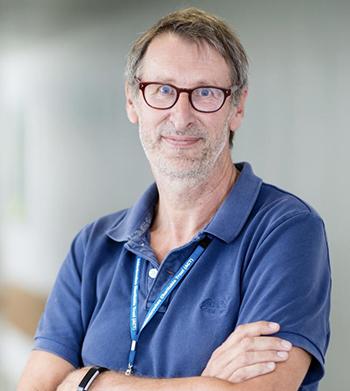
Roger Barker, BA, MBBS, MRCP, PhD is the Professor of Clinical Neuroscience at the University of Cambridge and Consultant Neurologist at the Addenbrooke’s Hospital Cambridge. He is a PI in the MRC-Wellcome Stem Cell Institute in Cambridge and Director of the MRC funded UKRMP Stem and Engineered cell hub.
His research seeks to better define the clinical heterogeneity of two common neurodegenerative disorders of the CNS- namely Parkinson’s (PD) and Huntington’s disease (HD). This has helped him define the best way by which to take new therapies into the clinic including novel experimental therapeutics such as cell and gene therapies.
Want more?
Don't forget to subscribe! There are many ways to listen: Apple Podcasts, TuneIn (Amazon Echo), Spotify or RSS Feed. (Need help subscribing? See our quick guide.)
For all of our Substantial Matters podcast episodes, visit Parkinson.org/Podcast.