Episode 108: The Golden Year for Testing Disease Modifying Drugs
-
Dan Keller 0:02
Welcome to this episode of Substantial Matters: Life and Science of Parkinson's. I'm your host, Dan Keller, at the Parkinson's Foundation. We want all people with Parkinson's and their families to get the care and support they need. Better care starts with better research and leads to better lives. In this podcast series, we highlight the fruits of that research—the treatments and techniques that can help you live a better life now, as well as research that can bring a better tomorrow.
Although there are medications to treat the motor symptoms of Parkinson's disease, no medication yet exists to modify the course of the disease, slowing down its progression. Since all drug approvals depend on people volunteering for clinical trials, Dr. Robert Hauser of the University of South Florida urges people in the very earliest stages of Parkinson's to consider entering trials of potential drugs. At this point, people can often go for up to a year before they feel they need drugs to treat motor symptoms, and it is this period that he calls the "golden year."
During this time, researchers can observe people's signs and symptoms for progression without them being masked by medication. He also urges healthcare providers not to unnecessarily start symptomatic therapy and to inform patients about clinical trials of drugs to slow progression. Also, patients themselves in the very early stages of the disease may elect to wait to start symptomatic therapy and seek out clinical trials. Given the often long wait to see any kind of medical specialist, Dr. Hauser described his center's system for getting patients in very quickly if they are in the early stages of the disease and are not yet on medication. Their participation in clinical trials may help address an unmet need in Parkinson's disease.
Dr. Robert Hauser 2:16
The most important unmet need in Parkinson's disease is to ultimately diagnose Parkinson's disease as early as possible and stop its progression in its tracks. Short of that, I and many others think that we'll have to probably take steps to get there. Right now, we traditionally diagnose Parkinson's disease when individuals get the classic motor signs like slow and small movement, stiffness, and tremor, and our first goal is to try and slow down progression. The reason for that is that we have medications today that do a pretty good job to treat slow and small movement and stiffness. I will say tremor remains inadequately treated, so we need better treatments for that.
But the real problem comes long term because we don't have good treatments for the big long-term problems that arise. These things typically begin to become big problems 10, 12, or 15 years out, and those are problems with thinking and memory—that is cognition—and balance problems. It looks like it's going to be very hard to develop good treatments for those problems, so it really looks like what we need to do is slow down progression and ultimately stop it to really impact long-term function and quality of life for patients.
Dan Keller 3:38
Is it difficult now to judge disease progression clinically, and if so, what's the problem?
Dr. Robert Hauser 3:46
It all depends on what you mean by that. You know, I think we have the tools to assess long-term progression, but we have a number of limitations. One problem is that it's in multiple spheres. A lot of our scales tend to be very focused on a certain set of problems. For example, we might have a scale that includes things like balance and cognition, but it might also include slow movement, tremor, and facial expression, so it's hard to put these things in the right proportions at the right time as the disease progresses to get a really good assessment of overall function and quality of life.
In an effort to do that, though, what we do is sort of pull back the microscope and try and take a larger, more grand look at how patients are doing with things like scales of function. How's the patient doing with regard to eating, dressing, driving, walking, etc.? And those things work pretty well. The problem is they become disconnected from the actual signs and symptoms of Parkinson's disease, like slow and small movement, stiffness, tremor, balance, and cognition. So we're missing that connection when we do that, and that's always bothersome to us.
People always get a little concerned when we're just looking at the big picture: are we really looking at Parkinson's disease, or could it be confounded by other things? So, even just looking at the clinical picture as a doctor, it's pretty easy to know how patients are doing. But when you start looking at scales that we can use in clinical trials, it becomes difficult to get a scale that captures all the elements of Parkinson's disease in the right ratios and helps us understand how it impacts function and quality of life.
Dan Keller 5:36
Even if you have a scale like you're describing, do the symptoms progress in lockstep, or are they very variable, especially from patient to patient? And when you talk about a drug to slow down progression, do you think you can find one that is going to slow everything down uniformly?
Dr. Robert Hauser 5:57
Patients do experience different signs and symptoms at different times and in different patterns of sequence, so that is an issue. I think we'll get into this a little bit more, but early on, most patients predominantly are focused on—because they have it—slow and small movement, stiffness, tremor, and maybe a little bit of mobility issues. Again, I'll tell patients when they're first diagnosed, we have pretty good medications for that, that'll work through five to seven years after diagnosis.
Between five and 10 years after diagnosis, a lot of patients find they are on levodopa and it starts lasting shorter amounts of time. So, we're dealing with that, but we are developing longer-acting levodopa formulations and other medications to help make levodopa benefit last longer, so we're doing pretty well there. Some patients develop dyskinesia, which are twisting, turning movements that are a sensitivity to levodopa, and that is somewhat of an unmet need. But again, it's those long-term problems, balance and cognition, that are really a problem.
So, although you've hit on an issue, we think that the underlying pathology of Parkinson's disease probably is constant through the disorder, but where it affects the brain is what is expressed in these different signs and symptoms. Clinically, we have the challenge of how do we create scales that really capture this progression. Things like scans or biomarkers to really look at the underlying pathology and how it's progressing would be super helpful, but we don't have them yet. A lot of people are working in the research field to try and help us with that, and that would be very helpful to try and understand how medications are affecting progression. So, we keep our fingers crossed for the future for that.
Dan Keller 7:44
You had written a piece about the "golden year," which would be the very earliest, I suppose, detectable stage of the disease. How does that figure into some of the problems with current trials of medications aimed at slowing progression?
Dr. Robert Hauser 8:01
I call that first year after an early diagnosis of classic motor Parkinson's disease the "golden year." This is when patients have the first signs of slow and small movement, stiffness, and tremor, and they can be diagnosed with Parkinson's disease, but it's a time where they don't necessarily need symptom treatment like levodopa and could potentially be watched for a certain amount of time before they need symptom therapy.
The reason I call that the golden year is because when we're trying to assess medications that look promising to slow progression of disease, we have to consider which patients should be enrolled in those kinds of trials so that we can assess clinical disease progression—that is, how patients are doing over time. Well, the problem is once they go on symptom medication, how they're doing is very dependent on what symptom medication they're on and how much they're on, and it's almost impossible to separate how they're doing from those symptomatic medications.
Patients who are diagnosed early with just a little bit of slowness, stiffness, and tremor can go nine months or 12 months without having a need for symptom medication, so we can watch them over that time without this confound—which means a sort of confusing effect—of symptom medications like levodopa or dopamine agonists.
The way these clinical trials work is patients with early motor Parkinson's disease and a little bit of slowness, stiffness, or tremor come into the trial, they are evaluated, and they get the study medication to take—either the real thing or the fake, which in medicine we call a placebo. They don't know which they're taking, and we as a study team don't know which they're taking either. We monitor their progression over nine months to a year without them going on symptomatic medication, and that allows us to judge or evaluate the progression of their clinical signs and symptoms, which we think is a reflection of the underlying disease. We think this is the purest, simplest, most straightforward way to assess promising medications that might slow disease at this time.
Now, this is the ideal. I will say, if patients are listening to this, what happens if you go six months and you really need symptom medication? Well, we do make allowances for that. Patients who do need symptomatic medication at six months can take it, but we do tell patients who are thinking about such trials that if you are only in the trial for a month or two, it's really hard to see an effective slowing of disease if there's just a limited amount of time. So, when patients are considering those trials, we're asking them to think about, you know, can you really go nine months to a year without symptom medication? That's why it's important to identify patients who are just at the very beginning of classic motor Parkinson's disease with just a little bit of slowness, stiffness, and tremor, let them know about these trials, and offer them the opportunity to participate.
Dan Keller 11:02
I suppose that was a message to people experiencing Parkinson's disease symptoms, but is there a message to the neurologists who might see them very early on?
Dr. Robert Hauser 11:13
Well, I'm trying to get the message out to both patients and physicians about this because patients are an important part of this research effort. Without patients, you know, doctors can think about it all they want and the people in the lab can come up with great, promising medications, but unless we can evaluate whether they really work, the whole effort is for naught.
So, first of all, for patients, the issue is, if you are diagnosed with Parkinson's disease, think about whether you might be interested in participating in such research. Unfortunately, what happens with patients is two things. A lot of patients, let's say they have a little bit of tremor, may wait until they feel they need symptomatic medication to come to either a doctor or an expert. So I see a lot of patients who are being evaluated, and they say, "Doc, I'm here because I have slowness, stiffness, and tremor." I'm able to make a diagnosis of Parkinson's disease, but they say this started two or three years ago, and now they have enough difficulty that it's really not appropriate for them not to be on symptomatic medication. For them, we've missed that golden year where we have the opportunity for them to participate in such a trial.
So I say to patients, trying to get the word out to the larger community: if you've got a little bit of tremor, a little bit of slowness and stiffness, get evaluated. If a physician thinks you might have Parkinson's disease, before you go on symptom medication, think about whether such trials are available, and think about participating in research. Patients can find out about clinical trials on websites like clinicaltrials.gov and also through foundations like the Parkinson's Foundation, Michael J. Fox Foundation, etc.
Now, the other thing that happens is patients will go to a doctor, perhaps they've got a little bit of Parkinsonian or rest tremor, and the doctor makes a diagnosis. Well, the patient may have nothing but a little tiny bit of tremor and a little tiny bit of slowness, and the doctor may put them on symptomatic medication when they don't really require it. Once you're on those symptomatic medications, you're excluded from these trials for the reasons that I mentioned before—we are not able to evaluate how you progress over time independent of medication. So, once again, that's an example of how we lose that golden year or waste that golden year.
If a physician is going to put somebody on symptomatic medication, first of all, the physician should ask themselves: does the patient really need it to help with a disability or a really troublesome symptom? If not, they should have a discussion with the patient as to whether there are clinical trials reasonably close by that the patient might be interested in participating in. For patients, they should ask themselves, "Do I need this symptomatic medication right now, or are there research opportunities open to me?" Again, I think the message is that the golden year is a really important opportunity to get involved in research to try and help evaluate promising medications that might be able to slow progression.
Dan Keller 14:15
One thing that frustrates patients a lot with any kind of condition is getting an appointment with a specialist. In this case, time is of the essence. If they say, "Well, you can have an appointment in three months," haven't you lost three months of the golden year? Are you prepared to see that person very quickly?
Dr. Robert Hauser 14:34
Yes, we are. You know, a lot of expert centers like ours are involved in clinical research, which means research with patients like this. What we tell our schedulers is that when a patient calls and is seeking an appointment, they need to talk to the patient and try and understand what the problem is. If the patient says, "Well, I was recently diagnosed with Parkinson's disease two weeks ago, and either my neurologist wanted me to see Dr. Hauser, or I'm interested in a second opinion with Dr. Hauser," then the scheduler asks, "Are you on any symptom medications? Are you on any medications for Parkinson's disease?" If the answer is no, we try to schedule that patient within a week's time.
I think a lot of expert centers may have a mechanism in place like that. The other thing is that the patient may also facilitate things by saying, "I'm an early patient interested in research trials." A lot of expert centers will understand the situation and try to facilitate a quick appointment that way.
Dan Keller 15:38
Are there any promising compounds coming along, and are there any positive results that you can cite?
Dr. Robert Hauser 15:46
We recently did hear about the outcome of one clinical trial that I personally think is very exciting, and that was for a compound called prasinezumab, which was originally developed by Prothena, and the clinical trial was run by Roche. Again, this was the kind of classic clinical trial that I described, where patients with very early Parkinson's disease came into the trial and they weren't on any symptomatic medication—although in this case, they did allow treatment with a very mild symptomatic medication, an MAO-B inhibitor.
Patients came into the trial, they were randomized to placebo (which is like a fake) or a low dose or high dose of this medication, and they were monitored through a year. This medication is an antibody against small clumps, essentially, of alpha-synuclein, and the way it's thought to work is it's thought to reduce the ability of these small clumps of alpha-synuclein to move from neuron to neuron. It provided good outcomes in animal models of Parkinson's disease.
In this trial, there were a little more than 300 patients, and the primary outcome—which means the primary or main measure that was assessed to see if we saw some evidence of slowing of disease—was what we call a total Parkinson's score. For your sophisticated audience out there, it was the MDS-UPDRS, or Movement Disorder Society Unified Parkinson's Disease Rating Scale total score, which includes both an assessment of signs and symptoms by history as well as by examination, and includes motor problems as well as non-motor problems like cognition, hallucinations, anxiety, et cetera.
Anyhow, on that overall scale, there wasn't any difference over one year between the active medication and placebo. But when they did these what are called secondary analyses or additional analyses, they did see a slowing of progression in the area between 25% and 35% on assessments of motor function, either by the site raters or a central rater.
I think this could be potentially important. When we talk about secondary outcomes like this, we always have to take them with a grain of salt because we put the most emphasis on the primary outcome. But in early Parkinson's disease, the essence of the condition is these motor features, and when you look at these kinds of scales, the thing that changes the most in that first year or so is the motor features of Parkinson's disease. So we consider this sort of a signal detection study. We don't know for sure whether this agent actually slows progression of Parkinson's disease, but I think we're discussing it as an example of patients entering studies in that golden year and participating in helping evaluate medication. Based on these early results, Roche and Prothena are continuing to evaluate this medication, and we'll see if it continues to show promise. Other medications are entering this stage of evaluation, and I think the future looks bright.
Dan Keller 19:16
Is there anything important to add, or anything we missed on the general subject we've discussed that you'd like to add?
Dr. Robert Hauser 19:24
There are efforts to go further beyond what I've called the golden year, and I'll just talk about two of those quickly. One is that we know there are signs and symptoms that arise in Parkinson's disease before the slowness, stiffness, and tremor, and these include things like a decreased sense of smell and so-called REM behavior disorder, where people act out their dreams while sleeping.
There's a lot of interest in whether we can diagnose Parkinson's disease even earlier than we do now, and this has important implications. If we can develop a medication to slow progression of disease, this will become really important to diagnose Parkinson's disease as early as possible and begin slowing disease as soon as we can.
The other thing is we're interested in whether we can do clinical trials where we find patients who have Parkinson's disease even before they have slowness, stiffness, and tremor. We could run a clinical trial where patients with, let's say, a decreased sense of smell and REM behavior disorder are randomized to medication or placebo, and see if we can delay the time until which they get slowness, stiffness, and tremor. So that's another kind of way of evaluating the slowing of disease progression.
The other thing is, a lot of these studies are looking at this golden year—that first year or so after the onset of slowness, stiffness, and tremor. But ultimately, remember we talked about what we really need these medications for is to push off and make it so that patients hopefully don't get cognitive decline, decline in thinking and memory, and balance problems. I think if medications like the one we discussed seem to have an effect in slowing the progression of slowness, stiffness, and tremor in early disease, then we still have to make sure it works in later disease and really prove the case that we're pushing off these symptoms. We need to demonstrate that either there'll be less of it later in the disease or that patients won't get it later in disease at all, so that's another component here.
Dan Keller 21:28
Very good. I appreciate all the information. I'm sure it'll be helpful to our patients, and maybe some of them will look for a trial to get into.
In addition to a diminished sense of smell and REM sleep behavior disorder, which includes acting out vivid dreams, other very early signs of possible impending Parkinson's disease are constipation and mood disorders. If you experience any of these symptoms and would consider joining a clinical trial, talk to a neurologist about available ones, and, as Dr. Hauser mentioned, you can also do your own research online.
If you'd like to learn more about the research process and how you can help us better understand Parkinson's by getting involved in clinical trials, review the fact sheet titled Getting Involved in Research at parkinson.org/factsheets. For more information on clinical trials, you can search clinical trials at parkinson.org. You can also search at clinicaltrials.gov using "Parkinson's" in the space for disease or condition and "progression" in the space for other terms.
If you have questions about this topic or anything else having to do with Parkinson's, our information specialists can provide answers in English or Spanish. You can reach them at 1-800-4PD-INFO. News and updates about future events and resources are available by joining our email list at the bottom of our website's homepage. If you want to leave feedback on this podcast or any other subject, you can do it at parkinson.org/feedback.
If you enjoyed this podcast, be sure to subscribe, rate, and review the series on Apple Podcasts or wherever you get your podcasts. At the Parkinson's Foundation, our mission is to help every person diagnosed with Parkinson's live the best possible life today. To that end, we'll be bringing you a new episode in this podcast series every other week. Until then, for more information and resources, visit parkinson.org or call our toll-free helpline at 1-800-4PD-INFO, that's 1-800-473-4636. Thank you for listening.
Most people with Parkinson’s disease (PD) first seek medical care when they recognize or are troubled by symptoms – often stiffness, slowness of movement, or tremor. They may go on drug therapy at the time of diagnosis or, typically, within six to twelve months to relieve those symptoms.
In order for researchers and drug developers to test and ultimately find drugs that can slow the progression of the disease, they need to test those drugs in people who are not already on medications to alleviate symptoms and compare them to similar people taking a placebo. Currently there is no blood test or other biomarker to measure progression, so the most common and straightforward way for drug trials to judge progression is to observe signs and symptoms in people not receiving symptomatic medications such as levodopa, dopamine agonists, or other drugs that make symptoms less apparent.
Dr. Robert Hauser, Director of the Parkinson’s Disease and Movement Disorders Center at the University of South Florida in Tampa, urges people early in the course of their disease to enter a clinical trial as soon as they receive a PD diagnosis and before they go on medication. The longer that they can be observed before taking a potential disease-modifying medication, the greater the ability of researchers to detect changes, or in the case of a drug in development, if successful, not to see changes. However, patients who can go up to a year without medication are in short supply, in part because patients often wait to seek medical help until they want medication. As Dr. Hauser wrote in a medical publication a few years ago, “… why see a doctor when you don’t need treatment?”
But the answer is because people very early in the course of their disease are vital to finding drugs that can slow progression. Dr. Hauser terms the critical period of about one year between the time of first motor symptoms appearing to initiating symptomatic therapy the “Golden Year” for participation in disease modifying clinical trials. So, he wrote, “It is critical that care providers and patients don’t unknowingly waste this golden year.” In this episode he lays out the problem, has messages for patients and providers, and tells how such a system of referral to entry into clinical trials can work.
Released: July 13, 2021
-
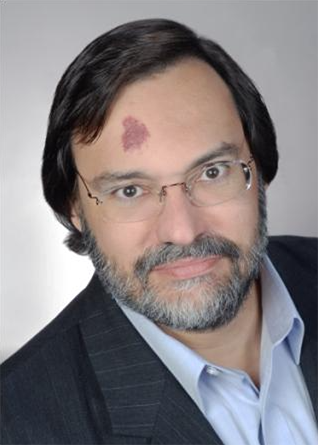
Dr. Robert Hauser is a Professor of Neurology at the University of South Florida College of Medicine, in Tampa, Florida. He serves as Director of the USF Parkinson’s Disease and Movement Disorders Center, a Parkinson Foundation Center of Excellence. Dr. Hauser earned his medical degree from Temple University School of Medicine in Philadelphia, Pennsylvania, and completed neurology training at the Eastern Virginia Graduate School of Medicine, in Norfolk, Virginia.
Dr. Hauser completed a fellowship in Movement Disorders at the University of South Florida and became Center Director in 1994. He has authored or co-authored more than 300 peer-reviewed publications and is one of the world’s most cited Parkinson’s Disease investigators. He is Past Chairman of the Interventional Neurology Section of the American Academy of Neurology, has served on the executive committee of the Parkinson Study Group, and was a member of the steering committee for the NIH-sponsored Neuroprotective Exploratory Trials in Parkinson’s Disease program (NET-PD). Dr. Hauser lectures frequently at scientific meetings and served as Chairman of the 2009 World Federation of Neurology International Congress on Parkinson’s Disease and Related Disorders.
Dr. Hauser’s primary research interest is the development of new medical and surgical treatments for Parkinson’s disease and other movement disorders. He has extensive expertise in clinical trial design and execution. The outcome measures he developed have become the gold standard for use in clinical trials. He maintains an active patient practice and has been voted a Top Doctor by his peers every year since 1993.

Want more?
Don't forget to subscribe! There are many ways to listen: Apple Podcasts, TuneIn (Amazon Echo), Spotify or RSS Feed. (Need help subscribing? See our quick guide.)
For all of our Substantial Matters podcast episodes, visit Parkinson.org/Podcast.